
The DMK may consider a two-tier campaign, where they keep the focus on Chief Minister Stalin, as a senior statesman with 50-plus years of political experience, and let EPS and the BJP shout in the wilderness.
In such a case, the second-tier may project Udhayanidhi as the contender and chosen obstructionist in Vijay's path.
The attempt would be to reduce Vijay to Udhayanidhi's level when the former is aiming at Stalin and Stalin alone in the state's political horizon, predicts N Sathiya Moorthy.

Reports that 85,000 of 2.46 lakh candidates in Tamil Nadu government's Post-Graduate Teachers Recruitment examinations have failed in the mandatory Tamil paper hides more than it says and says more than it hides.
The very figures have brought derision back to the lips of anti-Dravidian forces in the state (and possibly outside), as if to indicate the 'utter failure' of the state's 'anti-Hindi' policies to produce at least students and scholars with adequate command over and knowledge of Tamil.
First, for some archaic or unscientific reasons, questions in the mandatory Tamil exams for government jobs in the state are mainly from Tamil grammar and literature. They are not only ancient in chronological terms, but are also unrelated to the job profiles.
Aspirant clerks, doctors, nurses and engineers have to clear those exams, the latter class having had no familiarity with Tamil as an exam subject once they had cleared their Plus-Two.
Even here, the excessive focus on the marks scored in science subjects for admission in medical or engineering colleges has meant that students, their parents and teachers ignore Tamil and English, almost from the sixth standard, if not the first itself.
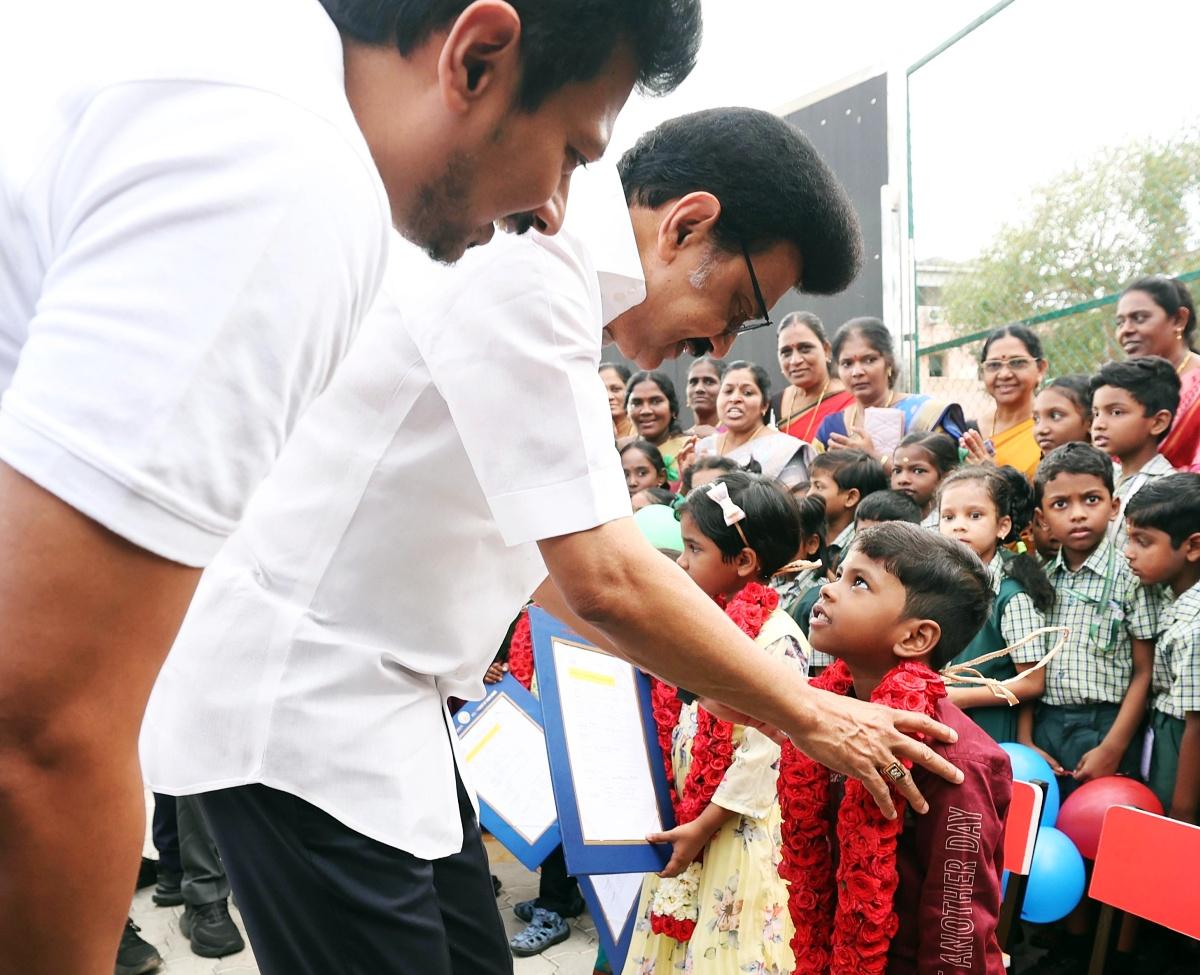
Owing to the ever-improving socio-economic conditions of individuals across the state, families even in rural areas have been seeing English medium education as a status symbol and also as a sine qua non for socio-economic mobility through education and employment.
Unlike often believed, learning Tamil well becomes a casualty. Even learning English as a language for examination purposes joins in the higher classes. Students and parents learn to see English language only as a tool to study the 'real subjects' that (alone) 'matter in life and for livelihood'.
The dichotomy arises if one begins comparing the poor scores in Tamil language exams and the larger Tamil identity that was displayed, for instance, at the massive state-wide Jallikattu protests.
The protests were initiated by Gen-Z IT and management professionals in the state, mostly with a rural background, and spread across the states and countries where their brethren lived.
Plain and simple, one is about career and the other is socio-cultural identity in the Tamil DNA. It's comparable to the 'Indianness/Bharatiya' characteristic that is taking shape in the NRI community through the past couple of decades and more. One is independent of the other.
It is here professional/political critics make the mistake of using different mental yardsticks to evaluate 'Dravidian identity' and 'Bharatiya' characteristic, which erupted only after the other had found deep roots, for historic reasons associated with the freedom movement and the rest.
All of it should explain why the ruling Dravida Munnetra Kazhagam in the state is able to play the larger 'identity politics' during successive elections and make it work. But come 2026, it may not have as much impact as Chief Minister M K Stalin, who is also the party boss, may have hoped for.
These voters are by now solidly behind the DMK. Any further targeting of the ruling BJP at the Centre, Prime Minister Narendra Modi and his gubernatorial nominee, R N Ravi, is not going to produce one extra vote.
It is like the Hindutva forces and the BJP flogging Periyar E V Ramaswamy, M Karunanidhi and their religious ideology long after the death of the former, and the relative irrelevance that it had rendered vis a vis the third.
Today's elections in Tamil Nadu are fought on larger issues, including Dravidian political concerns centred on federal issues, and the inevitable anti-incumbency factor, all of them hinging on the 'undecided swing vote' factor, which remains at 30 to 35 per cent.
Anti-incumbency matters most to the swing voters, but that does not mean federal issues and imagery, for instance, do not appeal to them, as the BJP strategists in Chennai and Delhi seem to have long since concluded.

Unless Stalin changes his anti-Modi tack for the assembly polls, and has a campaign theme that balances the post-Hindutva BJP agenda and the positives of his government, the one-sided attack may not get the kind of response from the targeted constituency, as the DMK may hope for.
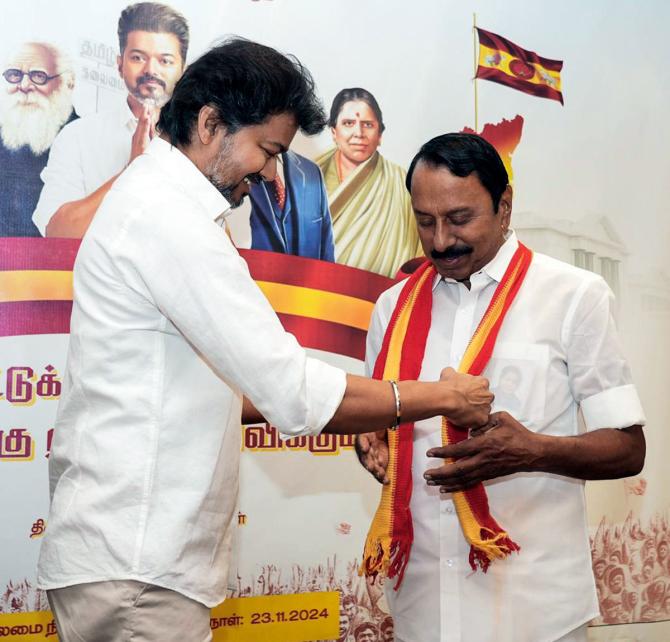
In comparison, rival AIADMK's Leader of the Opposition Edappadi K Palaniswami has focussed his attack on the ruling party and the chief minister as is his wont. Up to a point he has also ignored the fourth corner in the emerging contest, namely, the unquantified, infant TVK of actor-politician Vijay.
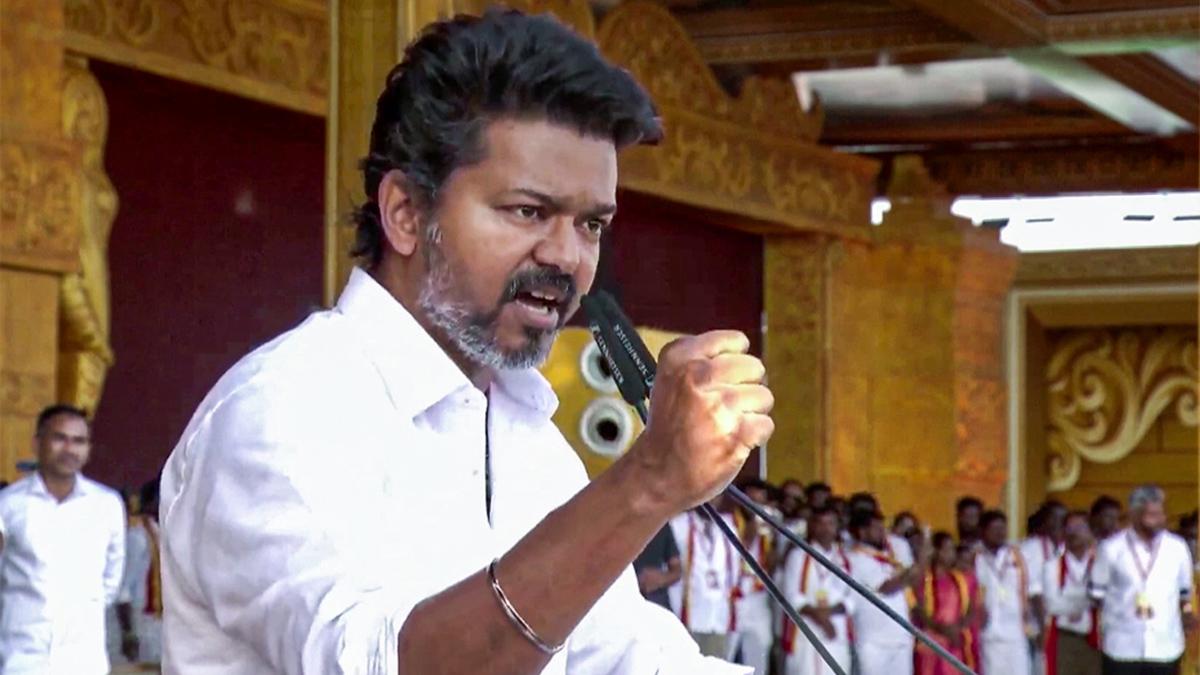
For his part, Vijay has strategised well to ignore the AIADMK in toto, to claim that the poll battle is only between the DMK and the TVK. While his selective sloganeering is eye-catching, he is yet to follow it up with convincing arguments and positive offerings to the (swing) voters, to make his strategy work.
Here, it remains to be seen if AIADMK veteran K A Sengottiyan's induction would help the TVK organise itself better, structure its organisation better, and come up with ideas, philosophy and offering that go beyond Vijay's cinematic punch-lines.
Soon, Vijay will also have to climb down from what until now remains his hobby horse and face the real world full of questions, for him to answer in public.
Responding to more serious queries he would face from the poll platforms of his rivals through four-paragraph X statement two or three days later is not going to help.
Nor can he put himself on a high pedestal as only Narendra Modi has done, to decline meeting the media -- and answer their razor-sharp questions that will refer at times to the historic past, which he may be unfamiliar with.
Yet, none of it will solve the problem for the DMK and Stalin unless they address anti-incumbency issues, post-haste. They have already lost or wasted four-and-half years in office, and have only the last half to cope.
The first irony is that a party and ideology that won the Tamil people's heart through the nascent art of political communication over a century ago is now unable to shake the past -- just as its national-level Congress ally.
The DMK's IT wing and hired propagandists are no match for those that the relatively young Modi-led BJP introduced ahead of elections 2014, and from which the AIADMK rival has caught on.
The DMK's communication machinery is woefully inadequate even against the nascent TVK, whose propaganda strategists keep coming up with occasional flashes of campaign brilliance -- but are unable to take forward.
The same can be said of the DMK state government's enforcement machinery. Despite the chief minister announcing and inaugurating scores of imaginative welfare programmes, not each of them is being followed up meticulously by the officialdom, top to bottom. They put the latest file and work on the top, and let others languish.
The general perception is that Stalin is not as tough as Jayalalithaa or his late father M Karunanidhi, who was also accessible to cadres, voters and the media.
This perceived laxity shows up as administrative weakness down to the lowest-level government offices and police stations across the state.
For instance, to restore people's confidence, Jayalalithaa and Karunanidhi would have started with suspending all revenue officials and top cops when last year's Kallakurichchi liquor tragedy and this year's Karur stampede happened.
Stalin as CM side-steps officials' involvement in such matters, and at best stops with transferring lower-level cops concerned, where they are involved.
As AIADMK's EPS first and other party leaders since have been claiming, Stalin has given the impression of being run by four or five bureaucrats -- who also thus end up running the entire state administration, to their whims, and at the same time covering up the wrongs of their chelas down the line.

The state is not used to such a 'lax CM', and that is saying a lot, yes. But there is a kind of 'feel good' factor attaching to the man. This means, it is more of a 'Stalin election' than a 'Modi election', as the DMK chief would want it to be, one more time.
It also means that some of DMK's second-line leaders eager to pit Deputy Chief Minister Udhayanidhi Stalin against Vijay may have to wait.
Alternatively, the DMK may consider a two-tier campaign, where they keep the focus on Stalin as a senior statesman with 50-plus years of political experience, and let EPS and the BJP shout in the wilderness.
In such a case, the second-tier may project Udhayanidhi as the contender and chosen obstructionist in Vijay's path.
Rather, the attempt, if any, would be to reduce Vijay to Udhayanidhi's level when the former is aiming at Stalin and Stalin alone in the state's political horizon.
But for this to succeed, the DMK's propaganda and IT wings have to change their attitude and approach and become more contemporary and competitive.
Shorn of other issues, a certain section of the non-committed voters will be asking themselves if they should give Stalin another chance or not. Here, he may have an advantage over EPS and certainly the TVK's Vijay.
Among the trio, the experienced two have their contributions and failures as chief minister to debate about. Vijay has none. Some say 'opening on a clean slate' is by itself an advantage.
Yes, it would be so, would have been so, if and only if Vijay had become more accessible and more forthcoming with his plan of action for Tamil Nadu.
It is slowly reducing to a stage where his sympathisers outside of fans have begun concluding that he has nothing substantial to offer.
Most political analysts, based on conventional thinking, are betting on the DMK alliance, as they are strong, continuing and have consistently held a 40 per cent vote-share in three successive elections in 2019, 2021 and 2024.
They are not ready to give a 'non-starter' of Vijay around 25 per cent for a start-up, but only the traditional five or 10 per cent that first-timers have always captured since 1957, nay, 1952 itself.
Contesting alone in the Lok Sabha polls last year, the AIADMK polled the lowest-ever 20 per cent. This raises questions about the usefulness of a one-time AIADMK veteran for the TVK in his own western belt, which has remained an AIADMK stronghold since the times of MGR and Jayalalithaa.
Whatever the BJP has scooped up in the region since the 'Coimbatore serial blasts' of 1998 are either that of its national-level Congress voters or a share of the 'non-committed voters' of the time -- not of the AIADMK.
Analysts also forget that the AIADMK, last year, had still held on to the 'committed vote-bank' that stood at 21 per cent, the party's worst-ever election under reigning chief minister Jayalalithaa.
It was the same as the votes polled by the Jayalalithaa faction in the post-MGR assembly elections of 1989.
The Janaki faction, so named after MGR's widow -- the shortest-term chief minister -- polled a total of 10 per cent, in the company of late actor-politician Sivaji Ganesan's long-forgotten Tamizhaga Munnetra Munnani.
Truth be told, MGR's AIADMK came to power in the maiden 1977 assembly polls with only 33.5 per cent vote-share, in a multi-cornered contest, in which the DMK rival could manage only 25 per cent.
The AIADMK's victory became possible because the Congress combine polled 20 per cent votes and the breakaway Janata Party (which no one now knows existed), a substantial 17 per cent.
Today, the question is if the names of MGR and Jayalalithaa sell. The Congress found out that Kamaraj is not saleable among the young voters, many of them having not even heard of the man, leave alone his contributions to the state's education, industries and job sectors, when CM (1954 to 1963).
The same may apply to MGR and Jaya as political images, with many Gen Z fans of Vijay possibly having not heard about their political, administrative and social contributions -- or, even the corruption charges against them.
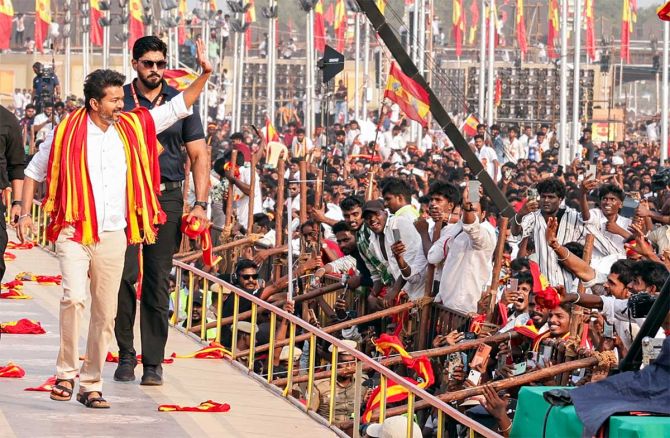
For Vijay now to begin swearing by them, and triggering a self-centred EPS to follow suit, does not help anyone.
Yet, for the same reason, AIADMK cadres/voters from MGR's time since 1972 may be wedded more to the party than even the 'Two Leaves' poll symbol, leave alone the personalities of MGR and Jaya.
This may be to the advantage of EPS and the AIADMK than the likes of veteran Sengottaiyan, who has moved to the Vijay camp. But EPS too understands that even the 20-per cent vote-share from last year is not a good figure to start against a well-entrenched DMK alliance, with a committed 45 per cent vote-share through three elections and six years.
This is the true reason for EPS to accept the BJP-NDA, with its 18.5 per cent vote-share in 2024, as an ally, despite the 'ideological baggage' he has been forced to carry all over again.
Vijay's further declaration as a chief ministerial candidate himself has added to EPS' woes as the latter had hoped to jump ties and have an alliance with the TVK instead.
Likewise, EPS's insistence on not accepting the likes of T T V Dhinakaran's AMMA with his 5.5 per cent vote-share and former chief minister O Pannerselvam with his unevaluated voter-pull, like Vijay, back in parent AIADMK, is a dampener for the BJP. The party thus hopes to retain them in the NDA, as in 2024.
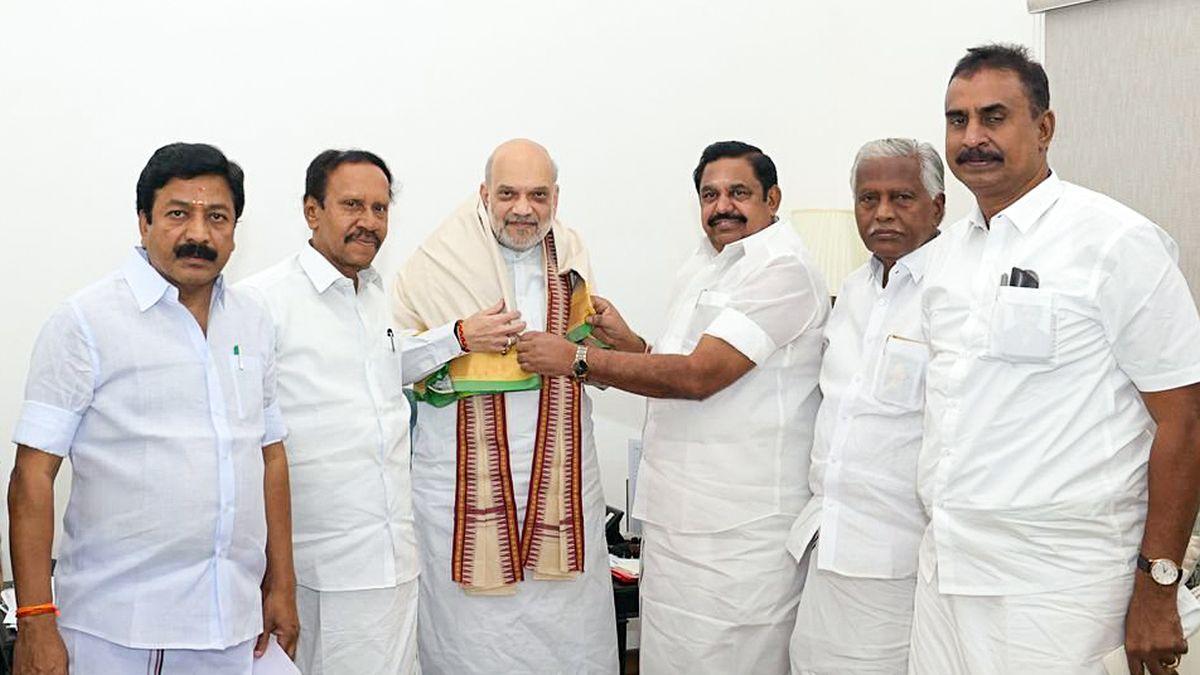
A clear picture may emerge when BJP's chief strategist Amit Shah visits the state in mid-December. Despite media speculation to the contrary, both TTV and OPS are likely to return to the NDA.
They had quit the national combine after Shah, during his April visit, announced the revival of the AIADMK combine.
Yet, for Vijay, the question would remain, why has he been shying away from attacking the BJP, which he declared was the party's 'ideological enemy' while the ruling DMK was their 'political enemy'.
Maybe Vijay can get away with the logic that he was not attacking the AIADMK because he did not want to give free publicity to a poll rival, and at the same time keep it a direct fight between the DMK and the TVK.
But the TVK cannot hope to cut into the DMK's minority vote-bank, as is being made out, by holding back on the BJP-ruled Centre.
Despite his Christian identity -- Joseph Vijay being his given name -- delayed statements against some of the BJP/Centre's initiatives are weak and unconvincing.
At the end of the day, it is the parish priests and Islamic imams who guide their respective communities in matters of election, and they may not find enough reason for crossing over from the DMK to the TVK, if Vijay does not convince them over his BJP policy.
That is saying a lot, at least in the interim!
N Sathiya Moorthy, veteran journalist and author, is a Chennai-based policy analyst and political commentator.
Feature Presentation: Rajesh Alva/Rediff







 © 2025