

Beijing has been wary of Sanae Takaichi's efforts to boost Japan's military profile since taking office six months ago, points out Dr Rajaram Panda.

Key Points
- Japan has lifted its long-standing ban on exporting lethal weapons, marking a significant departure from its post-war pacifist stance.
- The new policy allows exports to 17 partner nations, while maintaining restrictions on countries actively engaged in ongoing conflicts.
- The National Security Council will oversee approvals, evaluating security implications and ensuring alignment with Japan's defence interests and commitments.
- The move is expected to strengthen Japan's defence industry and support global partnerships like the GCAP fighter jet programme.
- China has raised serious concerns, warning the policy shift could signal a move towards militarism and destabilise regional security dynamics.
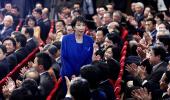
In a landmark policy reversal, Japanese Prime Minister Sanae Takaichi's government in a cabinet decision on April 21 lifted Japan's decade-old ban on exporting lethal weapons, reversing a cornerstone of the nation's post-war policy.
At a national security council meeting, the government approved the change by revising its arms export principles, abolishing previous rules that limited transfers to non-lethal purposes as rescue and surveillance.
Taikaichi gave the reasoning that if Japan meets the needs and carries out defence equipment transfers to friendly countries, it would not only improve the defence capabilities of the recipient countries but would also help secure Japan's own security.
She further clarified that this policy change does not mean that Japan ceases to adhere to the commitment of principles as a peaceful nation for over 80 years since the War.
Japan first adopted a ban on arms exports to the Communist bloc and other destinations in 1967. In 1976, then prime minister Takeo Miki went further and effectively decided on a comprehensive embargo.
Such a policy remained in place till 2014 when then prime minister Shinzo Abe's cabinet created the Three Principles on Transfer of Defense Equipment and Technology allowing exports under certain conditions.
These conditions were built around the five categories of rescue, transportation, vigilance, surveillance and minesweeping, effectively blocking the export of lethal weapons.
The new rules introduced by Takaichi removes such restrictions. This means equipment will now be classified as either lethal 'weapons', such as fighter jets, destroyers and submarines, or 'non-weapons', like radar systems.
What does this policy change mean in Japan's overall defence policy?
It effectively means that Japan can now export lethal weapons to the 17 countries with which it has defence transfer agreement.
Non-lethal equipment may be exported without destination restrictions. In principle, exports to nations actively engaged in combat remain prohibited.
The new policy carves out an exception and allows transfers of lethal weapons if Japan determines there is 'exceptional circumstances' vital to its own national security.
Which government organisation in Japan is authorised to decide the country eligible to receive the lethal weapons and on what conditions?
It is the national security council which shall review all potential weapons exports by using criteria such as security environment of the destination country and any potential impact on Japan's Self Defence Forces.
Japan reserves the right to monitor how the equipment is managed after being transferred.
The NSC will be required to notify all MPs in writing after an export is approved.
However, it remains unclear if this after-the-fact notification will serve as an effective check on the cabinet's decisions.
Japan probably wants to do self-introspection to assess its own ability to continue fighting should a war break out by strengthening the domestic defence industry's production capacity through exports.

The Controversy
Japan's decision to export lethal weapons has sparked controversy in the region.
On March 26, 2024 Japan's cabinet had approved a plan to sell future next-generation fighter jets that Japan was developing with Britain and Italy to other countries. Those were seen as the latest move away from the country's post-War pacifist principles.
Japan hoped that by taking the decision, allowing Japan international arms sales, Japan expected to secure its role in a year-old project to develop a new fighter jet together with Italy and Britain.
It was also a part of the larger move to build up Japan's arms industry and bolster its role in global affairs.
At that time, Japan had clarified that it had no plan to export co-developed lethal weapons other than the new fighters, which are not expected to enter service until 2035.
One may notice that Japan has been rapidly changing rules to ease weapons exports. In March 2024 the cabinet approved a revision to its guidelines for selling defence equipment overseas, and authorised sales of the future jet.
The government had then clarified that it had no plans to export other co-developed lethal weapons under the guidelines. It further clarified that any such change would require cabinet approval.
Although Japan has long prohibited most arms exports because of its adherence to its pacifist constitution, it started taking steps toward a change amid rising regional and global tensions.
In 2014, Japan began to export some non-lethal military supplies. Then in December 2023 it approved a change allowing sales of 80 lethal weapons and components that it manufactures under licenses from other countries back to the licensors.
That change cleared the way for Japan to sell US-designed Patriot missiles to the US, helping replace munitions the US was sending to Ukraine to fight against Russia.
The decision on jets allowed Japan to export lethal weapons it co-produces to other countries for the first time.

GCAP Jet Boosts Japan Defence Strategy
Like the arrangement with the US on Patriot missiles, Japan made similar arrangements with Italy and Britain to develop an advanced fighter jet to replace its aging fleet of American-designed F-2 fighters, and Eurofighter Typhoons used by the UK and Italian militaries.
Prior to the arrangement with Italy and Britain, Japan was working on a home grown design to be called the F-X. In December 2022, it agreed to merge its effort with a British-Italian programme called the Tempest. The joint project was called as the Global Combat Air Program.
In view of the stressed security situation in Japan's neighbourhood, Japan with a pacifist constitution always feels vulnerable despite its security alliance with the US.
With the arrangement with Italy and Britain, Japan hopes the new fighter aircraft would offer better sensing and stealth capabilities amid growing tensions in the region, giving it a technological edge against regional rivals China and Russia.
North Korea's missile threat also worries Japan as some of the missiles Pyongyang has fired have flown over Japan's airspace.
Japan's cabinet felt that the ban on exporting finished products would hinder efforts to develop the new jet and limit Japan to a supporting role in the project.
Such feelings stemmed from the fact that Italy and Britain were eager to sell the jet in order to defray development and manufacturing costs.
The government of Fumio Kishida then sought cabinet approval to sign the GCAP agreement but was delayed by resistance from the junior coalition partner, the Buddhist-backed Komeito party.
Japan has been making incremental moves to help boost the country's defence industry since the days of Shino Abe and change Japan's defence profile. All his successors have followed the policy adopted by Abe. Historically, Japan's defence industry has only catered to the country's Self-Defence Forces.
All of Abe's successors have been keen to build up the military.
Japan began opening the door to some exports in 2014, but the industry has still struggled to win customers.

Reactions from China
When the Taikaichi cabinet gave the final approval on April 21, 2026, paving the way for sales of lethal weapons that had long been banned, China's reaction was immediate, expressing 'serious concerns'.
The scrapping of long-standing restrictions on arms exports is a major break with Japan's post-war pacifist policy.
Any potential thaw in relations with China is now likely to be derailed.
Japan's Three Principles on Transfer of Defence Equipment and Technology had previously limited exports to five non-combat categories: Rescue, transport, warning, surveillance and minesweeping.
The changes now allow Japan to sell lethal weapons to 17 countries with which it has signed equipment and technology transfer agreements, including the US, Australia and Britain.
Japan sees China's rapid military build-up and its increasing assertiveness as threats, especially growing tensions in the disputed East and South China Seas.
Japan also sees increasing joint military exercises between China and Russia around Japan as a threat.
The World War II history of Japan's role and the devastation that followed still remain fresh in the minds of China, Korea and many countries in Southeast Asia.
The constitution that was virtually imposed on the Japanese people during the American occupation contained Article 9 which crippled Japan's future military role at home as well as in the region.
It limited its military to self-defence and required the country to maintain a strict policy to limit transfer of military equipment and technology and ban all exports of lethal weapons.
Even when the Kishida government committed to the fighter jet project with Britain and Italy in 2024, Opposition lawmakers and pacifist activists criticised the government for not explaining to the public or seeking approval for the major policy change.
Public opinion was divided on the plan. To address the concern, the government then limited exports of co-developed lethal weapons to the jet and promised that no sales will be made for use in active wars.
Then defence minister Minoru Kihara had clarified that if a purchaser used the jet for war, Japan will stop providing spare parts and other components.
Potential markets for the jet include the 17 countries with which Japan has defence partnership agreements such as the US, Germany, India, Vietnam.
Other potential buyers include countries embroiled in long-standing territorial disputes with China, such as Malaysia and the Philippines.

Taiwan Exclusion to Avoid China Tensions
Taiwan, a self-governed island that China claims as its own territory, is excluded in order not to complicate relations with China.
China has never renounced the use of force to reunite it with the mainland. In common with most countries, Japan also does not recognise the self-governed island as an independent State.
The Kishida government hoped that the new policy could help Japan push a bigger role in alliances and regional defence partnerships like Australia, the US and the Britain.
So when the Takaichi cabinet adopted the new arms export rules on April 21, 2026, it triggered warning against 'moves towards militarism'.
Beijing warned that Japan's plan to scrap restrictions could undermine the country's pacifist constitution.
It may be recalled that when Takaichi remarked on November 7, 2025 Japan may intervene if Taiwan was attacked relations between Tokyo and Beijing virtually froze.

Even while Beijing expressed serious concern on Japan's relaxation on arms exports and warned on the need for 'heightened vigilance to resolutely resist Japan's reckless moves towards new-style militarism', there were hints of a thaw when it was reported that Yohei Kono, a former president of Japan's ruling Liberal Democratic Party, was expected to lead a trade delegation to Beijing in late June 2026, the first visit of its kind since Takaichi made her comments last November.
Allowing the visit might be a signal that Beijing was softening its stance on Japan and that it might serve as a channel of communication.
Beijing has been wary of Takaichi's efforts to boost Japan's military profile since taking office six months ago.
So, how does India view this change in Japan's policy on exports of lethal arms export?
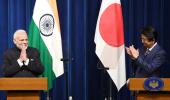
Since India aligns with the policy of Japan's regional and global concerns and maintains a robust defence partnership, India should welcome this initiative by Japan.
After all, India and Japan compliment on a host of regional and global issues and have shared mutual interests.
With China as the common adversary, both India and Japan find themselves on the same platform and share synergy to see the positive vibration in Japan's latest arms export policy.
India-Japan defence cooperation is likely to witness a brighter future in this light.
Dr Rajaram Panda is former ICCR Chair Professor at Reitaku University, Japan.
Feature Presentation: Aslam Hunani/Rediff








 © 2026