

In a federal democracy, the people must have a say (indirect or direct) in an office as important as that of governor.
Especially in a governor who can now effectively veto a bill by simply refusing to sign it, argues Harishchandra.
In the popular OTT series, The Crown, there is an episode where a young Queen Elizabeth II pulls up the much older prime minister, telling him that while it is his job to run the country, it is her job to ensure that the country is being run properly by those elected to do so.
It is a poignant revelation dividing the power between the queen and prime minister (and his cabinet).
In India, the same situation would apply to the President and prime minister, the governor and chief minister.
On November 20, 2025, a five-member Supreme Court bench replied to a reference made by the President of India regarding the timely assent to bills cleared by the government.
The Supreme Court court order reverses an earlier judgment in April 2025 when a two-judges bench had set timelines for the governor to clear bills in a fixed time frame.
The reasoning for the April 2025 judgment was simple: The Constitution clearly mandates that the governor 'shall' assent to a bill that has been cleared for the second time by the cabinet.
Not assenting to such a bill gives the governor a veto power to an unelected governor and is against the very spirit and essence of democracy.
Unfortunately, since the Constitution does not mandate a time frame, the April verdict set forth a time frame.
Now, this very time frame judgment has been reversed, which in effect, makes the governor the unelected ruler.
If a governor decides, for whatever reason, that s/he doesn't like a bill, s/he can simply refuse to assent to it. This is not what the Constitution mandated.
Governors are appointed and dismissed by the Centre, which means that governors, in effect, are instruments of the Centre.
Starting with the Congress, governors have been used to destablise or dismiss popularly elected governments at will in the states that were ruled by Opposition parties.
The Bharatiya Janata Party has taken a leaf out of the Congress book. Governors in the Opposition ruled states of Tamil Nadu, West Bengal, Kerala and other states have time and again overstepped their Constitutional limits.
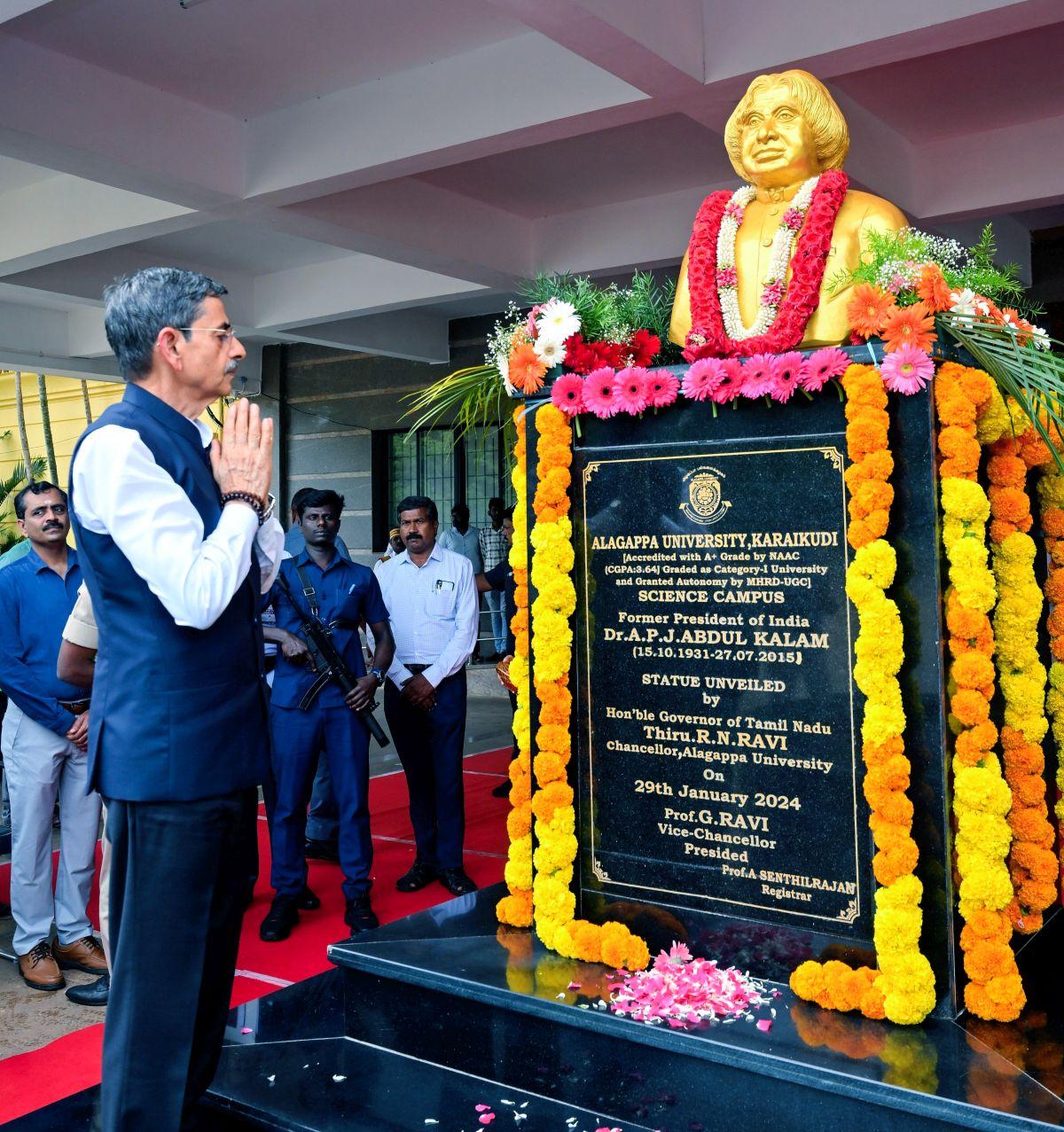
In fact, it was the actions of Tamil Nadu Governor, R N Ravi (a former police officer), who refused to approve a bill that was cleared twice by the Tamil Nadu assembly, in clear contravention of his Constitutional duty, that led to the case and the April verdict.
It cannot be a coincidence that in almost every state ruled by Opposition parties, the state government and the Centre-appointed governors are at loggerheads.
To be clear, the five-bench ruling, which does away with the concept of 'deemed assent' (a bill will be deemed assented whether signed or not by the governor after a fixed time), does say governors cannot sit on bills 'in perpetuity'.
But by not setting a time frame, it is very much up to individual governors who can take their own sweet time.
This does augur well for the states, for India, and for federalism.
The present system whereby the Centre appoints governors without any reference to the state is undeniably non-democratic, and against the concept of federalism.
Such governors owe their very existence to the pleasure of their masters in Delhi, and in such a situation, it is the rare governor who actually obeys the Constitution rather than the Centre.
We need a better way to choose our governors. Here's a suggestion:
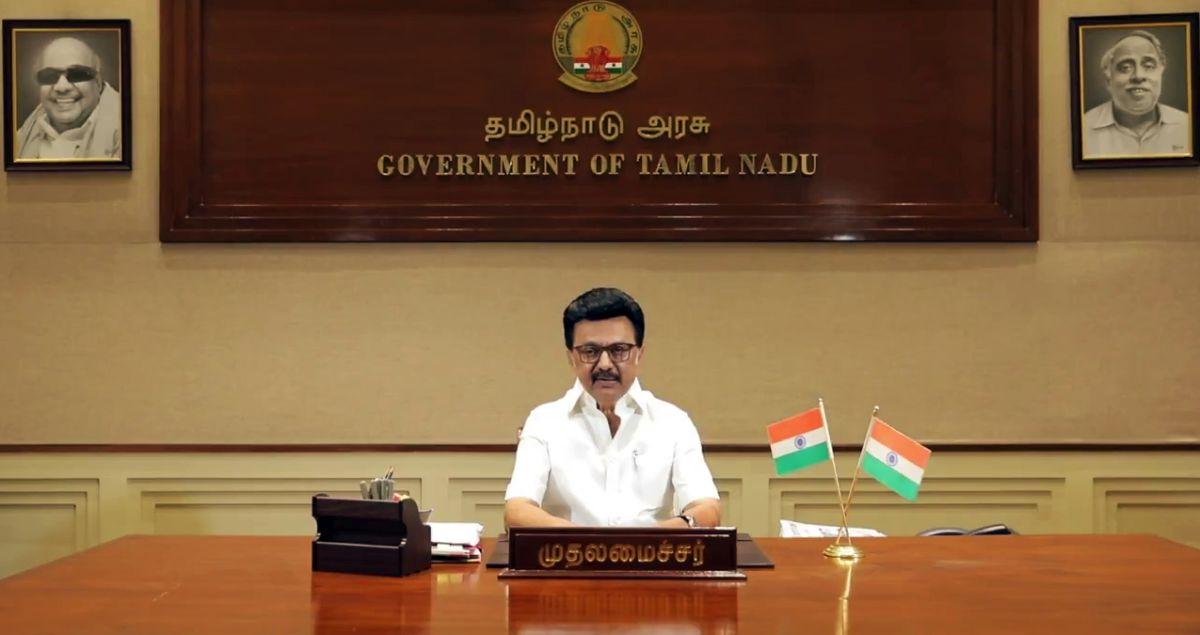
In the UK, there is a monarch that assents to the bill. As a republic, our Constitutional fathers created the office of a President, as an equivalent of the monarch, and whose assent finally turns a bill into law.
The President is elected by members of Parliament and the elected members of the state assemblies. Thus, it is rightly said, the President is indirectly elected by the people of India.
When it comes to governors, the Constitution gives the Centre a free hand to appoint them, a decision that has caused harm as the quality of our body politic declined over the decades.
It is time that states have a role in the appointment of their respective governors.
It is time that states elect their governors, just as how India elects its President.
The governor should be elected by the state assembly and the elected members of the local bodies (municipal corporations, panchayats, development boards, etc).
Thus, just like the President at the India level, governors would be elected by the representatives of the people.
A governor would be indirectly elected by the people, with a fixed term.
Of course, the details will have to be worked out, and the many requirements fine-tuned.
An added advantage would be that such an election would give more power to the local bodies and their elected officials.
As has been pointed out: Many Mumbaikars know the name of New York's mayor-elect, but few, if any, can name the mayor of Mumbai (without googling).
[If you did Google, you'll find that currently there is no elected mayor of Mumbai.]
In a federal democracy, the people must have a say (indirect or direct) in an office as important as that of governor.
Especially in a governor who can now effectively veto a bill by simply refusing to sign it.
Feature Presentation: Aslam Hunani/Rediff









 © 2026