

By getting Jagdeep Dhankhar to resign at short notice, Narendra Modi has sent a message to his own ideological clan that he brooks no one trying to get too big for their boots, observes Modi biographer Nilanjan Mukhopadhyay.
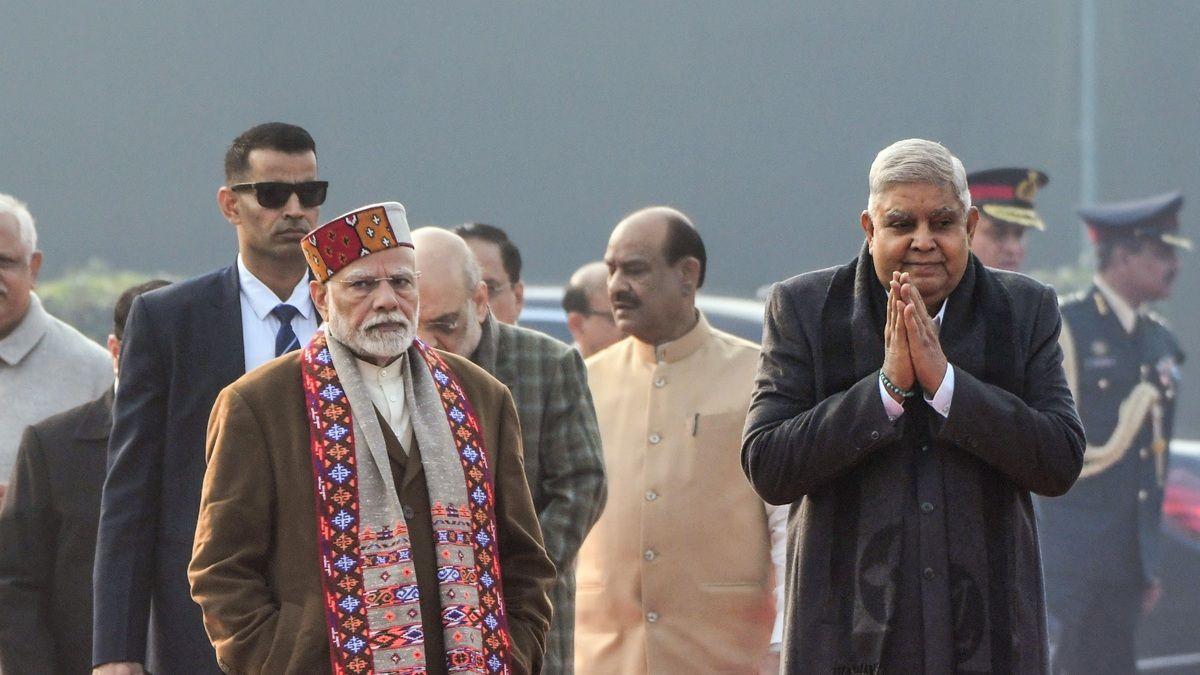
The Constitution of India does not lay down anyone to carry on with the duties of the Vice President in the event of the incumbent resigning. This demonstrates that on a regular basis, the office is rather inconsequential and largely ornamental. That the nation can make do, and get about its business, without a VeePee.
The VP majorly comes into play when under Article 65 of the Constitution, she/he acts as the President in the event of 'any vacancy in the office of the President by reason of his death, resignation or removal, or otherwise'. This arrangement continues till the election of a new President.
The VP also assumes charge of the Presidency 'due to absence, illness or other cause' of the incumbent.
There is only one 'fixed' charge of the Vice President, that as the Chairman of the Rajya Sabha, which too is an ex officio responsibility.
During Parliament sessions, most VPs so far have chaired the Upper House during ceremonial occasions, most important discussions and more often than not, at the start of proceedings every morning.
This job is now being performed by Deputy Chairman Harivansh Narayan Singh who has held this office for several years and is backed by a panel of several Vice-Chairmen to relieve him.
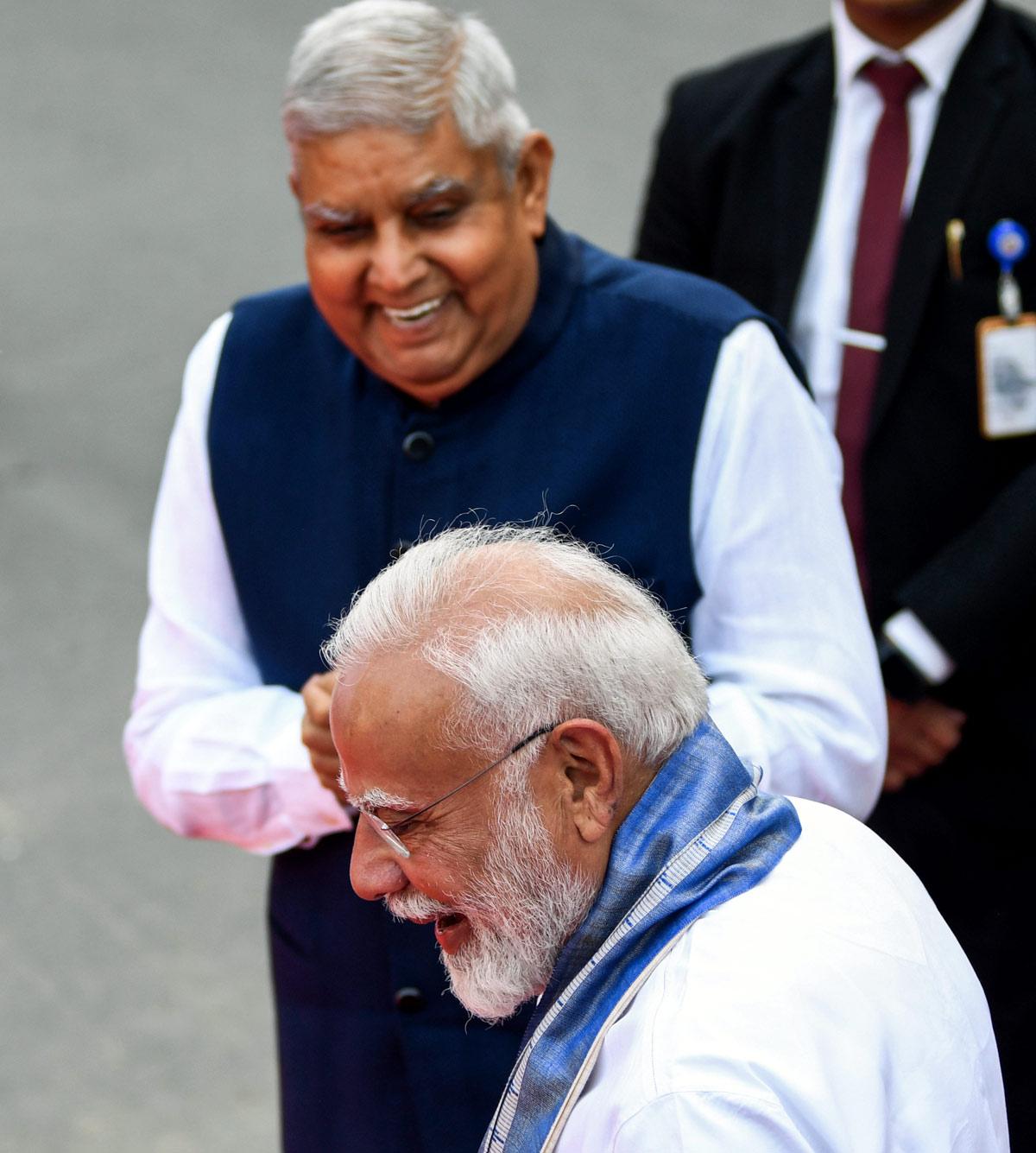
Effectively, no one will miss Jagdeep Dhankhar, insofar as functioning of the Rajya Sabha is concerned and for other matters of the State. The now 'missing' former VP will, however, continue being a principal character of endless formal, informal and off-the-record discussions and conversations, but in absentia.
The truth of what 'happened' to result in Dhankhar's unscheduled visit to Rashtrapati Bhavan on Monday night, meet President Droupadi Murmu and hand over his letter of resignation, and then share it on X at 9.25 pm, shall possibly remain 'unknown' to all barring the two dramatis personae, Prime Minister Narendra Modi and Dhankhar and possibly their closest aides and the latter's family. The intrigue around Dhankar's resignation shall remain because of its suddenness and unstatedness.
But given the sequence of events since the morning of July 21 and various engagements that had been announced for Dhankhar, it is unquestionably certain that the Vice President was asked to put in his papers, and immediately.
Various theories and speculation had been doing the rounds within minutes of the VP calling it a day permanently in the office he held. But more important than adding to these is the task of examining what this episode shows about the dramatis personae.
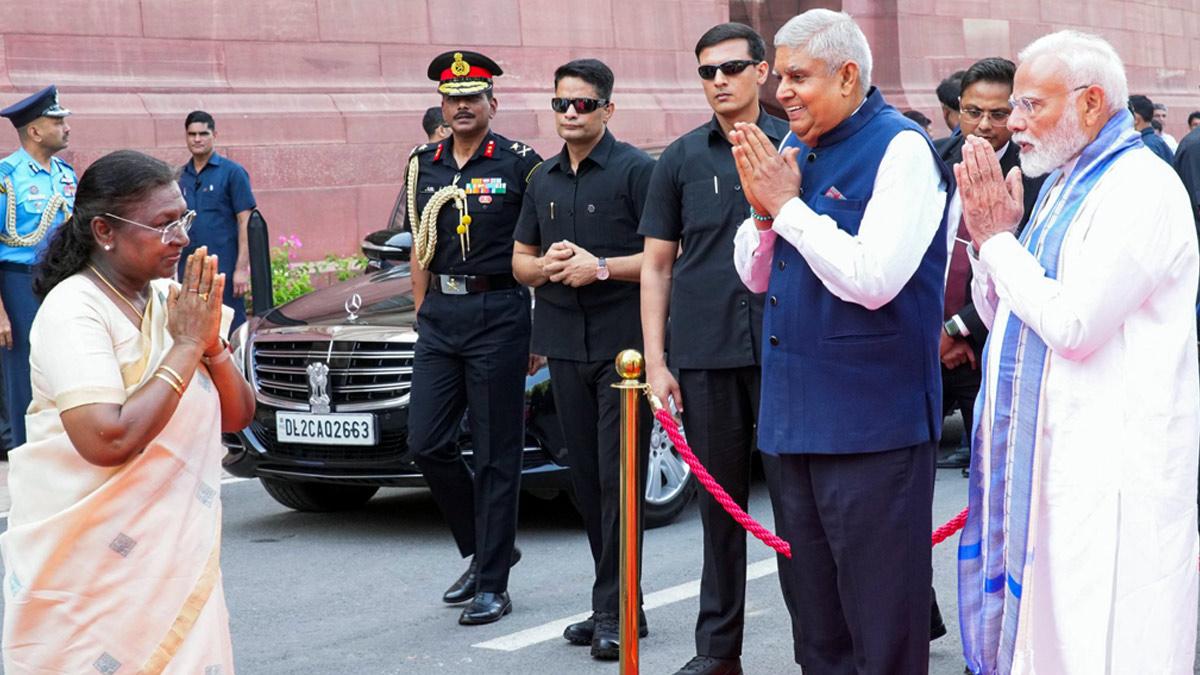
To begin with, the unprecedented sequence of events of Dhankhar's resignation and the fact that he was obviously 'conveyed' Modi's decision to move him out with immediate effect underscores the utter disdain this regime has for Constitutional positions and protocol.
There is no denying that previously too almost every previous government and ruling party, save possibly instances in the 1950s and 1960s, chose politically 'convenient' individuals as Vice Presidents.
But, at all times thereafter, the ruling party and leaders holding various offices in government, especially of the prime minister, remained extremely respectful towards the individual as well as the office.
Despite the awkwardness in personal ties, for instance between Pranab Mukherjee and Sonia Gandhi, in the years when he was President, she remained extremely deferential towards him.
In contrast, Modi was extremely brusque in his public response on X: 'Shri Jagdeep Dhankhar Ji has got many opportunities to serve our country in various capacities, including as the Vice President of India. Wishing him good health.'
Implicit in the coinage 'has got', is the assertion that Dhankhar has been 'given' many jobs as part of Modi's largesse. Moreover, the way the four-word good health wish is phrased makes it clear that there is no medical emergency, on-hand or impending, and that the formal reason cited in the letter to the President, was solely because the 'truth' cannot be made public.
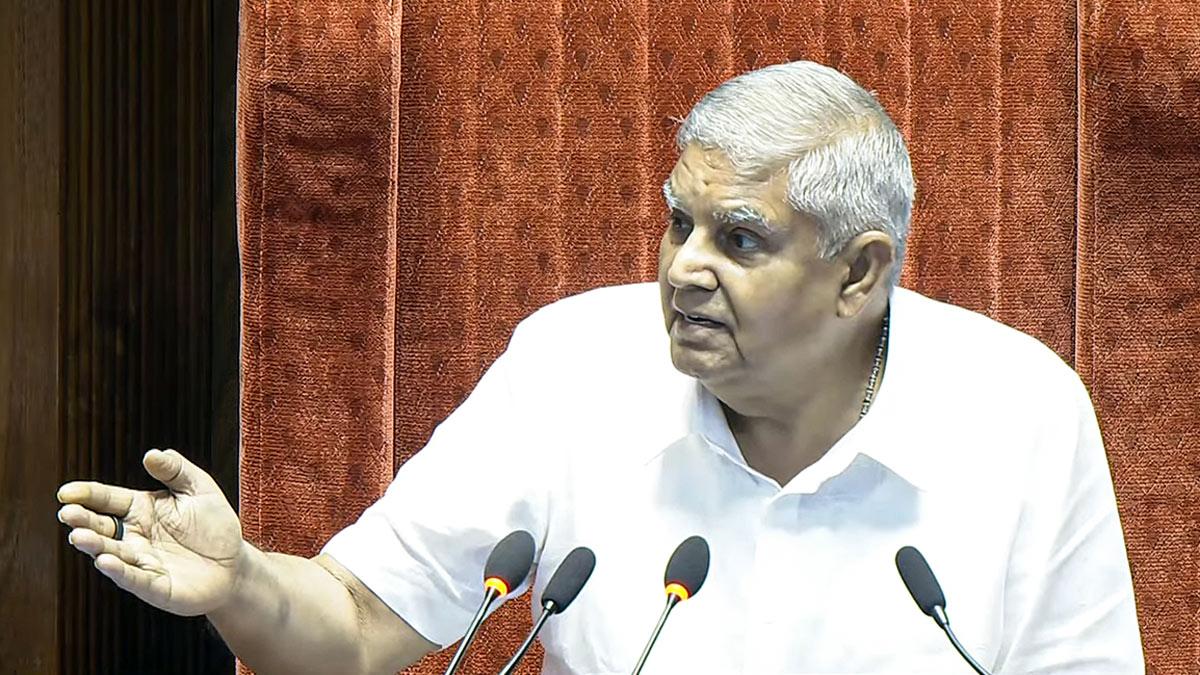
Dhankhar's exit also shows that even after ticking every box in the 'style of functioning' expected after he was given this job, he displeased 'Sahab', the way Modi continues being referred to by most.
The displeasure was not because Dhankhar failed to follow the mandate of keeping the Opposition on a tight leash, but because in the process of doing this, the then VP failed to maintain a low profile and spoke too much, especially on matters which were outside his official 'brief'.
To return to the health 'excuse' Dhankhar provided to the President, the fact of the matter is that it is not his health which took a beating due to the manner in which he conducted the business of the Rajya Sabha.
Rather, it is the well-being of India's Parliament which faced the twin assault -- from the VP in the Upper House, and Om Birla, so 'perfect' was his performance from 2019 that he was given another term last year, in the Lower House.
Dhankhar's exit will not mark an end to trampling parliamentary conventions, traditions and rules. There is no indication that Modi disapproved the roughness with which Dhankhar presided over the House of Elders, seldom acting as a gentle persuader but always the marauding enforcer.
As a consequence, given this regime's track record, we will get more of the same, if not in greater dosage.
The scant regard of this government and the BJP of today for Constitutional processes and institutions are well known. Take, for instance, the Lok Sabha has not had a Deputy Speaker, a Constitutionally mandated office, since May 2019.
The irony is that in his battles with the Judiciary, Dhankhar batted for the Legislature as well as the Executive but eventually got felled by the latter. He went beyond the brief of his office and backed Rashtriya Swayamsevak Sangh General Secretary Dattatreya Hosabale's recent contentious statement about inclusion of the words 'secular' and 'socialist' in the Premable to the Constitution.
That was possibly an instance of over statement for having not been in the Sangh Parivar, he failed to read that there were several matters on which Modi and the RSS were at loggerheads, most importantly on the former's efforts to make permanent the 'functional autonomy' of the BJP from the ideological fountainhead.
Modi's over-centralised style of functioning from the days he was Gujarat chief minister is well known. The so-call Gujarat model has now transmogrified into the India model, which few refer to in name.
By getting Dhankhar to resign at short notice, Modi has sent a message to his own ideological clan that he still brooks no one trying to get too big for their boots.
It is their political shortsightedness that several Opposition leaders, including of the Congress, decided to 'bat' for Dhankhar, in fond hope that this would weaken Modi and fan outrage against the PM.
It would have been prudent to merely articulate their hopes that the government will choose as its candidate a possible 'sure-shot' winner who is not made of the same mould as Dhankhar.
Nilanjan Mukhopadhyay's latest book is The Demolition, The Verdict and The Temple: The Definitive Book on the Ram Mandir Project. He is also the author of Narendra Modi: The Man, The Times. His X handle is @NilanjanUdwin.






 © 2026