

Can change happen? Not unless the changemakers themselves want it since they benefit the most from the status quo, notes Biswajit Dasgupta.
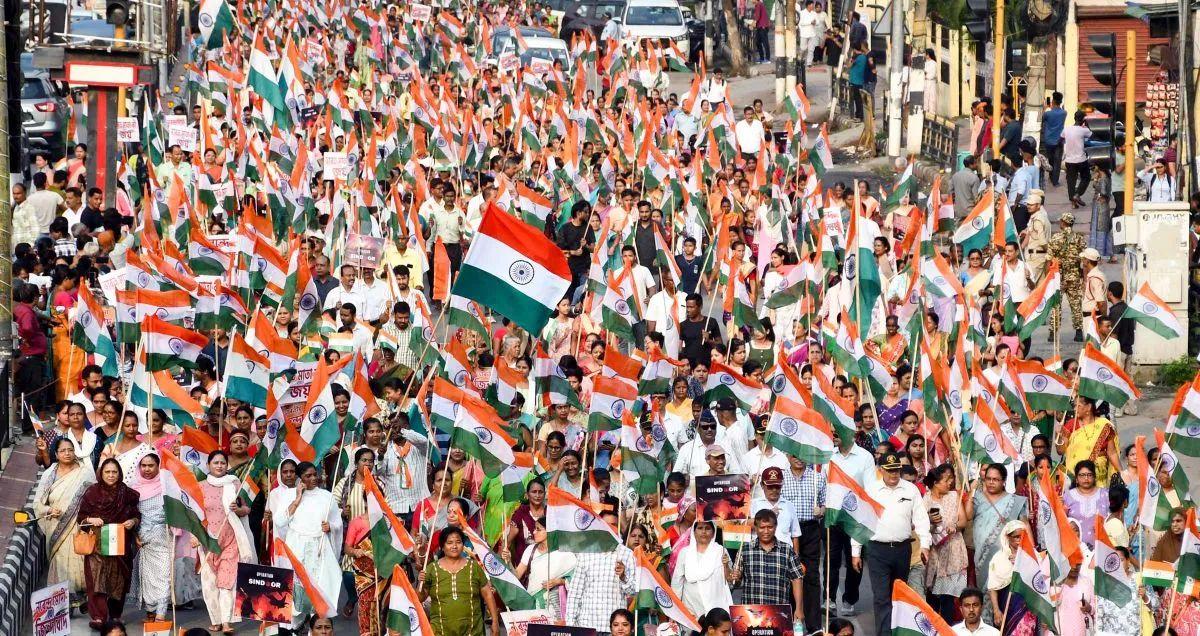
India wishes to realise the demographic dividend from its youthful population profile.
This dividend is not some fruit that can be plucked from trees five or ten years hence.
The tree has to be nurtured with care. There is no dividend unless your stock values rise in the market.
There are several scholarly articles and books written on the subject with colourful graphs, visuals and jargon but all this literature focuses on aspects that will convert the strength of the productive population into a richer economy through skilling, education, healthcare and governance.
To my mind, it tends to leave out issues such good behaviour, a safe and secure society and commitment to human values.
I am no social scientist with post-doctoral research papers on the subject to my name but my observation of society as a citizen tells me that we are fooling ourselves on this dividend story.
It is a psychological scam in which we want to believe. There is no public commitment to making it happen.
Complementary stories such as Viksit Bharat, Swachh Bharat and Atmanirbhar Bharat are also fables that we wish to believe but I would prefer to hear and believe stories like Shant Bharat, Sukhi Bharat, Susheel Bharat, Bhrashtachar Mukt Bharat, Dharm Nirpeksh Bharat in addition to Swachh Bharat -- this swachhata being more in thought and deed rather than on social media.
Far from demographic dividends accruing, I think we run the risk of sliding into demographic decadence if we continue along this path of violence, corruption, filth, religious divide and sectarianism of all hues.
I don't see this getting any better in the foreseeable future because these are the main planks on which the drama of electoral politics is staged.
The latest trends in public crime and misbehaviour do not inspire confidence.
Rapes, killings, political violence, drunken brawls, abuse of senior citizens, religious excesses, attempts to colour everything either green or saffron, rampant unemployment, political patronage, funding of local goons and blatant corruption will undermine public security and safety.
Here are a few observations on which I base my views. I hail from a certain part of India that embodies demographic decadence and I suspect many fellow citizens share these concerns.
First, I see a total arrogance and lack of respect in the youth towards elders.
This has nothing to do with politics or religion -- it is basic upbringing and 'sanskaar' of what used to be the Indian social ethic.
Today, an elder cannot ask young people engaged in drunken revelry in public places to behave themselves.
Roads and roadside shops have become venues of late night drinking hangouts with their attendant sparks of violence and deplorable behaviour.
Elders being roughed up, abused or even stabbed are common occurrences. The police is ineffective.
Second, despite lofty aims and noises made about the National Education Policy (NEP), there is no teaching of ethics in school or college curricula.
I remember studying in convent schools and later at arguably one of the best colleges in the country where we studied 'Moral Science' (it could be called by a more appropriate name) all through school and was even lectured once a week on Ethics in college while studying a Science curriculum.
I remember having seriously attended Civics and Community Living classes in school.
I wonder if these find place in today's syllabi -- computers and AI are more important. Reminds me of a catchy quip that said, 'Before you take on Artificial Intelligence, do something about Natural Stupidity.'
Third, when India gained Independence, the country's population was between 330 million and 340 million. Today, it is upwards of 1.42 billion.
There have been cross border movements ever since I learnt to read newspapers. I have read about fraud passports and citizenship papers available at a price ever since I learnt the meaning of 'fraud'.
I have also been given to understand from my readings that border demographies are changing as a result of illegal immigration into India.
So, why is vehement opposition being staged against initiatives like NRC, CAA and SIR? Don't we want to know who our bonafide citizens are?
Don't we want to know who our bonafide voters are? Or are there other forces at play in this game of demographics? How can fraud immigrants ever contribute to the demographic dividend?
Fourth, our higher education system, at least in my home state, has fallen from grace.
The universities were once the most respected in the country that boasted of the best students and faculty alike.
Today, they are dens of ragging and mismanagement with academic excellence relegated to a byline.
It is entirely possible that other institutions of higher learning across the country have faced a similar fate.
If you add to this the system of non-merit reservations, sometimes the best and brightest students get denied the university or college of their choice.
Those who can afford it, flee abroad -- those who cannot, add to the thousands of youth with unsatisfied ambition and are ready to be channelised into violent political activism and other forms of undesirable conduct.
There are several other observations that expose the yawning gap between national desire and reality. I will leave that for another day.
If the Indian leadership and youth themselves do not realise where this is taking the country, there is little hope of any Viksit Bharat.
Lofty visions of any demographic dividend could easily degenerate into demographic decadence.
Can change happen? Not unless the changemakers themselves want it since they benefit the most from the status quo.
Dream on... Viksit Bharat.
Vice Admiral Biswajit Dasgupta (retd) is a former commander-in-chief of the Indian Navy's Eastern Naval Command.
Feature Presentation: Aslam Hunani/Rediff










 © 2026