Does reservation makes it easy for reserved category students to get admission to institutions like AIIMS and difficult for general category meritorious students?
Dr Kapil Yadav: In AIIMS the difference between the general and reserved category at the time of admission is hardly 1 per cent.
Dr R K Prasad: The media makes it out as if a Dalit with 0% is getting a postgraduate seat and a person in the general category gets the same seat after securing 80 per cent. It is not so. 50% is the passing marks for reserved or upper castes. If you get less than 50% your name will not appear in the list.
Dr Kapil Yadav: We filed a Right to Information that you tell us how many general category students have passed MBBS and what is the pass percentage, and how many reserved category students have passed MBBS and what is their pass percentage -- that would conclusively prove that either you accept that these people are genetically defective, that is why they cannot do it.
But what happens over the five years they spend at AIIMS is that they are treated so badly that there is a marked difference in the pass percentage. It would be 50% to 55% for the reserved category and 90% to 95% for general category students. They undergo so much psychological trauma here, it's something you can only perceive. It cannot be proven.
Dr Rajesh Paswan: My grandfather was uneducated. My father did graduation and became a teacher. I am a lecturer. The college where I teach is 100 years old and I am the first Dalit lecturer.
Reservation in higher education was introduced in 1994. You talk about merit. How does one define merit? Should it be an exact percentage of marks, IQ or something else? Either you say 99% is merit and we fight for it. But when we compete for a percentage, we are weeded out in the interview.
The reserved students have the same facilities/teachers as other students at AIIMS, so what is the need for any special provision at all?
Dr Kapil Yadav: Agreed, you provide the same teacher and I won't refute it. The teacher is the same but his attitude is different towards two students. The atmosphere the student undergoes here is different. These are small things but a person who has to undergo all this has to take a lot of psychological trauma. (The AIIMS authorities recently rejected charges of caste bias at the institution.)
Dr R K Prasad: The whole issue is that the idea of Indian governance in an upper caste system is that they do not share power with the suppressed category. This is the root cause. It is a baggage of history and it is still prevalent.
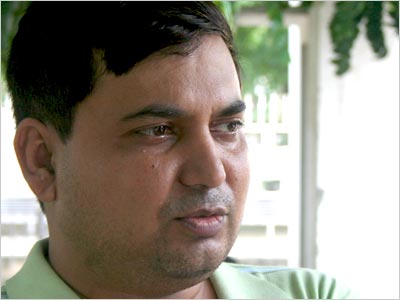
Image: Dr R K Prasad completed his Senior Residency at AIIMS this year.
Also read: The death of meritocracy
 Advertisement