4. P L Sharma, deputy station manager, Mathura, stated that he received no information about the accident. No train driver or cabin staff also reported any such accident on the 23rd morning.
5. Arvind Kumar of the track machine/civil engineering department stated that he was sleeping near the site of the incident. When he was informed by Singh about the body, he asked the gangman to mind his own business. The body lay on the track from 4 am to 9 am and several trains ran over it.
6. The autopsy report by a Dr Agarwal said there were no injuries on the body though several trains ran over the body as it lay from 4 am to 9 am. The doctor himself said accident victims when hit by a train would have their limbs mangled and fractured. But in the case of Major Ravi Shankar, there were no fractures; his body was neatly cut into two at the chest.
7. The post mortem report also said some of his organs were missing.
8. The photograph of the body did not reveal the spot where it was taken.
9. S Vasu also wants the CBI to find out what happened between 7.30 pm on August 22, 2003 -- when Major Ravi Shankar left the house -- till his body was found the next morning. Both the army inquiries were silent on this.
'The search parties from the Army Unit went searching for my son but no one visited the Mathura railway station where the railway authorities say they kept the body on the platform from 9.30 am to 5 pm,' Vasu wrote.
10. Ram Kishore Dubey, who took Major Ravi Shankar's body from the track to the mortuary, had stated in the inquiry that dead bodies were cremated only after waiting for 72 hours. What was the reason behind the haste in cremating Major Ravi Shankar's body?
The father wants the CBI to find answers to his questions.
"I am a mere David fighting against the mighty Goliath. I am 76 years old. I get all my strength from god, god and god alone," he says.
"I know the truth will triumph one day. Otherwise, how would I have got all these documents through RTI? Imagine knowing the fact that your son's body was cut into two, unceremoniously bundled into a cloth, carried in a cycle rickshaw to the hospital where a post-mortem was done. Again it was bundled up and taken by the rickshawwallah to the crematorium to be burnt. No rituals, no ceremony.
"My son was cremated unsung, unwept," the distraught father continues, as the mother, 67, listens on, silent.
"Like a destitute, like a beggar, my son's body was burnt. I don't think I have committed such a heinous sin in my life to deserve this."
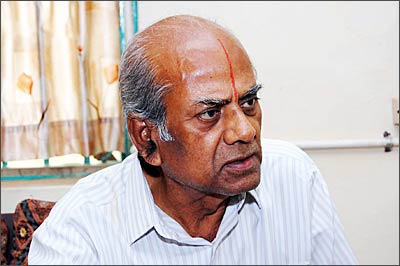
Image: The parents say they have nothing else to live for, but unearthing the truth
Also see: The soldier who became a legend
 Advertisement