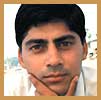
Name: Gaurav Sawant
Designation: Special Correspondent
Organisation: The Indian Express
"My most vivid memory is of blood mingling with the tears that ran down the cheeks of injured soldiers. Out of sheer exhaustion, soldiers lay on the freezing ground close to the bodies of their dead comrades.
"In the nine weeks I spent in Kargil, there are several incidents that will stay with me forever. There was this time when I accompanied some soldiers in the Drass sector. We drove for more than two hours at 12,500 feet with no lights.
"Then we began climbing. The shelling intensified. The soldier in front of me was hit. That was the time I almost vomited out of fear. It was scary as hell, but the soldiers trudged on. They had a job to do."
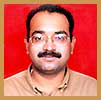 Name: Shashi Kumar
Age: 28
Designation: Correspondent
Organisation: Currently with World Report. He covered the conflict for The Week
"I saw so many officers and soldiers crying before they left for war. They would be wearing their shoes, tying their belts and the tears would be flowing freely.
"The proposed assault on Tiger Hill was leaked out. It was the first assault that we could actually see. A lot of people had gathered to watch it -- a lot of soldiers, a lot of officers and also media persons. Of them, four people died in Pakistani shelling that night.
"One was a young guy, must have just passed out from the military academy. He was the first to reach Point 5140. He had come to phone his mother. A little later a shell landed near the booth and he died.
"What stands out about the coverage of the conflict was what the media did not do. Not enough was written of people who were actually fighting."
Name: Rajesh Ramachandran
Age: 29
Designation: Principal Correspondent
Organisation: The Hindustan Times
"I remember the night I got injured in Drass, the night Tiger Hill was captured. The artillery firing had just begun from our side. Then an officer told us, 'The Diwali will start now from the other side, so you better move.' But we still lingered.
"Then five-six rockets landed. All of us panicked and ran to the brigade headquarters. Some went into a bunker. I thought it was too congested, so three of us sheltered outside. A shell landed in front of us, and I got hit by a splinter.
"That is a commentary on how much we knew about ground realities, how badly we were equipped. Only the foreign news agencies had provided their journalists with bulletproof jackets.
"I lay in the bunker till it stopped shelling. Then I was taken to the doctor. He was trying to revive a soldier who had a huge hole in his chest.
"I was still conscious. I was not just an onlooker then. I was part of it. I was also injured and waiting to be treated and there was this boy whom the doctors were trying to save. He died. He died in front of me. That's the image that comes to my mind. It could have been me."
 Name: Pamela Constable
Age: 48
Designation: Bureau Chief
Organisation: The Washington Post
"The most difficult part was getting accurate information. Journalists were not allowed to go to the war area. The other thing I faced was trying to cover the conflict from both sides. Travelling from one place to the other was a problem.
"The issue of national pride was present. Both the Indian and Pakistani media were biased in their coverage. One, because they could not travel from one war zone to the other and, two, because there was that influence of national pride. The coverage had a patriotic influence."
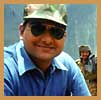
Name: Sudhir Choudary
Age: 29
Designation: Correspondent
Organisation: Zee Television
"It was an experience none of us will ever forget. We would meet an officer or jawan one day. The next morning he would be no more.
"I met Captain Vikram Batra in Drass. He was very happy because he had recaptured a particular peak. He told me all about the fight he led. The next day I was told he was dead! That was when I realised that death was so near.
"I won't say the Indian reporting was biased. It could have been biased had it been a 50-50 fight. But it was one-sided from day one. There was no restriction from the Indian government or the army. The only request we got was not to shoot strategic locations."
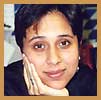 Name: Barkha Dutt
Age: 28
Designation: Special Correspondent
Organisation: New Delhi Television
"Operation Vijay was the first war I covered. I hope it will be the last. The assault on Tiger Hill is one thing I can never forget. It was the only place that was accessible to journalists. That was the time I saw actual fighting.
"The toughest part was how to send our stories. No infrastructure was available. Our tapes used to take 48 hours to reach Delhi.
"Then the army started giving information only after the war when they realised that the media was of help to them. Whatever reports we had were from the young officers, jawans and local people.
"The feeling of nationalism was there. The way everybody was reacting was more emotional. But I don't think the Indian media was biased in its coverage; we would have been biased only if we were less critical of the government."
 Name: Mike Wooldridge
Age: 52
Designation: South Asia Correspondent
Organisation: British Broadcasting Corporation
"Being close enough to the conflict but not being able to report firsthand on what was happening on the mountains above us was very frustrating. That is not unique in conflict, of course, and we face a similar difficulty reporting the fighting in the Jaffna Peninsula in Sri Lanka now.
"Once we stopped in a small village just off the road between Kargil and Batalik. While we were there several shells landed nearby. We tried to take cover. But I did not see anyone in the village -- adult or child -- flinching. We have lived with this for a long time, they told us.
"I think the coverage was as good as it could be, given the access to the areas of fighting. Yes, there was jingoism that crept into some of the reporting in India. But there was other coverage and analysis that counterbalanced that."