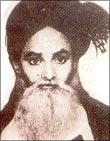
 Hazrat Moulana Deendar Channabasaveshwara Siddiqui, the founder of the Deendar Anjuman, was born in a rich family at Gurmitkal in the Gulbarga district of Karnataka in 1886.
He became a wellknown ophthalmic surgeon. The villagers considered him a sage. He travelled a lot, wrote religious books and preached philosophy and theology.
Siddiqui travelled to many areas of Pakistan, which was then part of undivided India. He became, curiously, an expert on Asian military strategies, and wrote a book on the science of winning a war.
It was during an eye camp in 1924 in Gadag near Hubli, Karnataka, that his followers claim Siddique received a divine vision. According to Anjuman's religious books, a divine voice told him he was the reincarnation of Channabasaveshwara, a 12th century Veerashaiva.
Channabasaveshwara was the nephew of Basaveshwara, the founder of Veerashaivism. Basaveshwara had created Veerashaivism by breaking the Hindu caste structure. The divine voice is said to have urged Siddiqui to establish a Muslim religious order by imbibing the spirit of Hinduism.
Siddiqui began his religious mission by codifying Veerashaivism. He quit his medical practice and proclaimed that he was a saint and the reincarnation of Channabasaveshwara. He called himself Hazrat Deendar Channabasaveshwara Siddiqui. His religion was named Moballige. But the sect began to be known as the Deendar Anjuman, meaning the followers of the path of dharma.
Initially, he converted some 700 Hindus to the Sufi sect, which Siddique claimed was the ultimate culmination of Hinduism.
Orthodox Muslims protested against Siddiqui's liberal teachings, which they said amounted to the negation of everything that Islam stood for. But local people, who believed that Siddiqui was a saint, converted to the sect despite threats from traditional Muslims and Hindus.
Siddiqui travelled to most villages in Karnataka and Andhra Pradesh propagating his religion. He married four times. As Siddiqui emerged an important religious leader, Osman Ali Khan, the last Nizam of Hyderabad, invited him to the city. The Nizam accepted Siddiqui as a spiritual leader of great standing and donated five acres of land to him.
Some history books say though Siddiqui preached amity, tolerance and the oneness of religions before his death, at one point of time he tried to form an army to capture Hampi and recover its lost treasures.
After the Nizam began disliking Siddiqui, he imposed restrictions on his movements from Hyderabad. Siddiqui's son Syed Ziaulla, by his fourth wife Zainabee Sahiba, migrated to Pakistan. He is today the spiritual head of the Deendar Anjuman.