



|
|
|
|
|
| HOME | NEWS | REPORT | |||
|
February 4, 1999
ASSEMBLY POLL '98
|
Sex and drugs play havoc with Banglore's street children
M D Riti in Bangalore
Anjali belonged to the ever-growing tribe of street children in Bangalore, and had learned long ago that the only currency she could trade with was sex. Her escort was a pushcart vendor who worked her street and her price was a plate of biriyani at a roadside canteen followed by the latest Shivaraj Kumar movie in town. On February 1, the Forum for Street Children, a non-governmental organisation, began a one-year research into the sexual behaviour of street children in Bangalore and the risks involved. This is the sequel to a pilot study undertaken by the Forum which indicated the existence of several new and alarming trends on the streets of Bangalore that could endanger the lives of these children, and also lead to the unmonitored spread of AIDS. The Forum is a common platform for 12 organisations directly working with street children, including BOSCO, REDS, CWC, Mythri, KSCCW and Navajeevana. As the preliminary study was only a pilot, it was necessarily small, and the statistics and findings it arrived at can be only be considered as indicators of trends. However, these pointers themselves were eye-openers.
The Forum estimates that there are at least 80,000 street children in Bangalore today. About 60 migrate into the city through the main bus station alone every day. BOSCO has set up a booth at the city central railway station to spot and rescue new arrivals, and have enlisted the support of the railway police in this endeavour. The typical profile of children who come out on to the street in Bangalore is like this. They usually hit the streets alone at about the age of 9 or 10 years, driven out of their homes by alcoholic or abusive parents, poverty or after committing a minor need-driven offence like petty theft. The profession that almost all of them drift into is rag-picking.
The 10-year-old boys usually get into all-male groups of boys of the same age, who hang out together. They soon witness the mating rituals of older street dwellers. The young boys themselves have already begun to think and work like adults, supporting and defending themselves. The sexual urge follows naturally enough. They often begin with exploratory sex with each other, graduate to comfort sex as a means of relief from the extreme stress of daily living and might end up bartering sex for protection with older street boys. The street word for a homosexual encounter is 'back engine.' Sometimes, these children also fall victim to paedophiles who systematically abuse minors, causing them to have anal and vaginal ruptures. These early homosexual encounters seldom seem to make these boys gay. By the time they turn 14 or 15 years of age, they are eager to attempt heterosexual encounters. Their obvious choice is any of the girls who live on the streets like them. Interestingly, the boys often fall in love with at least one or two of the girls that they first encounter, but are usually rebuffed as the girls have never been given an opportunity to know that sex can be linked to romance or love. This sometimes causes emotional scarring in the boys, and they too develop a cynical attitude towards sex, often getting into petty pimping or even selling sex themselves. Obviously, these children lose whatever little childhood they ever experienced as soon as they hit the streets. But quite apart from this sad fact, activists working with children are worried about the high-risk potential of this behaviour. BOSCO, for example, reports at least one death last year, caused ostensibly by tuberculosis, that they firmly believe was really caused by AIDS.
"We can only find these cases by pure chance because only parents or guardians can have children tested for AIDS," says Brother Mani Karott of BOSCO, co-ordinator of the Forum's drug abuse prevention programme. Tragically, it is the young, fresh and clean-looking girls who attract the maximum attention who are often afflicted with the worst sexually transmitted diseases. These children usually go to semi-skilled health workers for treatment, and are often fobbed off with Pencillin shots or anti-fungal ointments which are scarcely effective, given the magnitude of their problems. By the time they approach qualified doctors, their bodies are too ravaged by disease to be fully salvaged. The girls seldom care, by then, as they have developed the typical street attitude of living well for the day and letting tomorrow take care of itself. Sometimes, they turn vengeful, and say, "Since I am ill today because someone infected me, let me spread my disease around to as many others as possible in turn." This attitude, while being perfectly understandable given the depressing lives led by these children, could be alarmingly lethal in the face of the AIDS threat. The most disturbing drug trend revealed by the Forum study was the use of common stationery products like the correcting fluid Erazex as inhalants. A bottle of Erazex costs Rs 18 and can be bought across the counter freely. The typical pattern of use was for groups of five or six boys to buy a bottle of whitener and thinner together, empty them onto a piece of cloth and inhale the contents. Such groups were buying bottles about four or five times a day. "They eat sketchily, go out on a rag-picking trip, sell their collection, buy Erazex with the proceeds, sniff and then go off to sleep," says Karott. "When they wake up, they repeat the cycle." Petrol ranked second on the list of frequently used inhalants, followed by adhesives, paints and thinners. A peculiar feature of the solution use was that the children frequently slashed themselves with knives and blades, or mutilated themselves by other means, while under the influence. The children interviewed attributed this to feelings of sorrow caused by the drugs, as well as similarly caused self-anger. Alcohol and inhalant drug use was found to be very high amongst the girls, while the chewing of tobacco and betel nut was almost universal amongst them. "I used to chew betel leaves and tobacco when I was working on the streets," says Meena, who was 'rescued' by Navajeevana. "Then I went on to drugs and pan." This seems to be the usual pattern. The study discovered that children begin chewing and smoking tobacco at the age of 10 years, graduate to inhalants by the age of 11 to 12 years and start using cannabis by 13 years. A few months later, they are into alcohol use and opioids. The children seem to use drugs for three main reasons: to stave off hunger, make their work of rummaging in filthy garbage less repugnant and increase their threshold of pain. The latter is a must as these children are frequently the victims of merciless police beating for sleeping on the streets. Besides, it helps them cope with the frequent sexual assaults when they are new to the street. According to the study, children spend over Rs 18 a day on drugs, while those who use solutions spend over Rs 23 a day on it. About half the children assessed in the pilot study reported to being sexually active. Almost all of them said they were intoxicated when they had sex, and never used barrier contraception, despite knowledge of condom use and the potential for HIV and other infections. Intoxication, they reported, made them both careless and daring. The Forum organised a long intervention programme in which they took street children with alcohol and drug addictions to camps and workshops, showed them alternate means to relieve their stress and also motivated them to find better means of livelihood. The high success rate was the catalyst that encouraged them to attempt this year-long study, at the end of which they propose to have a much longer and better organised intervention programme. Given that all the NGOs involved have been working hands-on with these children for many years, their chances of success are high.
|
|
HOME |
NEWS |
BUSINESS |
SPORTS |
MOVIES |
CHAT |
INFOTECH |
TRAVEL SHOPPING HOME | BOOK SHOP | MUSIC SHOP | HOTEL RESERVATIONS EDUCATION | PERSONAL HOMEPAGES | FREE EMAIL | FEEDBACK |
|
 The unkempt, middle-aged man leading the scruffy teenage girl into the
dark cinema hall looked old enough to be her father. But the knowing gaze that the girl turned on him made it obvious to the close observer that their relationship was quite different.
The unkempt, middle-aged man leading the scruffy teenage girl into the
dark cinema hall looked old enough to be her father. But the knowing gaze that the girl turned on him made it obvious to the close observer that their relationship was quite different.
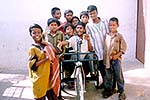 Almost 60 per cent of the children surveyed, for example, said they had had multiple sexual contacts. They spent all their meagre earnings on recreation first and food next. Field workers from Mythri narrate the story of Muruga from J C Road, who earns about Rs 50 to Rs 100 a day, and spends more than half of this sum on smoking, drugs, alcohol and girls. Another quarter goes into buying cinema tickets. The last quarter only remains for food.
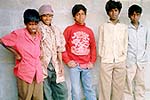 The girls discover immediately that their sole asset out here is sex. Many of them have already been initiated into it by an adult before they left home. They quickly learn to barter sex for
protection, food, shelter, spending money and entertainment. A couple of years later, they develop into full-fledged commercial sex workers, often using their male friends to pimp for them in exchange for a percentage of the take, or again for more sex.
The girls discover immediately that their sole asset out here is sex. Many of them have already been initiated into it by an adult before they left home. They quickly learn to barter sex for
protection, food, shelter, spending money and entertainment. A couple of years later, they develop into full-fledged commercial sex workers, often using their male friends to pimp for them in exchange for a percentage of the take, or again for more sex.
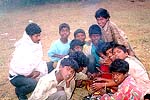 The victim, Siddalinga, 17, was a street dweller, an alleged pimp and a rowdy. The Forum knows of at least five more children, in the age group of 14 to 20 years, all of whom are HIV positive and are still out on the streets. These cases were discovered quite by chance when the children (three female, two male) came for treatment of other ailments.