


|
|
|
|
|
| HOME | NEWS | REPORT | |||
|
September 8, 1998
ELECTIONS '98
|

Tale of unwed mothers spurs Kerala women against faithless menD Jose in ThiruvananthapuramJanu died at 35. As an unwed mother. And a streetwalker.
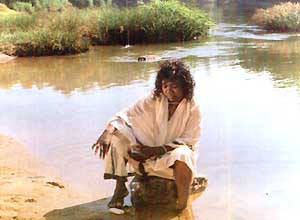
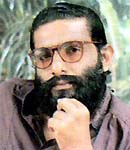
Anyway, Janu died a pitiful death. Little knowing that she may, in her death, achieve what she had not been able to in life: Justice. For herself. Her two children. And the hundreds like her. Janu's tale has now been made into an award-winning documentary. Which, in turn, has focussed attention on the plight of unwed mothers in this South Indian state. The 35-year-old tribal, who gave birth to two children while working as a housemaid and died on the streets of Tirunelli a couple of months ago, is the torch-bearer for the documentary, made by O K Johny about the horrendous tales of unwed mothers and their hapless children in Wyanad, a North Kerala district. The Kerala State Women's Commission, headed by Malayalam poet and environmentalist Sugathakumari, was stirred into action by the documentary film, which won both the state and national awards in 1997. The Commission found the DNA test facility set up by the Rajiv Gandhi Institute of Technology at Thiruvananthapuram as the best scientific and legal tool to bring the men responsible for impregnating women to accept her and their children. The documentary maker, however, does not think the much discussed DNA facility would provide any succour to the hundreds of unwed mothers. He said that establishing paternity through DNA has no meaning, as several men identified by the wronged women have refused to look after them even after accepting the responsibility.
"If the Commission had ensured a safe living for the woman, Janu would not have died at 35," he added. The campaign for the rehabilitation of victims of sexual atrocity should start soon after a woman is wronged. Janu had turned to an anti-social life after she was thrown out by the landlord and her own family. The rehabilitation of such women involves financial commitment. Johny said the sum of Rs 50,000, sanctioned to the Commission by the Government of India is not even sufficient to meet the cost of conducting paternity test on 20 victims. The Commission itself has identified 400 women in the state. The actual number is much high. Of 103 cases investigated, the Commission has taken up only five cases for DNA tests. Resolving these cases involves further expenditure on legal counts, for which the Commission has no mandate. Commission director Alexandar Jacob admitted the financial difficulties while talking to this correspondent. However, he said that the state government has given an assurance to provide enough funds if the Commission's efforts to join unwed mothers and their children with the men responsible are successful. Several men had come forward to accept their children after the Commission sought complaints from unwed mothers. Three of five men to whom summons were issued by the Commission owned responsibility before undergoing the test. Jacob was hopeful that more men would come forward in due course. However, social activists working in tribal areas in Wyanad are not hopeful of such voluntary acceptance. Reason: most of the men involved in the cases are influential government officials. Jose Sebastian, the head of a World Health Organisation project in the district, said that several unwed mothers, who recognised the men responsible for their malady, have refused to notify their names under duress. He said the culprits have been resorting to bribery and threats to prevent the women from disclosing their names. The phenomenon of unwed motherhood is rampant in Kerala's tribal areas. The men involved in such cases are mostly officials in charge of tribal welfare. The isolated life the tribals lead has been largely responsible for such exploitation. The officials find easy victims among young tribal women, who go to forests for firewood and fruits.
|
|
HOME |
NEWS |
BUSINESS |
SPORTS |
MOVIES |
CHAT |
INFOTECH
SHOPPING & RESERVATIONS | TRAVEL | LIFE/STYLE | FREEDOM | FEEDBACK |
|
 A common phenomenon, you may say, a little too common in Kerala's Wyanad district. Where unwed mothers and their hapless children elicit no raised eyebrows -- not many, at least.