
The song that best encapsulates Geeta Dutt's unfairly abbreviated life would probably be: Yaad Karoge, Yaad Karoge, Ek Din Humko Yaad Karoge.
On her 95th birth anniversary on November 23, Dinesh Raheja pieces together the life of this talented singer.
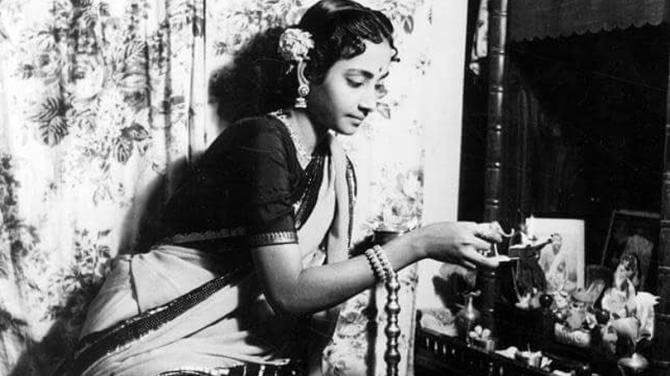
The inordinately gifted Geeta Dutt was only 41 when she passed away.
The playback singer died young, just like her renowned actor-filmmaker husband Guru Dutt.
But again, just like in his case, her luminous body of work ensures that her fame transcends mere mortality.
Forty-three years after her death, a long refrain from her classic Aar Paar (1954) song Jaa Jaa Jaa Bewafaa was played in Tanu Weds Manu Returns (2015). It perfectly mirrored leading lady Kangana Ranaut's anguish, and one could not help but marvel at the raw emotional power of Geeta Dutt's voice.
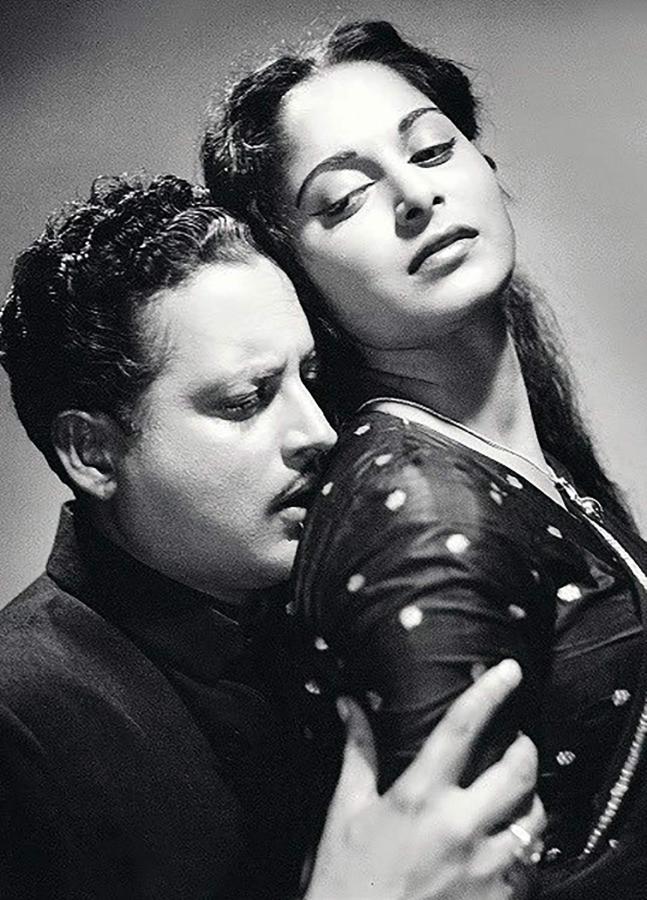
Legendary composer O P Nayyar once described her expressive voice as 'kudrat ka karishma'.
Indeed.
Whether it was the pain of pining (Waqt Ne Kiya Kya Haseen Sitam from Kagaz Ke Phool, Naa Jao Saiyaan Chhudake Baiyaan from Sahib Bibi Aur Ghulam) or the intoxicating joy of being young and alive (Aye Dil Mujhe Bata De from Bhai Bhai, Tadbeer Se Bigdi Hui Taqdeer Bana De from Baazi), Geeta conveyed with emotional transparency every shade of sentiment in her passionate voice.
Her rich repertoire establishes that it is emotive skills rather than technical excellence that makes for an extraordinary singer.
Geeta Dutt etched out this verity throughout her scintillating career.
The singer had only a rudimentary training in classical music but starting at the age of 16, she scaled peaks of creativity.
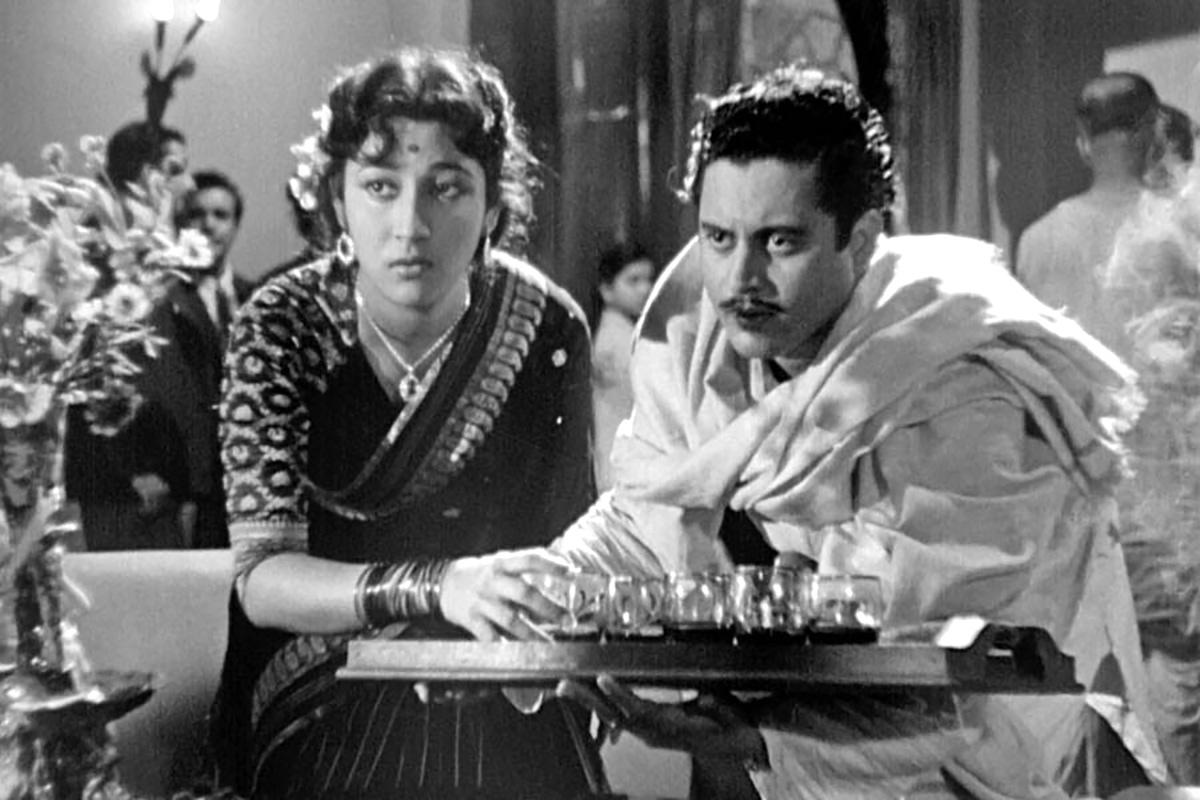
Her neighbour, composer Hanuman Prasad, offered the teenaged Geeta Roy a chance to sing in Bhakt Prahlad (1946). Her renditions made news and the middle-class girl was flooded with work, singing for half-a-dozen more films in her debut year itself.
The film that established Geeta as a singer of note came her way the very next year with Do Bhai (1947).
Two songs -- Mera Sunder Sapna Beet Gaya and Yaad Karoge, Ek Din Humko Yaad Karoge -- were career-making hits for both, leading lady Kamini Kaushal and Geeta.
What is remarkable is that Geeta imbued genuine emotion into both these epic heartbreak anthems though she was only 17 at that time!
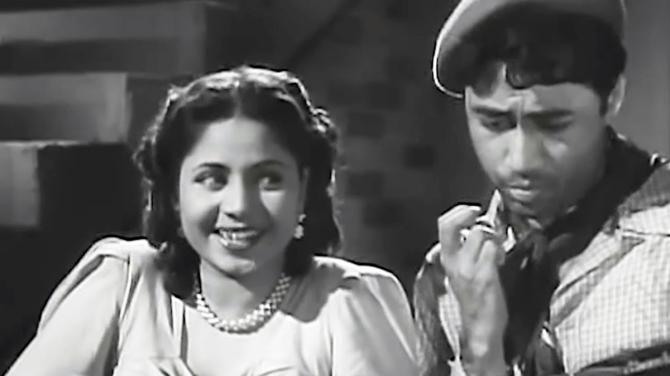
These hit songs also spelt the auspicious beginning of Geeta's long association with music director S D Burman.
Soon, she was also singing with almost all the leading film composers of the day, Anil Biswas, C Ramachandra, Sajjad Hussain and Husnlal Bhagatram.
The Lata Mangeshkar tsunami struck Hindi film music in the late 1940s, but Geeta sailed through it, scoring a major triumph with the Nargis-Dilip Kumar starrer Jogan in 1950.
Music composer Bulo C Rani assigned as many as 12 songs to Geeta Dutt and she helped immortalise several sublime bhajans such as Ghunghat Ke Pat Khol, Main Toh Girdhar Ke Ghar Jaoon and Mat Jaa, Jogi.
Baazi (1951) proved to be a turning point for Geeta Dutt, both professionally and personally.
S D Burman made Geeta sing for both the heroines, Geeta Bali and Kalpana Karthik, and the singer proved conclusively that she could also dazzle with fast-paced, frothy numbers like Tadbeer Se Bigadi Hui Taqdeer Bana De and Suno Gazar Kya Gaaye.
Geeta followed these up with other light-on-the-feet dance numbers throughout the 1950s, making her the queen of the light brigade till Asha Bhosle took over.
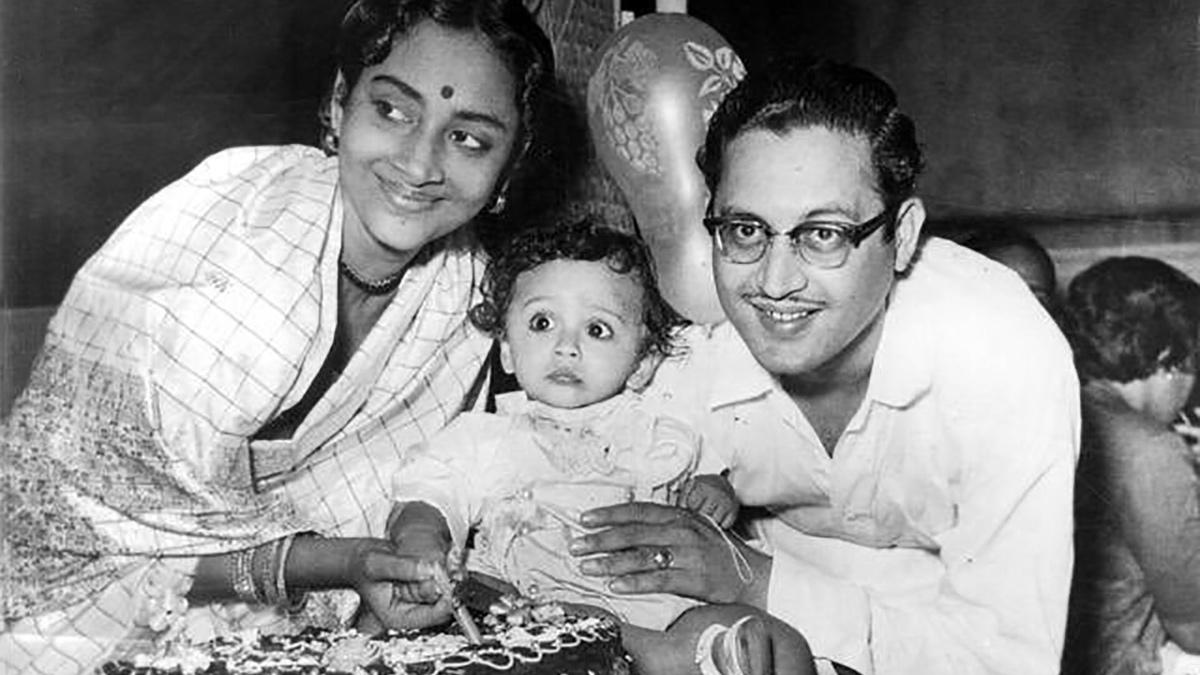
It was during Baazi that Geeta was also introduced to its debutant director Guru Dutt.
They fell in love.
He had yet to establish himself, while she was already a successfully playback artiste.
He ardently wooed her with letters and they got engaged.
Baazi was a big hit, and two years later, they got married in 1953.
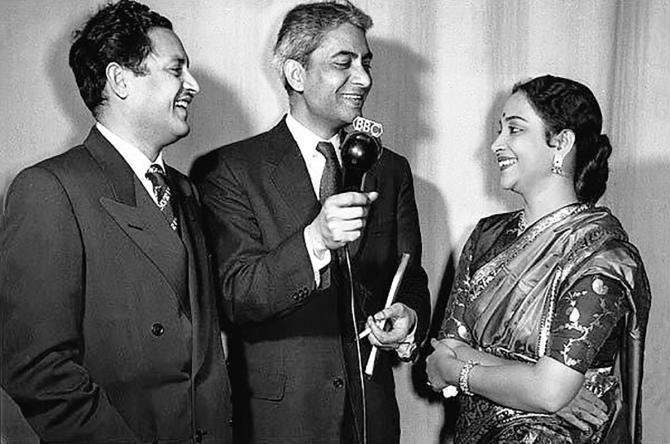
It was Geeta who introduced Guru Dutt to struggling composer O P Nayyar (for whom she had sung Dekho Jadoo Bhare More Nain in Aasman).
The result, Aar Paar (1954), was a smashing success.
Geeta sang the jaunty Yeh Lo Main Haari and Sun Sun Zaalima for heroine Shyama; and for the vamp Shakila she crooned the come-hither chartbuster Babuji Dheere Chalna besides Hoon Abhi Main Jawan which outblazes all other torch songs.
The Guru-Geeta-Nayyar team quickly followed it up with more winners in the comedy Mr And Mrs 55 (Thandi Hawa Kaali Ghata, Jaane Kahan Mera Jigar Gaya) and the thriller CID (Yeh Hai Bombay Meri Jaan topped the Binaca Geetmala for 1956).
Guru Dutt pivoted to a total change of pace with his next, the sombre classic Pyaasa (1957).
S D Burman conjured up a varied showcase for Geeta's vocals in the romantic Hum Aapki Ankhon Mein, the seductive Jaane Kya Tune Kahi and finally in Aaj Sajan Mohe Ang Laga Lo, a tour de force creation of yearning at a higher plane.
This esoteric ambition was also evidenced in the Kagaz Ke Phool (1959) nugget Waqt Ne Kiya Kya Haseen Sitam perfectly articulated by Geeta's pain-lashed vocals.
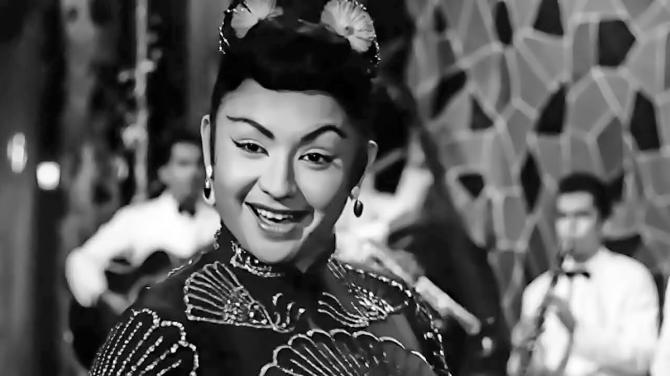
It was the best of times for Geeta, yet it was also the worst of times.
Professionally, despite these eternal songs, she was fast losing ground.
She was now the mother of two boys, Arun and Tarun, and her husband wanted her to prioritise her home over her career.
Moreover, even Nayyar and Burman had switched loyalties.
In Howrah Bridge (1958), Nayyar had Asha Bhosle sing for Madhubala while Geeta got Helen's Mera Naam Chin Chin Choo.
In Sujata (1959), S D Burman made Asha Bhosle sing for Nutan while Geeta was allotted songs filmed on the mother Sulochana (the lullaby Nanhi Kali Sone Chali) and sister Sashikala (Bachpan Ke Din).
Worse, Geeta had made the ill-starred decision to finance her brother Mukul Roy's production, Sailab (1956). When the film bombed, Geeta had to declare bankruptcy. For years, her earnings were culled to pay the debts.
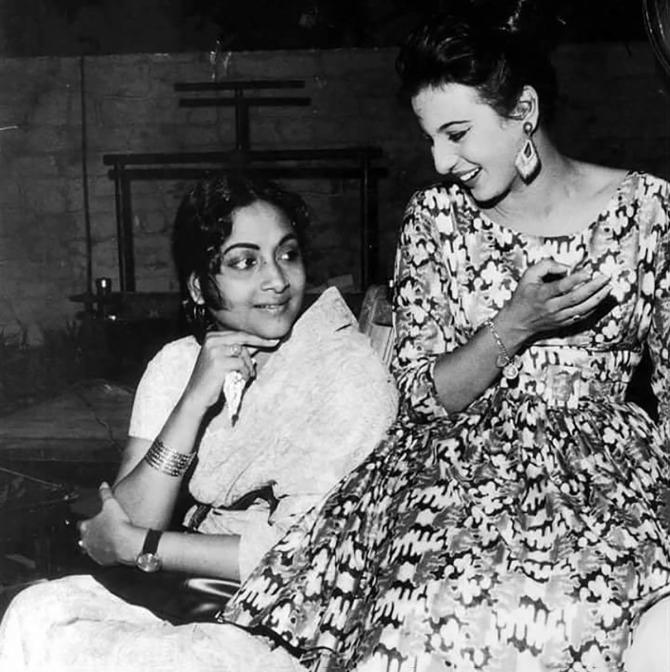
Personally too, Guru Dutt's long-term association with his leading lady Waheeda Rehman was taking a toll.
Geeta had sung for both Mala Sinha and Waheeda in Pyaasa. But for Sahib Biwi Aur Ghulam (1962), she pointedly sang only for Meena Kumari.
But the soul-deep quality of forlorn despair that she brought to the film's numbers, Koi Door Se Awaaz De and Naa Jao Saiyaan Chhudake Baiyaan, were peak Geeta.
The latter was her favourite song; she would sing it at every stage show.
Geeta did her best work in Guru Dutt's films.
Soon after the Dutts became parents to daughter Nina, Geeta finally separated from her husband circa 1963.
However, the bond remained strong. So much so that when Guru Dutt died from a suspected suicide in 1964, Geeta had a nervous breakdown.
She couldn't recognise her own children for some time.
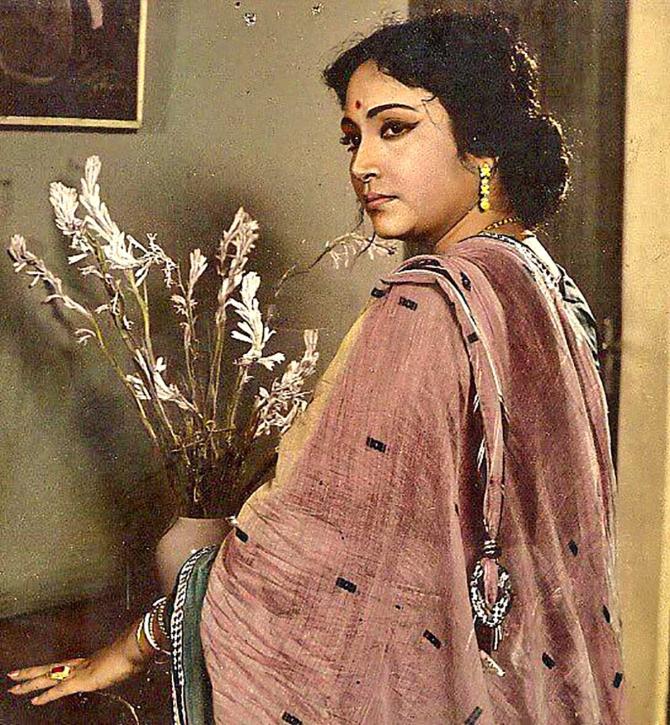
The fun-loving singer, who made friends easily (even among fellow singers like Meena Kapoor and Shamshad Begum), was a shadow of her former self.
But her voice remained in fine fettle (check out Aaj Ki Kaali Ghata from Uski Kahani, 1966).
Yet, almost inexplicably, very little work was tricking in.
Determined to pull together for her children, the pretty singer made a tepid acting debut in the Bengali film Bodhu Boron (1967) alongside Pradeep Kumar and fellow debutante Rakhee.
It was Guru Dutt who had originally wanted to launch his wife's acting career in the 1950s and had even started a film, Gauri, only to abandon the idea.
What Geeta really desired was to make a comeback as a singer. And it seemed possible after Kanu Roy crafted three stunning solos for her in the acclaimed Sanjeev Kumar-Tanuja film, Anubhav (1972).
Each Gulzar-penned song is a burnished gem: Mujhe Jaan Na Kaho Meri Jaan, Mera Dil Jo Mera Hota and Koi Chupke Se Aake.
Unfortunately, before there could be a career upswing, death claimed Geeta Dutt that same year.
The song that best encapsulates Geeta's unfairly abbreviated life would probably be: Yaad Karoge, Yaad Karoge, Ek Din Humko Yaad Karoge.
Photographs curated by Satish Bodas/Rediff








 © 2025