
S D Burman is that unique composer who remained successful right up to his death with his creative engines never running on empty.
Sachin Dev Burman created much magic with his scores for Bimal Roy Guru Dutt and Dev Anand's films.
Dinesh Raheja marks S D Burman's 50th death anniversary on October 31 by looking at his super successful collaborations.
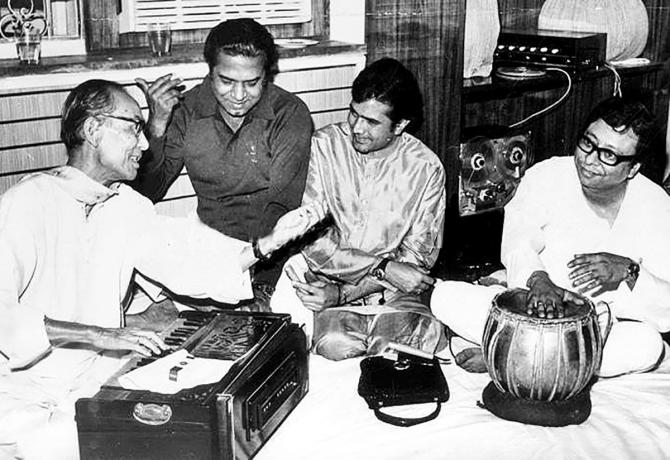
S D BURMAN WITH SHAKTI SAMANTA
Aradhana (1969)
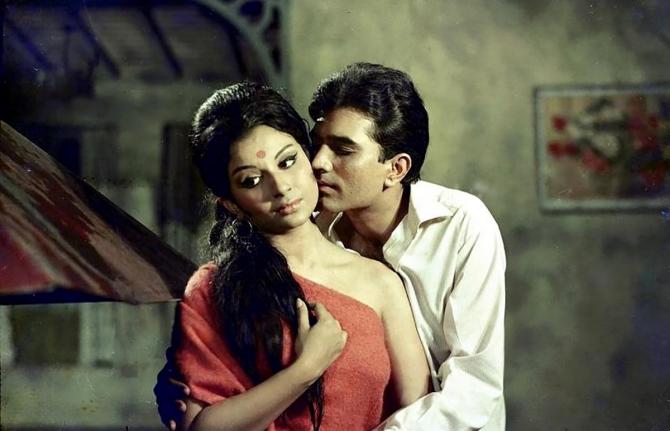
Two superstars -- Rajesh Khanna and Kishore Kumar -- went on to blaze a lightning trail thanks to this blockbuster film and S D Burman's imperishable soundtrack.
Kishore's full throttle rendition of Mere Sapnon Ki Rani and the smouldering seductiveness of his voice in Roop Tera Mastana gave him two heavy hitters that shot him straight to the top.
The singer had another hit with the duet Kora Kagaz Tha Yeh Man Mera (with Lata Mangeshkar) while Mohammad Rafi too scored with the popular Gunguna Rahe Hain Bhanwre (with Asha Bhosle) and Baghon Mein Bahar Hai (with Lata Mangeshkar).
In characteristic Burman style, the penned-by-Anand Bakshi songs were easy on the ears, and soon they were on everyone's lips. This included Lata's bittersweet Chanda Hai Tu and the male solo Safal Hogi Teri Aradhana for which S D Burman won the National Award for Best Playback Singer.
Shakti Samanta and S D Burman worked together only in Anuraag thereafter. As with Dev Anand, so with Samanta, Burman passed on the baton to his gifted son R D Burman.
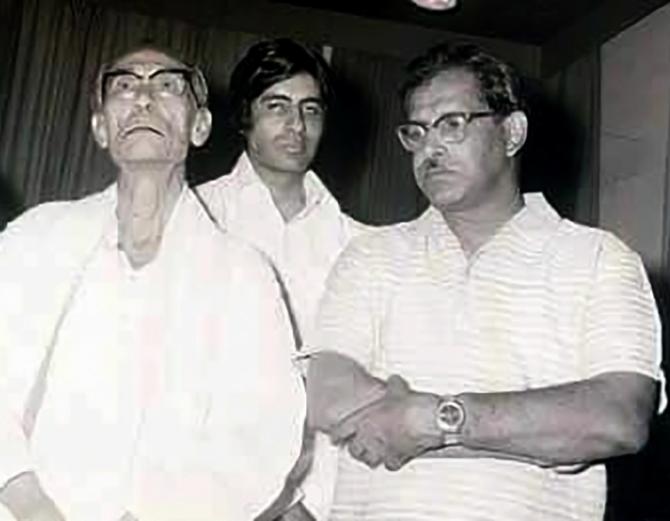
S D BURMAN WITH HRISHIKESH MUKHERJEE
Abhimaan (1973)
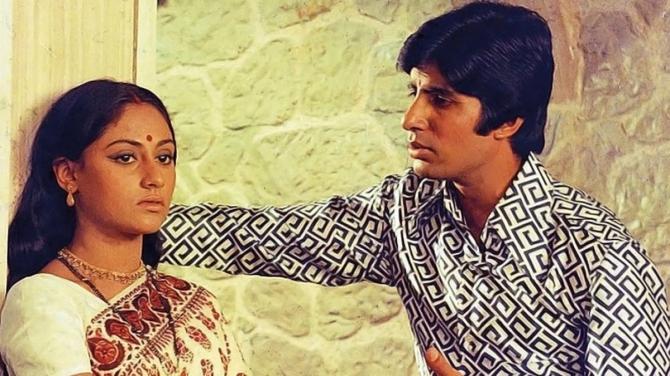
In his late 60s, S D Burman was already a legend -- 1973-born Sachin Tendulkar is named after him. Remarkably, Burman Sr continued to compete successfully with son Rahul and other music directors courtesy a string of 1970s hits Sharmilee, Naya Zamana, Jugnu, Prem Nagar. He also initiated another collaboration with Director Hrishikesh Mukherjee.
Mukherjee's Abhimaan is among S D Burman's most seminal scores.
The film revolves around two singers and S D Burman's score is essentially a love letter to Indian music without overindulging the classical flavour.
Lata dominates the soundtrack with three solo gems, Piya Bina, Ab Toh Hai Tumse and Nadiya Kinare. She is also the sole female voice for the duets, while S D Burman variates the male voice between Kishore (Tere Mere Milan Ki Yeh Raina), Rafi (Teri Bindiya Re) and Manhar Udhas (Loote Koi Man Ka Nagar).
S D Burman continued to engage audiences with Mukherjee's Chupke Chupke and Mili, both released in 1975 the year of his demise.
In fact, S D Burman is that unique composer who remained successful right up to his death with his creative engines never running on empty.
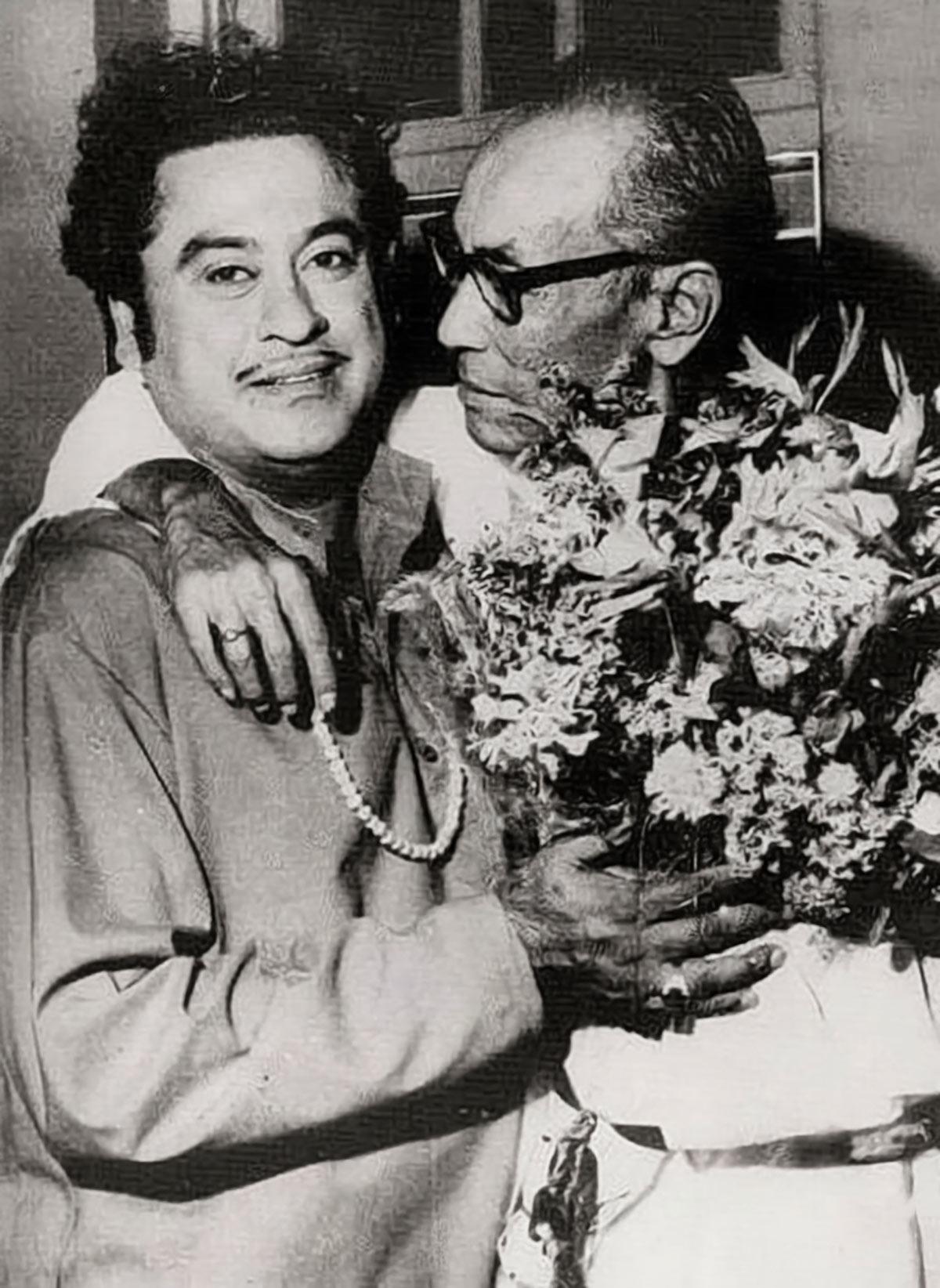
S D BURMAN WITH KISHORE KUMAR
Chalti Ka Naam Gaadi (1958)
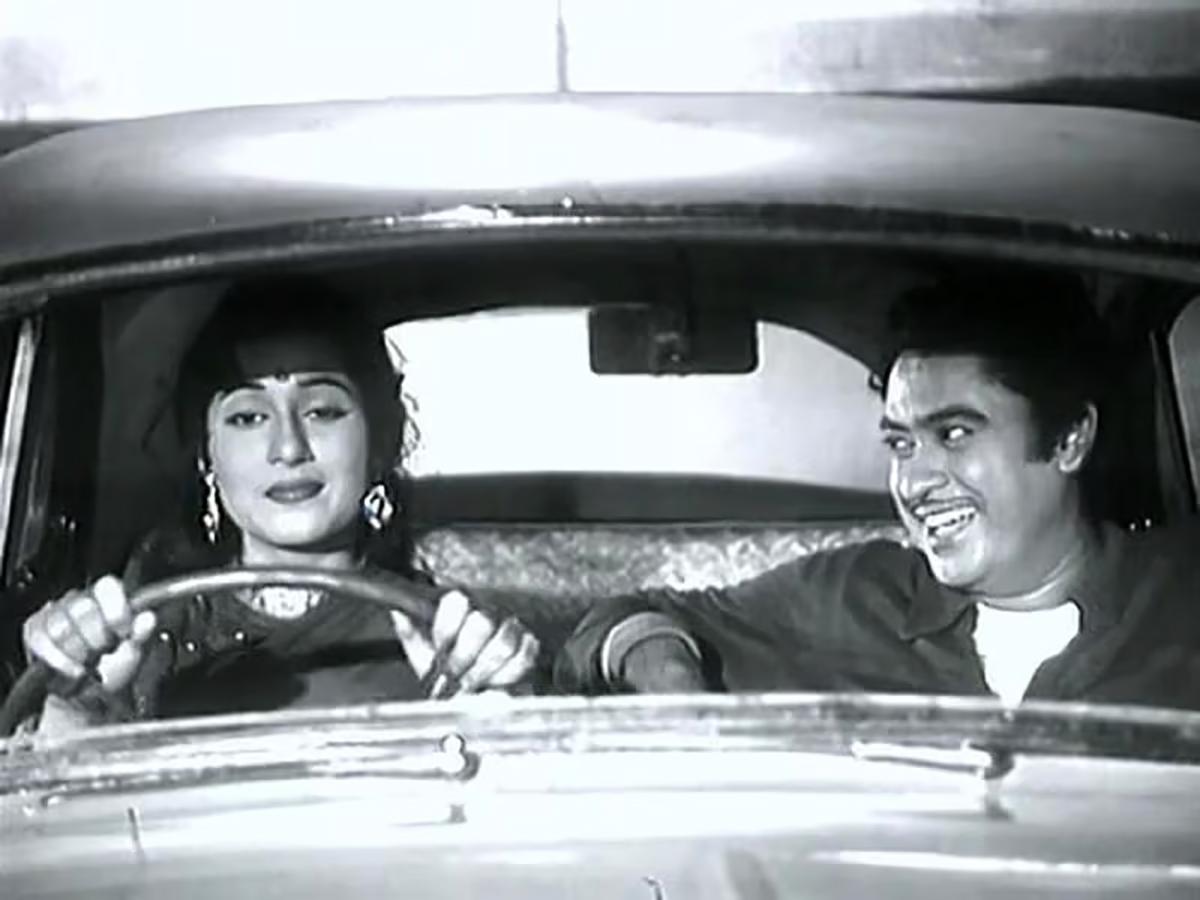
Producer-actor-singer Kishore Kumar's madcap genius helped evidence S D Burman's versatility with Ek Ladki Bheegi Bhagi Si, Hum The Woh Thi and Babu Samjho Ishaare (alongside Manna De). These numbers made for a rumbustious soundtrack in an eternally popular comedy starring Kishore and a delightfully droll Madhubala.
S D Burman tapped into lyricist Majrooh Sultanpuri's flair for conversational male-female dialogue-duets with the delectable Kishore-Asha sung: Main Sitaron Ka Tarana... Panch Rupaiya Barah Aana and Haal Kaisa Hai Janab Ka with the latter even topping the Binaca Geetmala annual countdown that year.
Notably, Lata Mangeshkar's name is conspicuous by its absence from the film.
In 1957, S D Burman had fallen out with the singer over a misunderstanding regarding recording dates, and the two did not work with each other for five long years. S D Burman pivoted decisively towards Asha Bhosle instead.
S D Burman should get as much credit as O P Nayyar for pushing Asha's career into the A league. Asha became the Number 2 singer after 1957, thanks not only to Nayyar's blockbuster score for Naya Daur, but also due to Burman's backing her in 1957-1958 with multiple hit songs in Paying Guest, Nau Do Gyarah, Kaala Paani and Chalti Ka Naam Gaadi.










 © 2025