

'I realised why the farmers and the rural folks are going for Trump. They are so insecure and vulnerable that anybody who is throwing a line of hope to them, they seize it.'

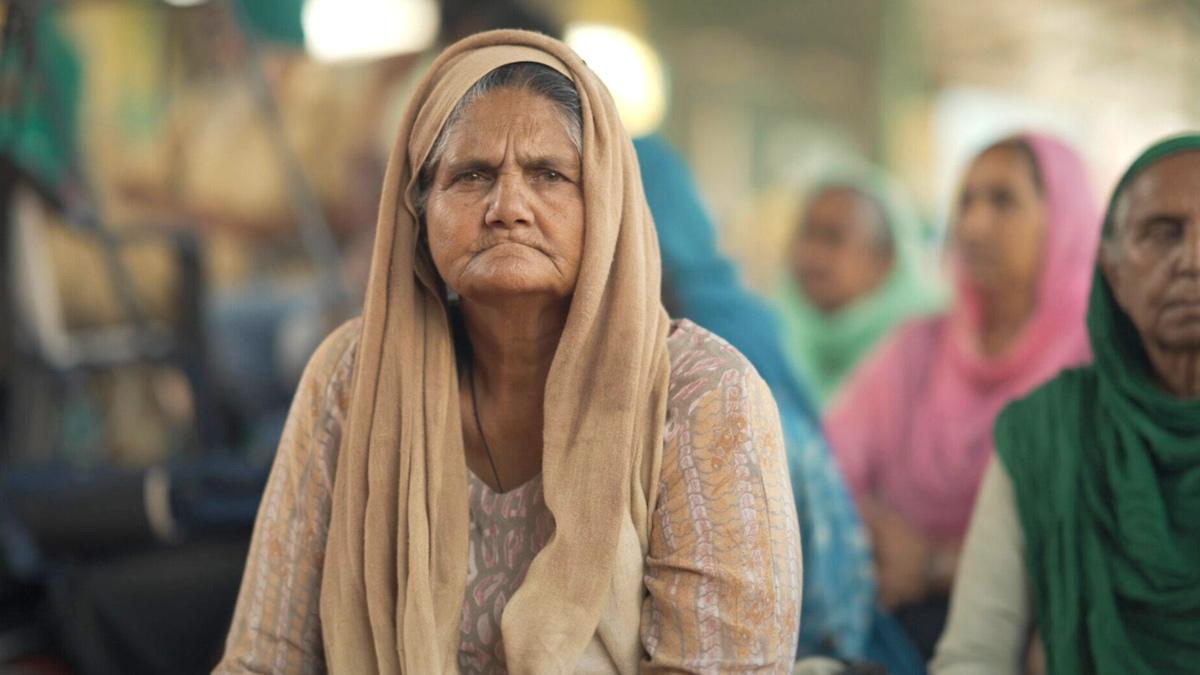
The year was 2020. For nearly a year, hundreds of thousands of farmers had converged and parked themselves on three key areas that were the major arteries to enter Delhi. It became the largest sit-in protest the world had witnessed in recent times.
They were protesting against three controversial farm laws that had been hurriedly passed by the Indian parliament, ushering in market reforms in the farming sector. By bringing in agri-business companies and traders into the market, the laws erased the minimum price protection that the farmers had been getting from the government.
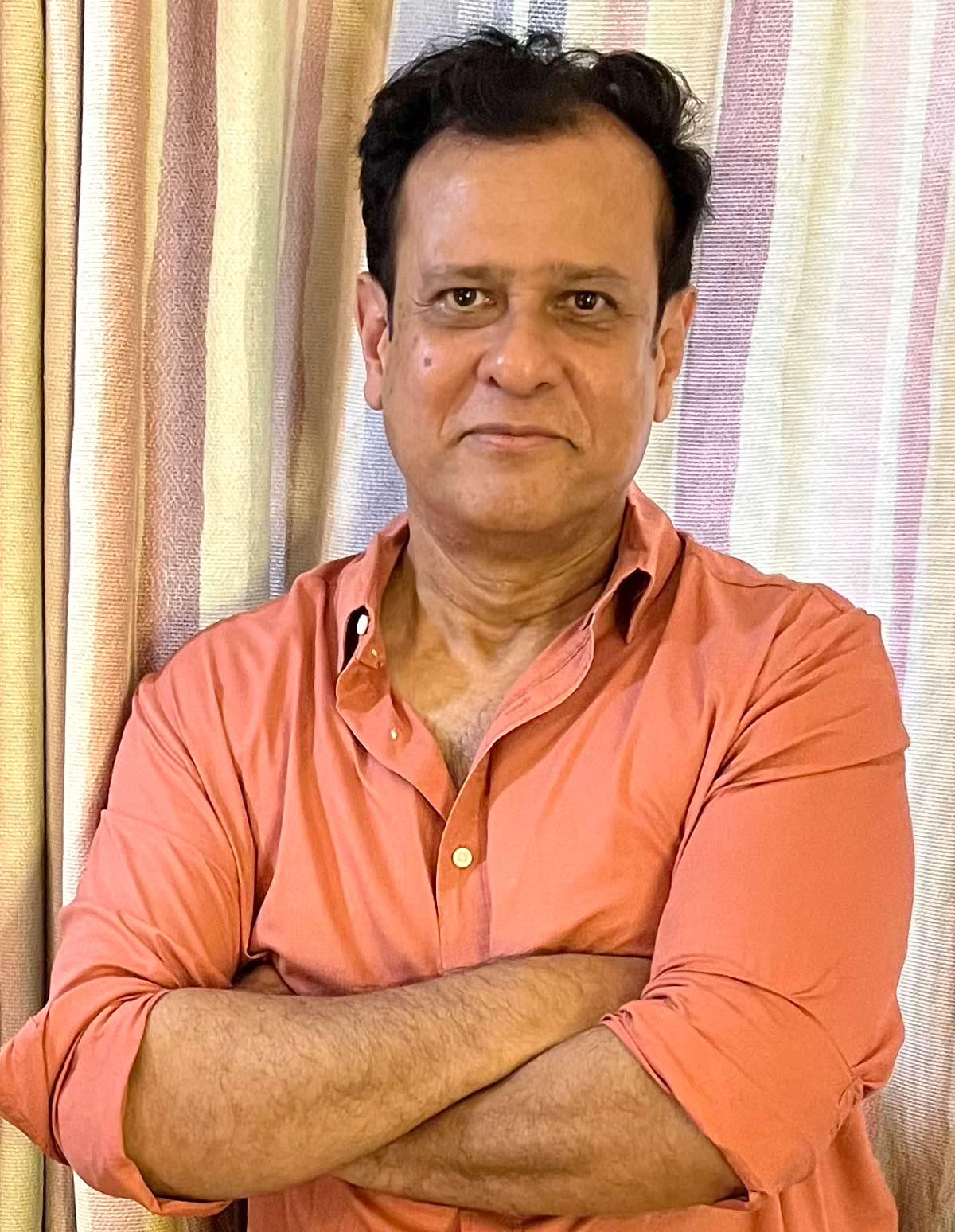
Los Angeles-based filmmaker Bedabrata Pain (Chittagong) arrived in Delhi with his camera to capture this historical event that was taking place in the midst of the global pandemic.
But soon Pain realised that to understand this protest, he had to first study a similar crisis that hit the American farming sector in the 1980s during Ronald Reagan's presidency.
He drove through the American farm states with three colleagues and spoke to farmers. The result is Pain's hour-long documentary Deja Vu: Where Past Meets Future, presented by the Oscar-winning sound mixer and designer Resul Pookutty. Earlier this summer, the film had its world premiere at the International Documentary and Shorts Film Festival in Kerala.
Aseem Chhabra spoke to Pain about the making of his documentary and his key findings.
Tell us about the starting process for this documentary. You originally set out to follow the Indian protests. Why did you think of looking at the US farm laws?
I think a lot of it has to do with a question that always comes up about Indian residents abroad -- what is their attitude towards the country of their origin and the country where they live in?'
That's always been on my mind.
The US is looked upon as a big exemplar of what we should do. Here is at least one example of what one should learn from the other side of the US.
When the farm laws were introduced in India followed by the protests, I began to think 'Are the farmers stupid? Are they stubborn? Are they losing out an opportunity?'
I started reading, and the first thing I came across was about farm suicides in America.
The number is four times the national average. Practically every person we spoke to had a case of farm suicide in their family.
That was an eye opener. In this land of milk and honey, you go outside the American cities, and the situation there is one of desperation.
Here were four Indians going through Trump country and we were determined that we have to tell this story. We didn't understand everything when we began. But as we went along on this three-week trip, things kind of started falling in place.
So it was more of a self-inquiry, self-curiosity, as well as sort of a responsibility.
In India, everything was speculative.
'Oh, this will happen. That will happen.'
And here is something that is right in front of you. There is the saying those who don't learn from history are condemned to repeat the same mistakes.
Who were the other three people with you?
All three are from the LA area, but they aren't filmmakers.
Rumela Gangopadhyay is a part-time actor, and the others, Rajashik Tarafder and Sristy Agarwal, are PhD students in physics.
They were very active during the anti-CAA protests. I threw the idea at them and they jumped at it.
They got hold of farm organisations. Some were forthcoming, others weren't.
How many miles did you cover?
So 10,000 kilometres is a kind of number thrown.
We rented a Toyota van and drove. That actually caused bigger problem in our journey because lot of the rural folks were more worried about a Japanese car than four brown Indians driving. Honestly, they were very welcoming and warm, which was a marked change from the cold areas we were driving through.
One farm organisation led to another.
The first guy we nailed down to talk was Joe Maxwell, who was the former lieutenant governor of Missouri. Once he came on board, the rest slowly followed. He obviously had a certain amount of clout.
Was there no incident of racism?
There was one incident.
There was a guy who stopped our car. We were a bit lost, and he was a little threatening.
He had his hand on a knife that I could see.
He had a gun as well, and he had a dog.
We said to him, 'Oh, what a nice, cute dog.'
He responded, 'The dog is more dangerous than I am.'
But what I like to focus on is the warmth that we got.
Which states did you cover?
We went from Oklahoma to Iowa, Missouri, Wisconsin, back to Iowa, then Nebraska, Colorado, and Kansas.
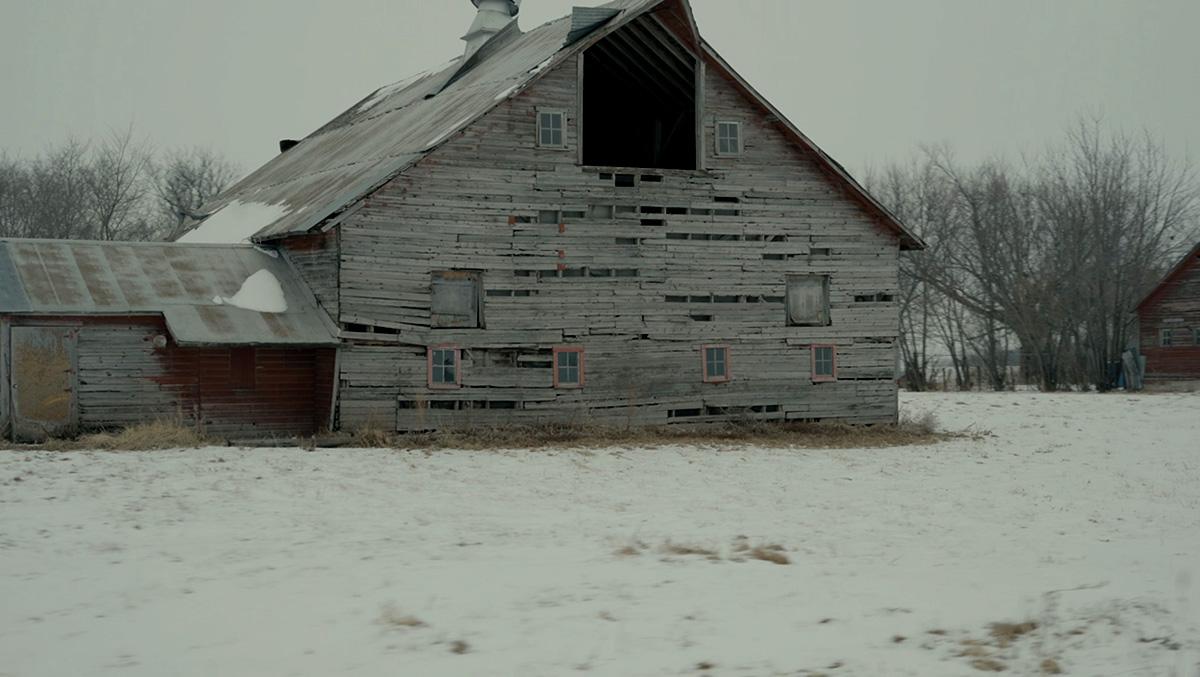
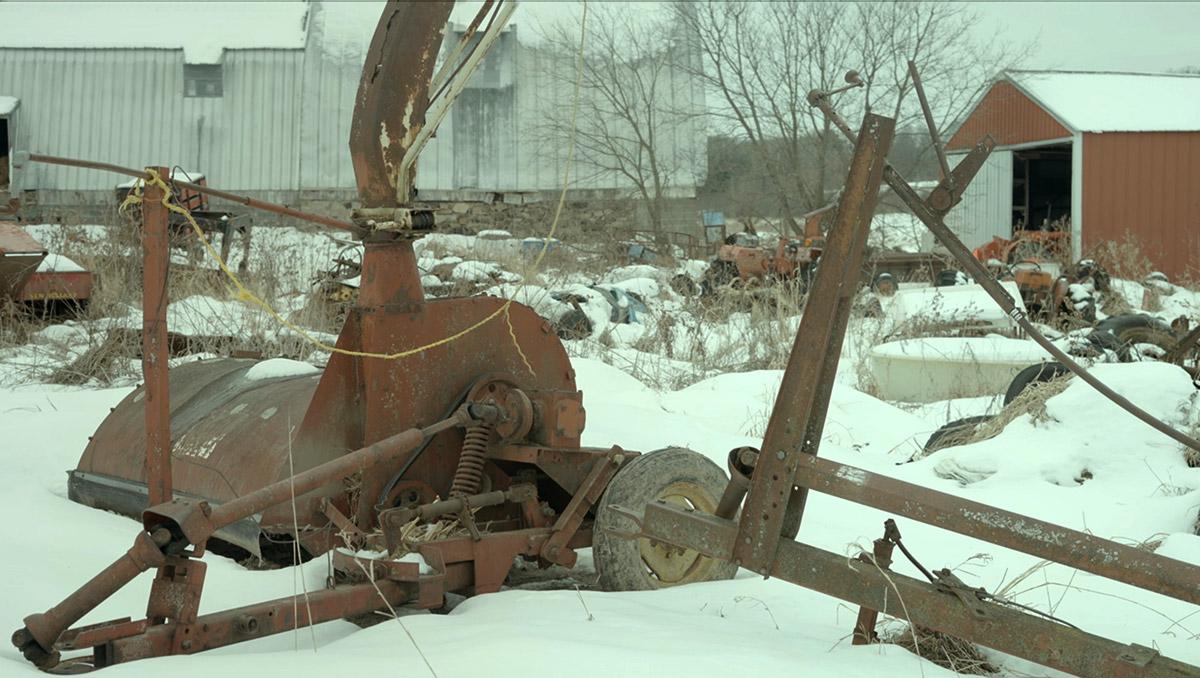
We were shooting in winter, so the film has this gloomy, desolate look.
It fits in with the mood of the film, even though it wasn't intentional.
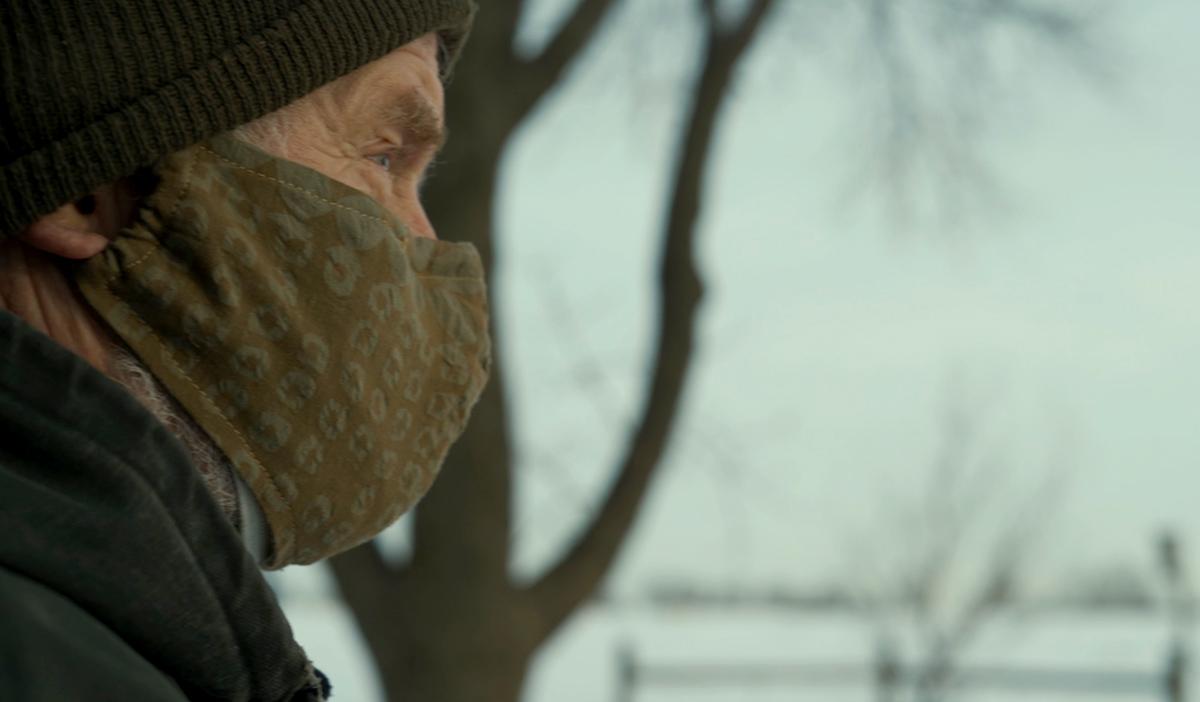
Apart from the fact that it was cold half the time, some people had masks on. So this is during COVID?
Yes. This is right when the protests were going on in India.
These guys knew more about what was happening in India than we did. They really wanted Indian farmers to succeed.
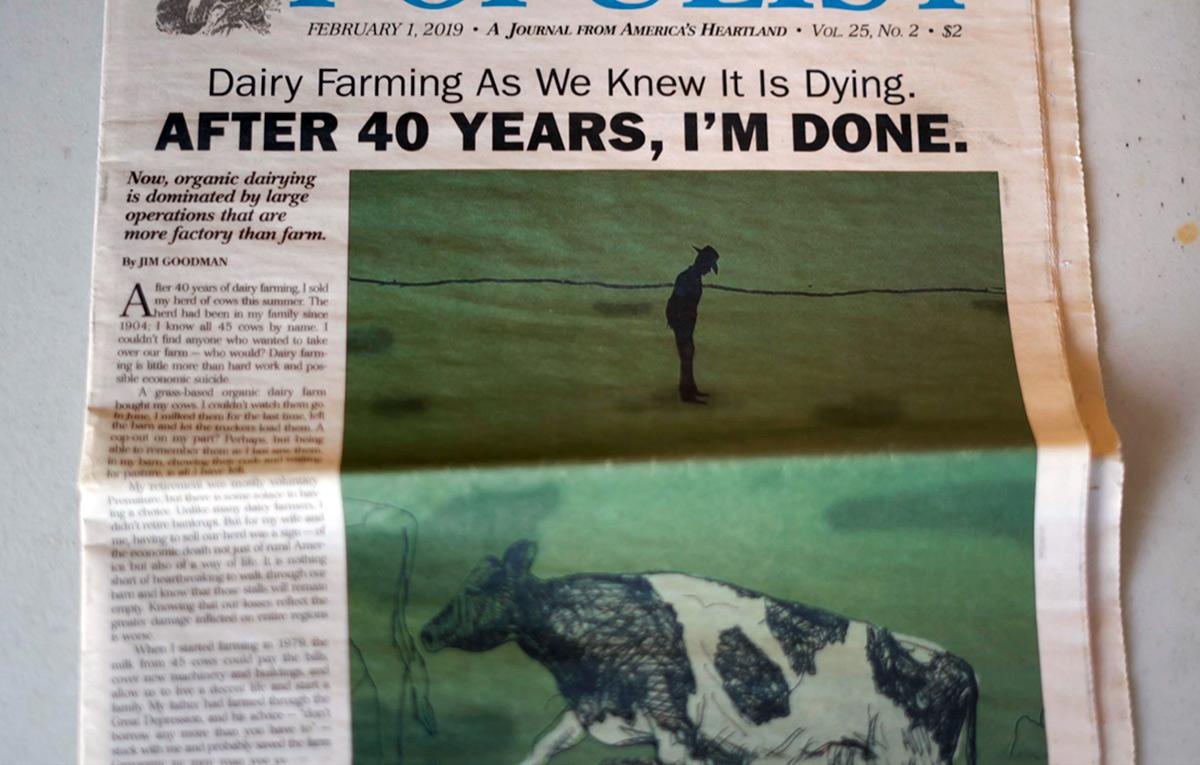
You show some startling facts, like individual dairy farmers in America are down from millions to about 30,000. There used to be 10 millions farmers in the US, but now the number is down to two million. Were there other findings that shocked you?
It was very important for them that somebody was asking them what they had gone through.
They were willing to tell that story.
Sitting in big cities, we missed how much these guys have gone through, why they have come to this hopeless situation, and how much they want to share their experience. It's a validation for them. So that would be my first learning.
I also realised how different this America is.
It's not the America we see in movies or is in our popular conception. It's very stark. It's decaying. You go to people's houses and you see these broken-down houses right next door.
One thing I really did not understand was the extent to which corporate America has taken control of rural America.
I will give you one incident. One of the guys I met, I asked him 'Who did you vote for?'
He said, 'Well, I used to be a Democrat, but I voted for Trump.'
This was when Biden had been elected. But he was glad he didn't vote for Biden.
'Do you know who is Biden's secretary of agriculture?' he asked. 'His name is Tom Vilsack. He is known in rural America as the Monsanto man. After this, do you think I can vote for Biden?'
I realised why the farmers and the rural folks are going for Trump. They are so insecure and vulnerable that anybody who is throwing a line of hope to them, they seize it.
It really came to me why the right wing has taken hold there because liberals have cast them aside. I understood that these guys were hurting. They were vulnerable.
Their way of life was disappearing.
One guy told us he doesn't have health insurance. You know what lack of health insurance means in America?
They still think that we can go back to their old way of life.
And this is why Trump has scored.
When I asked some of the farmers why didn't you fight back, some told me they were immediately labeled as communists. And there has always been a strong anti-communist feeling in America.
Also, I had no idea about the parity issue (a fair price offered to farmers) in the US, which is a big connection with the Indian minimal support price (MSP). But it is not giving subsidy to farmers.
Think of it, like how the Reserve Bank or the Federal Reserve sets up the interest rate every day. It sets a floor so that all economic activity happens based off that floor.
That's where the government needs to step in, even though there is free market.
Exactly. Every capitalist market is regulated. There are various rules there.
But when the parity went away, that is when the subsidies came.
Eighty percent of the subsidies, as you see in the film, went to the corporates and the big landowners.
You talked to a young farmer whose father was a farmer. You mention that people, college graduates don't say I am going to go become a farmer. They want to become engineers, lawyers and doctors. But in America you never hear someone say, 'I want to become a farmer.'
Yes, very few do. You saw the horrific statistics that in the US, there are more people in prisons than farming.
That was one of the big things that drove us because in a country like India, where 60 to 65 percent of the population is rural dependent, something like this will have a major impact, not just on farmers, but on consumers.
I was really surprised to find out how much farmland Bill Gates owns across the country. It was quite a revelation.
Bill Gates is one such example. There are many others with huge tracts of land, and they put those lands on auction.
You are a small farmer, you have a tractor or a a harvester, you come and till the land, and you will get income from selling the crops. So it's like a share farmer. Many of them take loans to get their implements, like their tractor, because in America, nobody buys.
But if you miss one installment, they can remotely shut off your tractor while you are in the middle of tilling the land.
So some of the farmers didn't want to speak on the camera because they were afraid that it would negatively impact them.
I have always imagined Bill Gates to be a quote-unquote, a good capitalist, because of all the aid and charity he does.
I interviewed Noam Chomsky and he told me, 'When we say good capitalist, bad capitalists, these guys are decent fellows. We shouldn't have anything personally against them. But many of them are not.'
Yes, Elon Musk for example.
Exactly. But many of them are very decent fellows.
But at the end, they are calculating what would magnify their profits and keep it coming because they are also afraid of losing the position they have. So they are doing deals to stop anybody else from coming up, which is a part of capitalist enterprise, especially when you go to the monopoly phase.
We talk of free market, but where is the free market?
It is monopoly capital that has come and is standing like a vulture over us.





 © 2026