

'The way the anticipation is built up for Gabbar Singh's introduction scene with sound, image and details of his personality, like the combat boots he wears.'
'The camera comes so close -- not a tele lens shot, but a wide-angle close-up -- that you can almost smell Gabbar's breath.'
Celebrating Sholay's 50th anniversary on August 15 with a special series, where contemporary film folk analyse the cult classic.

Two-time National Award-winning cinematographer Sudeeep Chatterjee has several commercially successful and critically acclaimed films to his credit, including Chak De! India, Dhoom 3, Bajirao Mastani, Padmaavat, Gangubai Kathiawadi and Brahmastra Part One: Shiva.
Looking back at the iconic Sholay, he explains what makes the Dwarka Divecha-shot curry western "dadagiri" cinematography in commercial Hindi cinema.
Speaking to Rediff Senior Contributor Roshmila Bhattacharya, Sudeep says, "As a cinematographer, I know how incredibly difficult it must have been to shoot the Hema Malini-Dharmendra tanga song, Koi Haseena, given the way they had to coordinate it with the passing train."
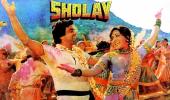
"I love the way Mehbooba Mehbooba is lit and Holi Ke Din is picturised with those incredibly choreographed camera movements."
"And I have often wondered how the bike and the sidecar separated so seamlessly, then came together again and connected, during Yeh Dosti."
'Over a decade after its release, I was watching Sholay...'
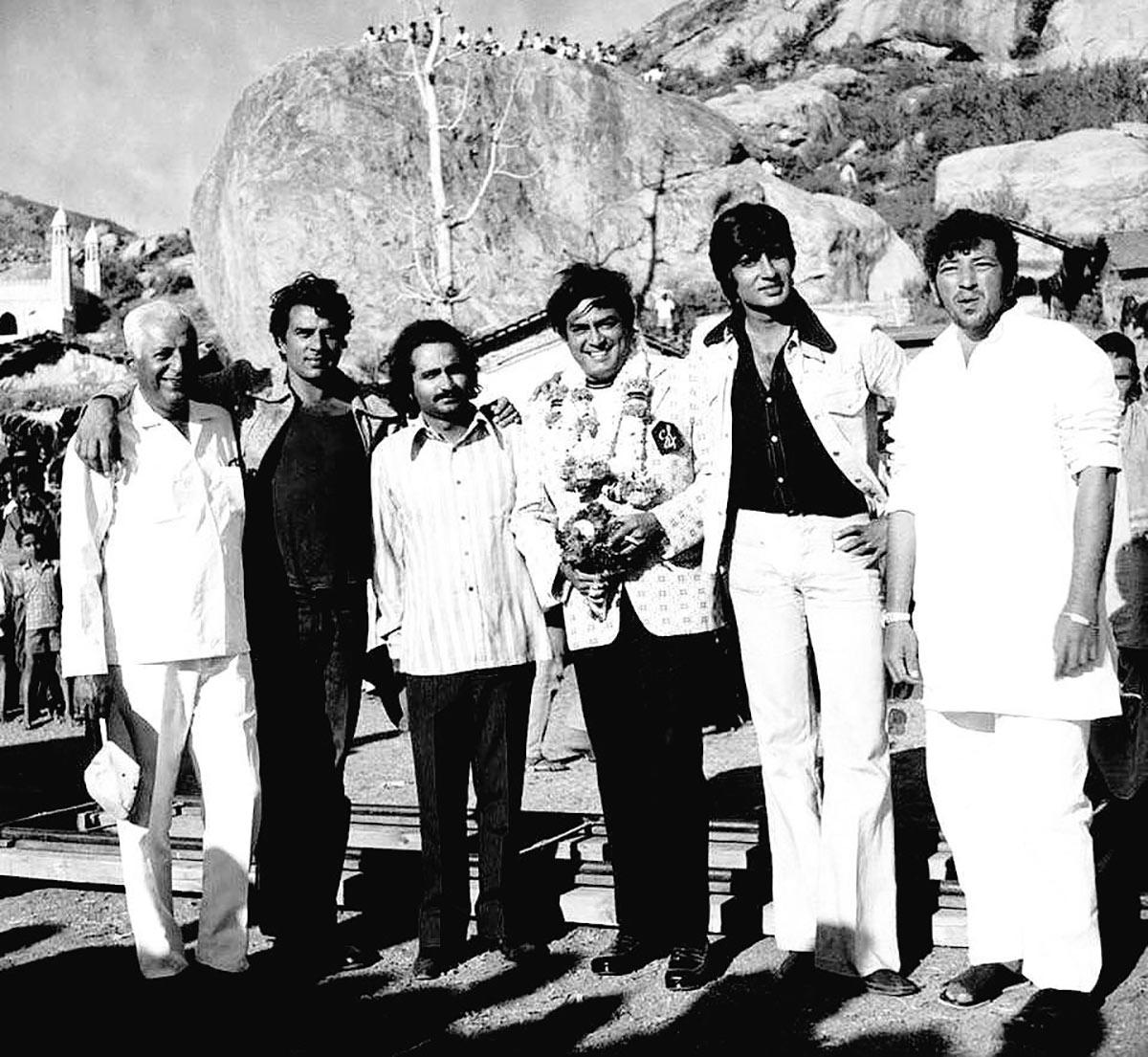
It was only in 1986 that I saw Sholay for the first time because while my father would take us for movies, he didn't like us watching Hindi films unless they were directed by Guru Dutt, Bimal Roy or Shyam Benegal.
The rest were, what he called 'the laralappa films', and he didn't care for them.
Only after Class 10 was I permitted to watch films of my choice and on the last day of the board exams, I rounded up a few friends and headed to Kolkata's Jyoti cinema where Ramesh Sippy's cult film was still playing.
Some of them had already seen Sholay and wanted to go to Tiger cinema for Blue Lagoon, but I managed to convince them to accompany me.
So over a decade after its release on August 15, 1975, I was watching Sholay on screen, in 70 mm, and I was blown away by the images!
I have always been a fan of the cinematographer Dwarka Divecha for the variety and versatility in his work, seen in films like Ratan, Yasmin, Solva Saal, Amrapali and Prince.
Sholay is, in my opinion, dadagiri cinematography in commercial Hindi cinema.
'Wondered how the bike and sidecar separated during Yeh Dosti'
We had an LP record with all the Sholay songs and dialogue at home which I had heard at least a thousand times.
I knew every word, every beat by heart, and watching them play out on screen as images was just amazing!
Today, as a cinematographer, I know how incredibly difficult it must have been to shoot the Hema Malini-Dharmendra tanga song, Koi Haseena, given the way they had to coordinate it with the passing train.
I love the way Mehbooba Mehbooba is lit and Holi Ke Din is picturised with those incredibly choreographed camera movements.
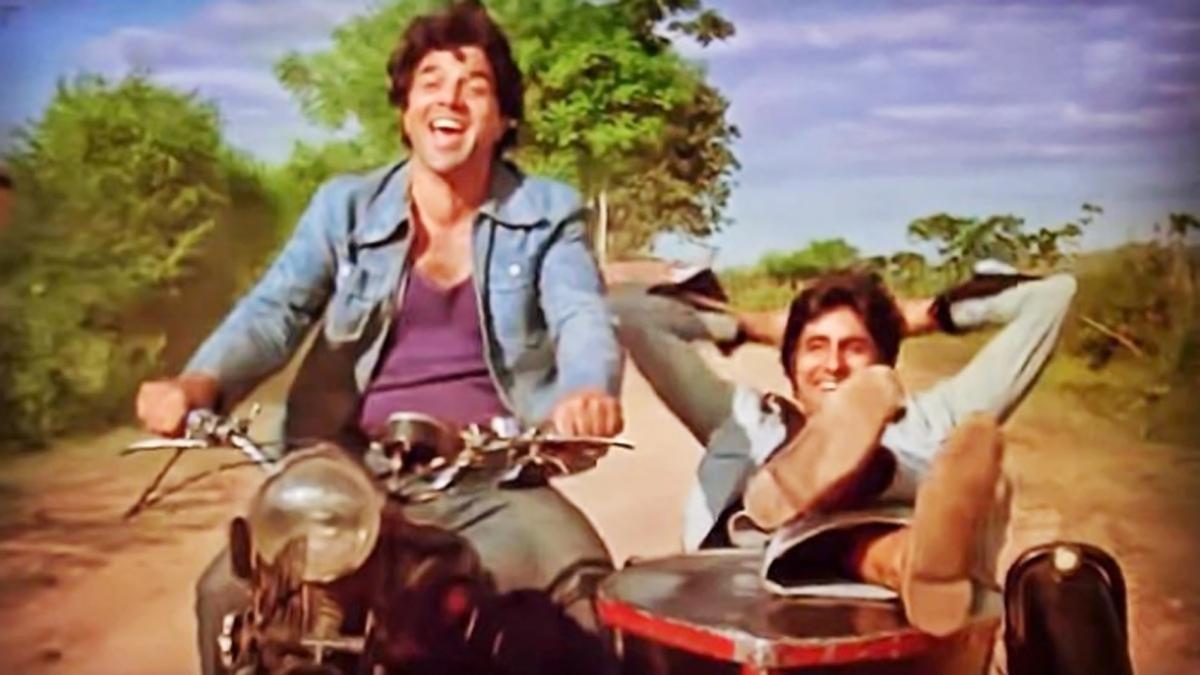
And I have often wondered how the bike and the sidecar separated so seamlessly, then came together again and connected, during Yeh Dosti.
My favourite is Jab Tak Hai Jaan, which in essence is an item song, with the villains lecherously ogling the woman, but you feel the pain Basanti is going through, both emotional and physical, as she dances on the shards of a broken bottle.
Along with the LP record from my childhood, I also got my hands on a first copy vinyl LP of Sholay's music album, and years later, I got everyone associated with the film, from Mr Ramesh Sippy to the actors Mr Amitabh Bachchan and Dharmendraji and scriptwriter Javed (Akhtar) saab to sign both.
Such memorabilia is priceless and, I've since realised, a good way of documenting history.
I had the privilege of meeting, several times, the famous S M Anwar, the operative cameraman of Sholay (later, the Director Of Photography on all subsequent Ramesh Sippy films) and Gerry Crampton, the incredible action director of Sholay, at his home in the UK.
Those remain some of my most favourite memories.
'The train robbery scene still leaves me baffled'
I love action and cinema which is full of drama.
My first film was Ram Gopal Varma's Road, then there was Adi (Aditya) Chopra's Dhoom 3 and even Sanjay Leela Bhansali's Bajirao Mastani had some action.
All through these films, Sholay has played at the back of my mind.
How can you not be influenced by it?
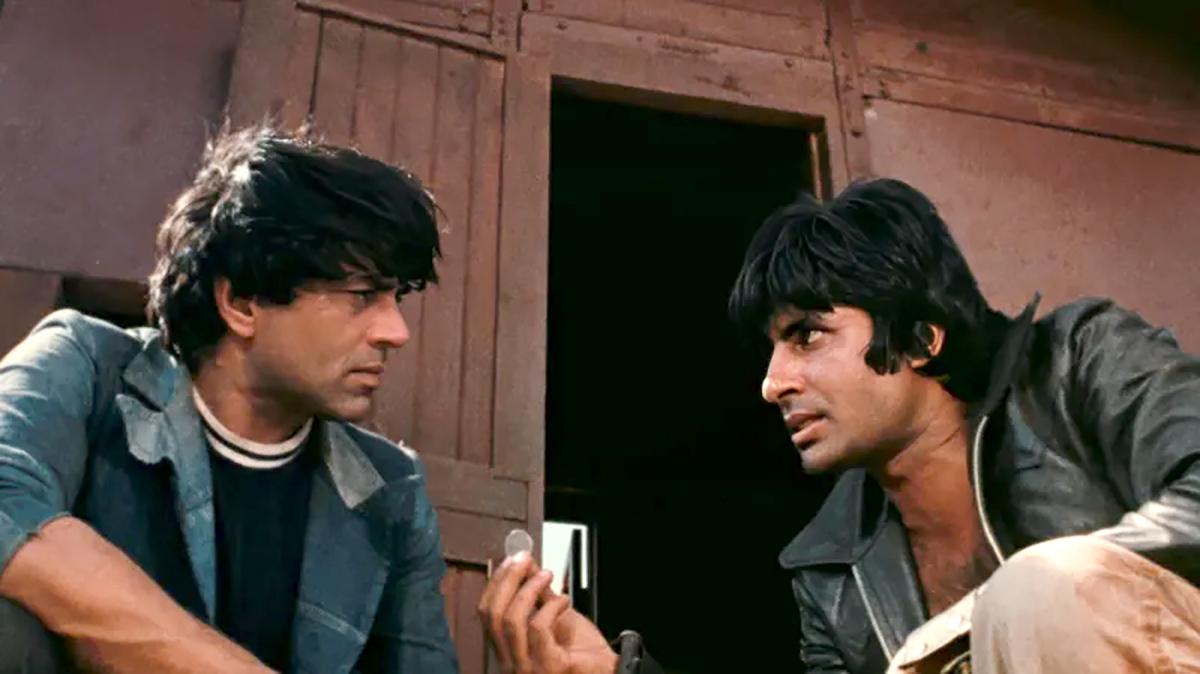
The attempted robbery scene, so excitingly spectacular, still leaves me baffled by the dynamism in the way the train and horses are shot.
They probably used Arri 2C cameras, I've always wondered how they mounted the cameras on a moving train and did the tracking shots with the horses in the foreground with such precision without any video assist.
I don't know how long it took them to shoot those scenes, yet the lighting is consistent all through.
'I love the play of light and shadow on Radha's face...'
The beautifully lensed shot of the boy's body on the donkey's back, followed by Rahim chacha's heartbreaking lament, is heartbreakingly poignant.
The decision on when to close in and capture the pain in his sightless eyes and when to pull back and give the character space is pure genius.
It has so much dignity.
These gentle nuances are as important as the action and drama for the emotional impact they leave behind, like the Jai-Radha romance.
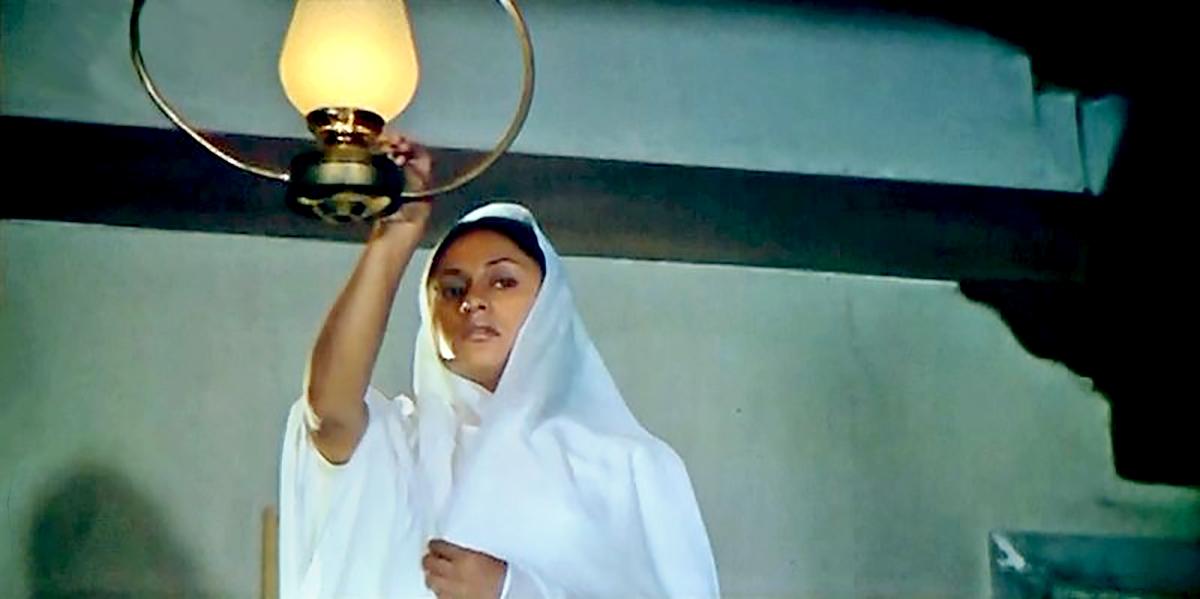
That scene when Radha is dousing out the lanterns in the balcony, one by one, as Jai plays the mouth organ, is so beautifully layered, with the warmth of the gentle romance in the middle of the hopeless reality of their situation.
That is pure cinema!
I love the play of light and shadow on Radha's face from the lanterns as she silently looks at him, and the expression in Jai's eyes as he looks back.
It's a priceless moment whose magic hasn't dimmed with time.
'The camera comes so close you can almost smell Gabbar's breath'
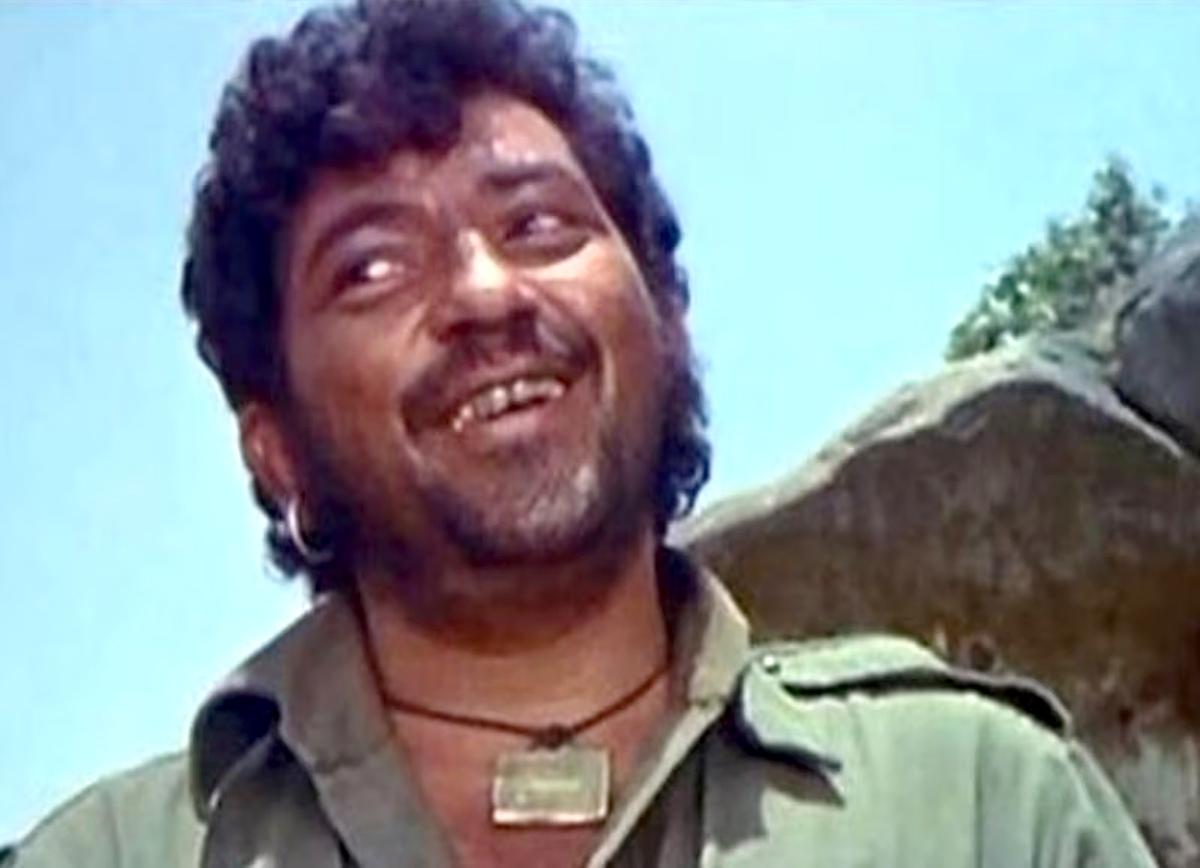
The way the anticipation is built up for Gabbar Singh's introduction scene with sound, image and details of his personality, like the combat boots he wears.
The camera comes so close -- not a tele lens shot, but a wide-angle close-up -- that you can almost smell Gabbar's breath.
This is one of the best character introductions I've ever seen.
I'm equally impressed by all the scenes in Gabbar's den.
And then there's the massacre of Thakur's family which wouldn't have been so bone chilling without R D Burman's background score and Mangesh Desai's sound design.
'I'm excited my kids will watch Sholay the way I did'
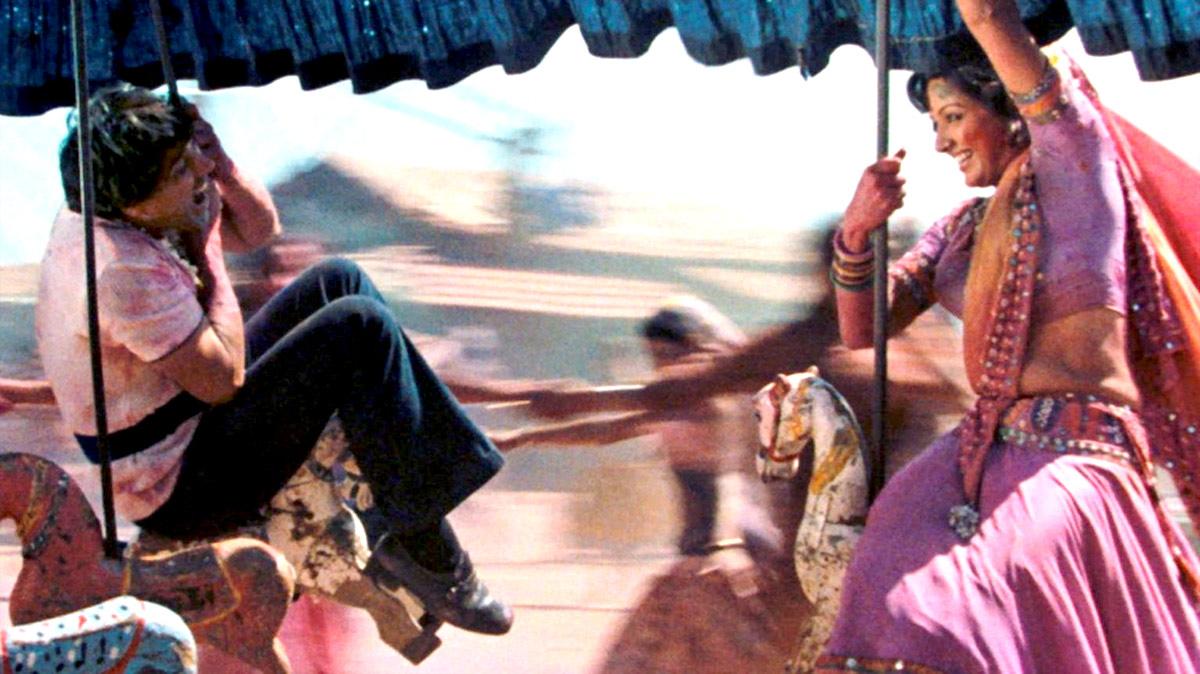
Sholay, for me, is a once-in-a-lifetime experience when everything, from the writing to the direction and the performances, from the camerawork and sound design to the editing and music, everything fell into place perfectly.
It's a film that ticks all the boxes, from action and drama to comedy and romance.
Everything is shot so beautifully, capturing every emotion in a way that it resonates with the audience in a very intimate way.
As a cinematographer, you create an image bank from everything you see, hear and imbibe, I'm certain Sholay has had a deep influence on me and my work.
After that overwhelming first viewing, I saw the film many more times while studying at FTII (Film and Television Institute of India) and afterwards too, but that was the terrible telecine transfer.
Cine lovers will forever thank Shivendra Singh Dungarpur and the Film Heritage Foundation for restoring the film in its 50th year.
I am most excited that my kids will watch Sholay the way I saw it all those years ago, the restored print probably even better than what anyone has seen till now!





 © 2026