
'She was brave. She didn't care a hoot. And India was not the strongest of nations as it is now.'
Ramesh Sharma's documentary films have dealt with a range of subjects -- from the killing of the American journalist Daniel Pearl (The Journalist and the Jihadi: The Murder of Daniel Pearl, 2006) to Mahatma Gandhi's legacy around the world (Ahimsa Gandhi: The Power of Powerless, 2021).
Sharma also directed the National Award-winning feature film New Delhi Times (1986) with Shashi Kapoor and Sharmila Tagore.
His new documentary Chronicles of the Forgotten Genocide: The Kissinger Doctrine recently premiered at the Kolkata International Film Festival.
In the film Sharma tracks in detail the brutal and tragic history of the creation of Bangladesh in 1971, the American involvement in supporting Pakistani forces led by then president Yahya Khan, the making of Sheikh Mujibur Rahman as the leader of Bangladesh, until a coup on August 15, 1975, in which he and most of his family members were killed.
The film examines the central role Henry Kissinger played not just in the 1971 genocide in East Pakistan (now the independent country Bangladesh), but also his involvement in coups and other political upheavals around the world.
It is a powerful, disturbing film, very well researched and documented, with some of the leading writers, journalists and policy makers who speak about Kissinger and the many dangerous games he played at the cost of millions of lives.
"When a group in Bangladesh was planning the massacre of Mujibur Rahman and his family, the American ambassador in Dhaka didn't know that Americans were talking to the coup plotters," Ramesh Sharma tells Aseem Chhabra.
Ramesh, is it quite a coincidence that with the news of Sheikh Hasina being given the death sentence, the story of your film still continues.
Both Hasina and her sister survived the massacre of Sheikh Mujib's family in 1975 because they were out of Bangladesh.
If they had been there, the entire family would have been killed. She was in Germany since her husband was working there. And her sister was with her. The oldest daughter of Hasina's sister is now a member of the parliament in England.
The other thing I find really interesting is that despite the fact that there is such a gap between Narendra Modi's and Indira Gandhi's policies, I remember Hasina was given asylum in India earlier and she lived in a house in Defence Colony in Delhi.
And now also she is living somewhere in Delhi.
She's at the moment under huge security, because there is a real threat to her life.
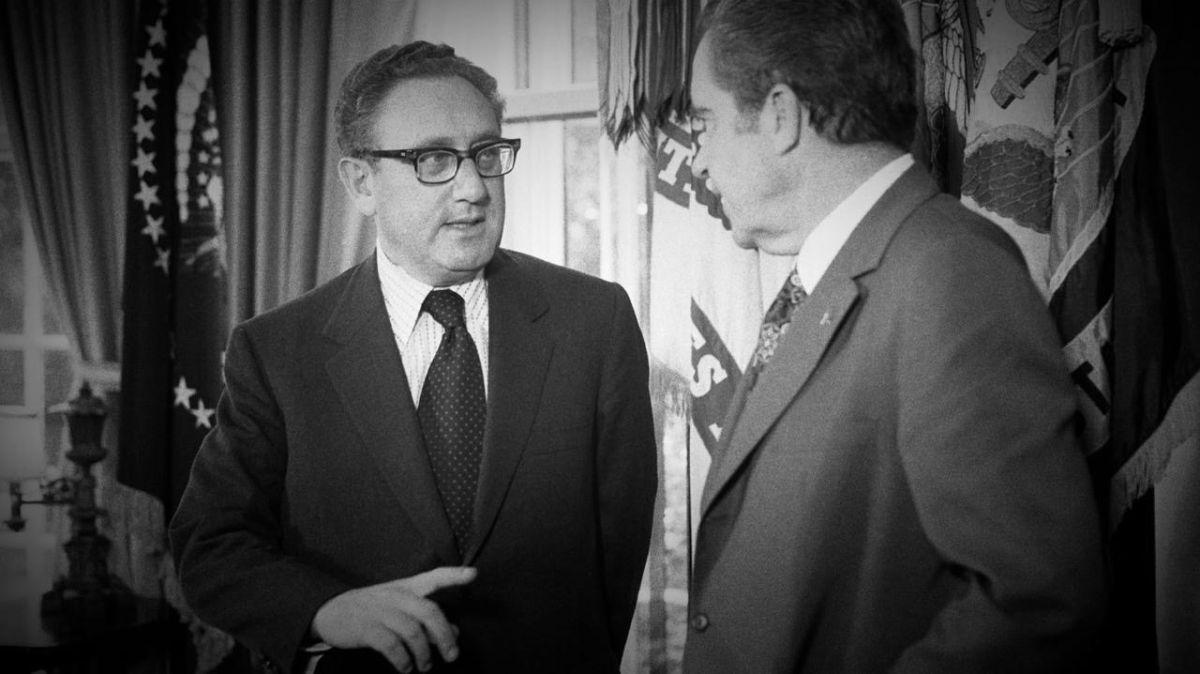
Let's talk about Henry Kissinger, the focus of your documentary and his ties with Pakistan and Yahya Khan.
His was a strategic mission. Kissinger wanted to break up the connection between China and the Soviet Union. He thought the best way to do that would be to become friendly with China.
Then obviously the US would have had an upper hand over Soviet Union. The Vietnam War was not ending. All these things were happening in Laos and elsewhere in Africa.
But they were scared that the American public would react negatively to reaching out to China.
So they wanted to keep it a secret. And the only person they felt who could keep that secret and connect the US with China was Yahya Khan.
Otherwise they could have done it through Canada. Canada had ties with China at that time.
They could control Yahya Khan, since Pakistani armed forces were entirely dependent on American arms supplies.
But then the American Congress ruled that US could not supply arms to Pakistan. So during the 1971 War Kissinger got Jordan to supply planes to Pakistan.
I want to ask you about your interest in Kissinger. I am assuming you had started to make this film before he died last year.
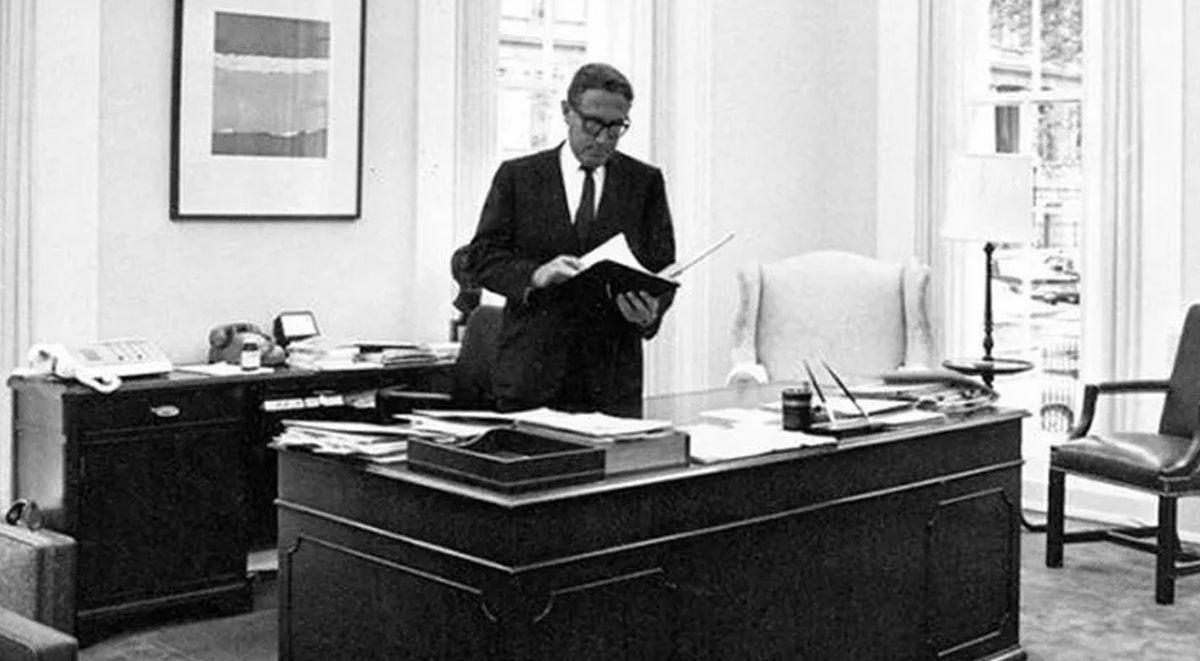
Oh yes. I wanted to speak to him and tried to get appointments with him. I spoke to his secretary about seven, eight times. But he refused.
One of the great paradoxes about Kissinger was that there were a lot of people in America who believed he was kind of a war criminal.
Yet every American president considered him the greatest international strategic mind and all met with him. Even Obama, Joe Biden and Donald Trump consulted with him.
He belonged to the school of thought that believed in American exceptionalism. America as the only superpower in the world. That's all he was interested in, the belief in America first, which is what Trump is trying to do today.
He was Richard Nixon's secretary of state. But what we see is Kissinger's agenda that was playing out.
In the beginning Kissinger was Nixon's national security advisor. He became secretary of state a little later. And then he became secretary of state and NSA chief for Gerald Ford, by which time he was the most powerful man.
By then he was also chairman of what was called the Forty Committee, that was involved in covert operations.
The committee could go directly to the CIA. It could bypass ambassadors. These committee members only reported to Kissinger.
So as you see in the film, when a group in Bangladesh was planning the massacre of Mujibur Rahman and his family, the American ambassador in Dhaka didn't know that Americans were talking to the coup plotters.
At the same time there was coup in Chile (in September 1973) and Seymour Hersh wrote in the front page of The New York Times about the American involvement in the assassination of the elected leader Salvador Allende.
There were corporate interests also, as in the case of the copper mines in Chile. Kissinger bluntly said, 'I can't have Chile destroy itself because of the foolishness of these people who have voted a communist into power'.
For them socialism and communism were the same thing. And it was a brutal killing.
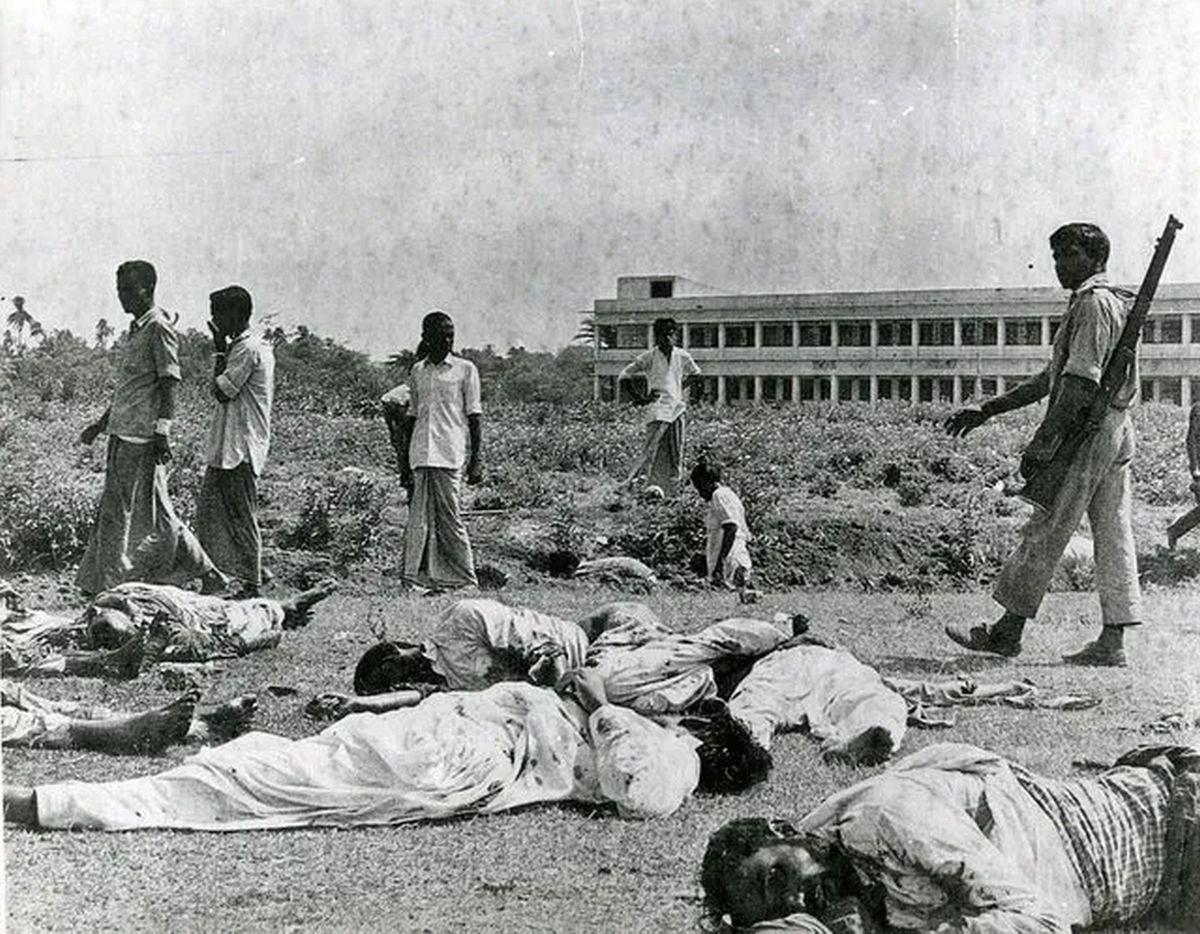
You go into a lot of details about the genocide that happened in Bangladesh between March and December 1971.
Almost 3 million people lost their lives. I have seen films and read about the Pinochet regime killing its opponents on a mass scale in Chile.
But Kissinger didn't give a damn that so many people were killed.
He really didn't give a damn. In fact, he sent the CIA head to meet with Pinochet, and together, they formed the most brutal police force after the SAVAK in Iran.
That police force helped the dictator General Pinochet rule Chile for 17 years.
Roger Morris said Kissinger's policy was to kill anything that moves. He served on the National Security Council under Nixon and Kissinger.
He later resigned when Kissinger authorised the carpet bombing of Cambodia saying that country had nothing to do with the Vietnam War.
It's documented so I show it in the film without saying it myself. Whatever you may say about American policies, but they kept records of everything.
Now declassified information also shows a telegram by Kissinger to the American ambassador in Bangladesh asking him to facilitate the asylum for Khondaker Mostaq Ahmad, the man responsible for the killings of Mujib and his family members.
What more proof do you want of the complicity of America in the coup against Mujib?
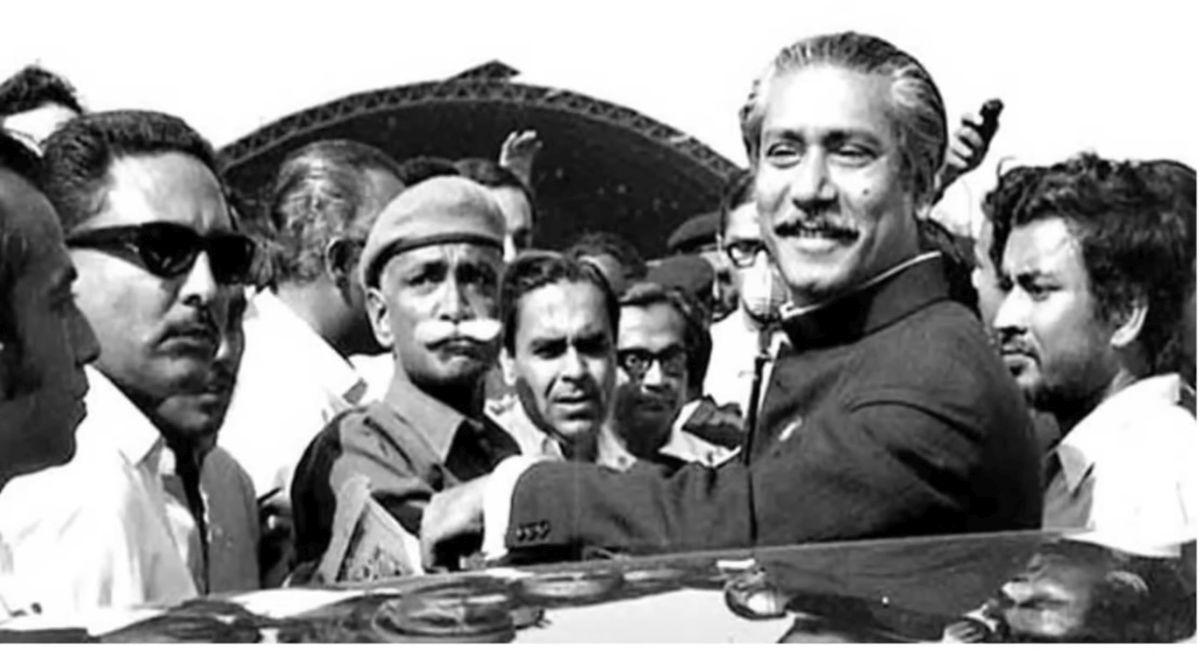
In the film you show a picture of Kissinger with Mujibur Rahman. I had never seen it before.
Yes, Kissinger made a fleeting visit to meet Mujib in 1972. He had come to Delhi and visited Bangladesh just for a few hours. They talked and later Kissinger said negative things about Mujib.
Tell me about the research that went into the making of the film. You even had access to Nixon and Kissinger's tape recordings.
There was a point when they were recording each other. And there is such an impressive list of talking heads you have in the film, many of them are quite old.
That was my greatest fear since they were all in their 80s and I wanted to finish the film before anything happened to any of them.
The only person who died before I finished the film was Kissinger.
And he was 100 years old at the time of his death.
Yes. The research was very extensive, because I knew the film could only have credibility if I did research and gave sources like footnotes in a book. So I read a lot.
Today, because of the internet, everything is easy. And there is documentation in the Library of Congress, National Security Archive at the Georgetown University.
And the presidential libraries are incredible. I was more interested in the Nixon's library.
I was looking into the proof of cases of rapes of women in Bangladesh. Sarmila Bose had written in her book (Dead Reckoning: Memories of the 1971 Bangladesh War) that the death toll numbers and the extent of atrocities committed by Pakistani forces were exaggerated.
I was lucky to find the reports and interviews by Germaine Greer who wrote The Female Eunuch and she has a lot of credibility.
The University of Melbourne has recordings of Greer's conversations with Dr Geoffrey Davis who conducted many late term abortions of Bangladeshi women raped by Pakistani army personnel.
Germaine Greer also talked about how babies were tortured, how the army personnel would throw up babies in the air and catch them with bayonets. It was horrible.
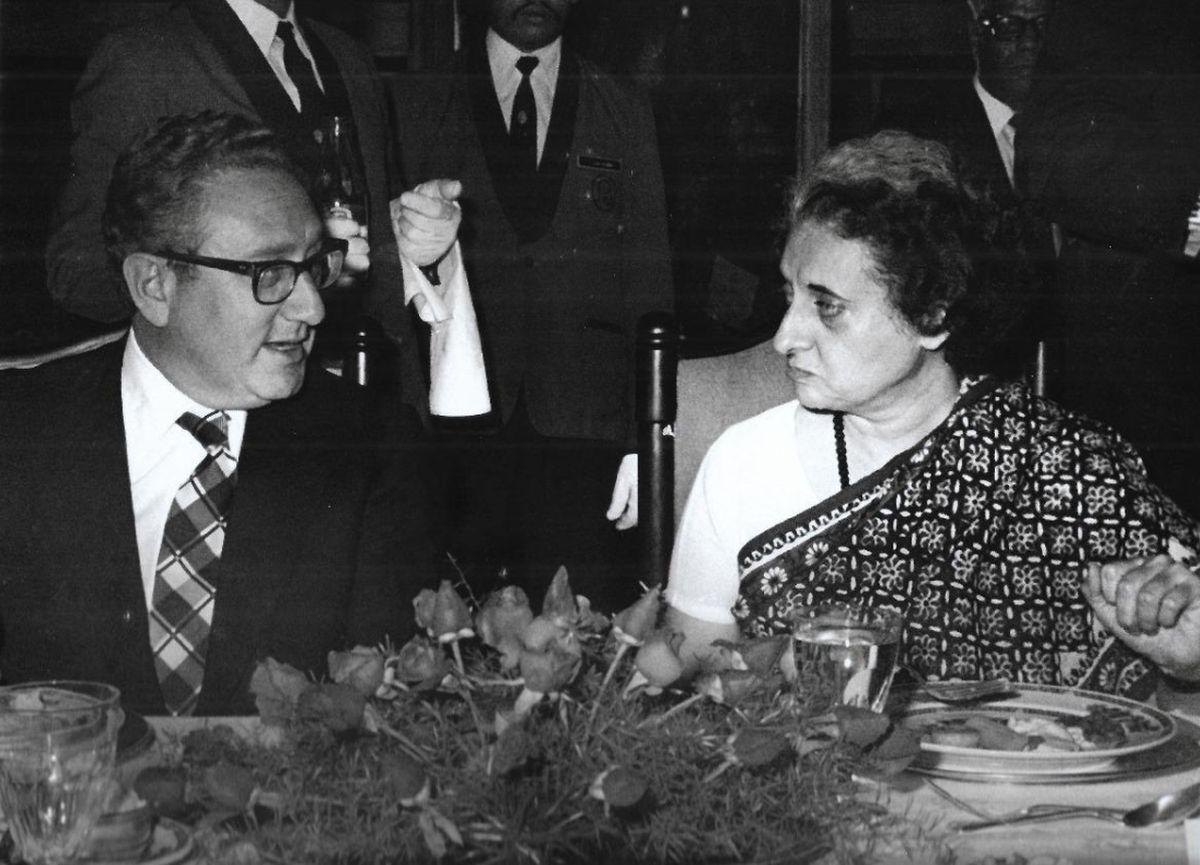
It is really shocking to hear Nixon call Indians as b******ds, and both he and Kissinger refer to Indira Gandhi as a b***h.
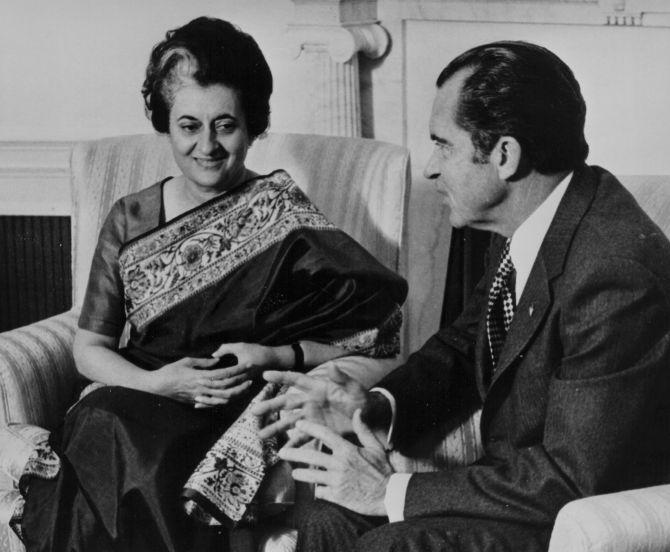
And then there is the incident when she went to meet Nixon in the White House with Indian Ambassador L K Jha. Nixon kept her waiting for half hour and how livid she was.
Yes, and I had the former CIA agent who accompanied her tell us on camera. He himself was embarrassed and shocked. They wanted to teach Indira Gandhi a lesson and humiliate her.
Indira Gandhi's story is amazing, how she traveled across Europe trying to convince the leaders that India was burdened with the 10 million refugees from East Pakistan.
What did you learn about Indira Gandhi's role during this time?
She was brave and she stood up to the Americans.
In a BBC interview she angrily said 'You think people are going to sit aside and watch people rape their women and say no we are going to quieten the situation? When Hitler was on a rampage why didn't you say that let's keep quiet and let the Jews die?'
She didn't care a hoot. And frankly at that time India was not the strongest of nations as it is now. Of course, she had the support through a strategic alliance with the Soviet Union.
Besides Germaine Greer you make references to other well-known people. Raghu Rai talks about the horrifying pictures he took in Bangladesh.
And Sydney Schanberg was The New York Times bureau chief in Delhi when he was holed up in a hotel in Dhaka.
He later went to Cambodia and covered the genocide there and was the main focus of the film The Killing Fields (1984).
I was also lucky to talk to Kai Bird, the Pulitzer Prize winning author who wrote the book on Oppenheimer, which was the source for Christopher Nolan's Oscar winning film.
Kai had spent time in India during his youth and studied there. Later her covered the Bangladesh war as a journalist.
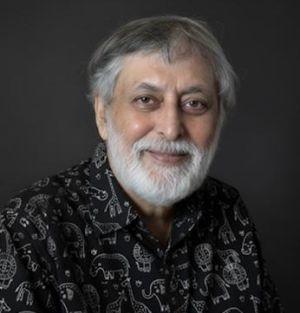 IMAGE: Ramesh Sharma
And then you also talk about the Pakistani journalist Anthony Mascarenhas.
That man was the bravest of all. You should read his two books The Rape of Bangladesh and Bangladesh: A Legacy of Blood.
Many of the facts that I have in the film come from Mascarenhas' works. And then I also consulted Lawrence Lifschultz who wrote the book Bangladesh: The Unfinished Revolution.
He is the one who reported that the US would not interfere if there was a coup against Mujib in 1975.
According to Roger Morris, Kissinger had three nemesis -- Allende of Chile, Nguyen Van Thieu of South Vietnam and Mujib. Fidel Castro told Mujib to be careful or else he would be killed.
Mujib was also a fool in the sense that he trusted people like Lieutenant General Zia-ur Rahman. He had been trained by the Pakistani army. He fought for Pakistan in the 1965 War against India. He was considered a hero in Pakistan at that time.
He eventually became president of Bangladesh after the coup against Mujib.
Despite all these interventions, coups and killings around the world, no one still holds America accountable.
That is what it is. There is no accountability. That is why the last song in the film that I wrote says America Is Above the Law. Even to this day, look at how Donald Trump is going on with Venezuela.
Look at what America did in Iraq. It will never stop. The American empire never ends. It just rebrands under different presidents.
Feature Presentation: Aslam Hunani/Rediff




 © 2025