
'I wanted to do something different, so I turned Dharamji into Hardy, making him waddle with Naseer's stick-like Laurel.'
'People enjoyed seeing him in these avatars. When you work with an evergreen superstar like Dharamji, you can make such 'items'.'
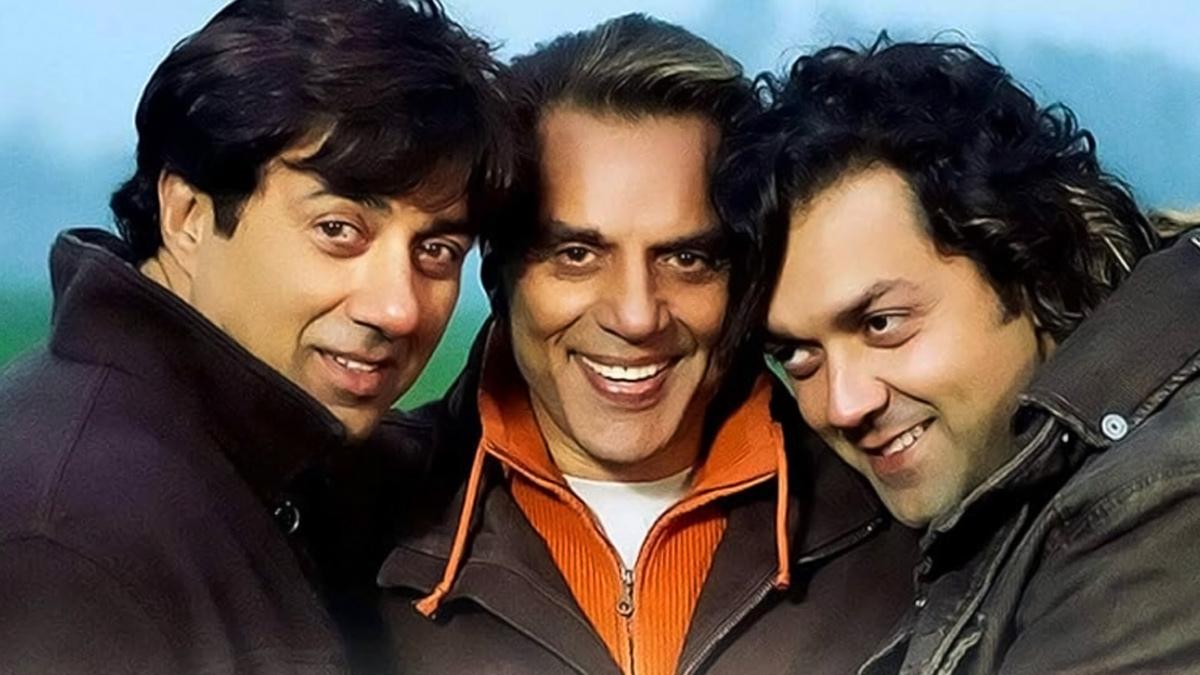
Anil Sharma has enjoyed a special relationship with the Deols and it goes back to 1987's Hukumat. A dhamekedaar action-drama starring Dharmendra, it was the top-grossing Hindi film of the year.
Two years later, the duo hit bulls' eye again with Elaan-e-Jung, followed by Tahalka.
At the turn of the century, the filmmaker created box office history with the next generation Deol -- Sunny -- with Gadar: Ek Prem Katha, and then again in The Hero: Love Story Of A Spy, the most expensive Hindi film made at the time.
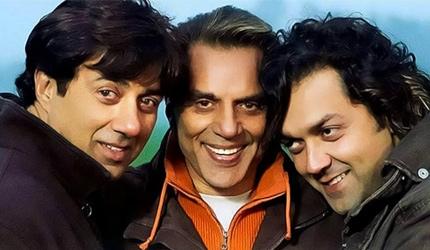
But it is 2007's Apne that remains unforgettable, bringing Dharmendra, Sunny and Bobby on screen together for the first time.
In 2013, his dad and younger brother made a cameo appearance in Sharma and Sunny's Singh Saab the Great in the song Daaru Bandh Kal Se.
Their trek continued with the blockbuster, Gadar 2 whose third instalment has been confirmed. The Apne sequel will also bring back the three Deols despite Dharmendra having passed away on November 24.
On his way to the late actor's prayer meeting, Anil Sharma tells Rediff Senior Contributor Roshmila Bhattacharya, "We never had an actor like him before, and we won't ever again."
Let's start with Hukumat which was Dharmendra's comeback film...
(Interrupts) Sabse pehle toh Dharamji never made a comeback, he was always around.
In 1987, he had seven superhits including Hukumat, Aag Hi Aag, Watan Ke Rakhwale, Insaniyat Ke Dushman, Insaf Ki Pukar, Loha and Jaan Hatheli Pe.
He was a huge star and I was privileged to work with him.
After two social dramas, Sharaddhanjali and Bandhan Kuchchey Dhaagon Ka, what promoted you to suddenly veer towards the action genre?
I didn't want to do action. I wanted to focus on social and romantic films.
But with the advent of the home video, people stopped going to the theatres to watch such films.
This left even big filmmakers like Shakti Samanta, Ramanand Sagar and B R Chopra confused, with many shutting shop.
It would upset me to see my audience watching the films I made at home.
So, that's when I decided I was only going to cater to the masses now.
Hukumat was born out of anger and revenge.
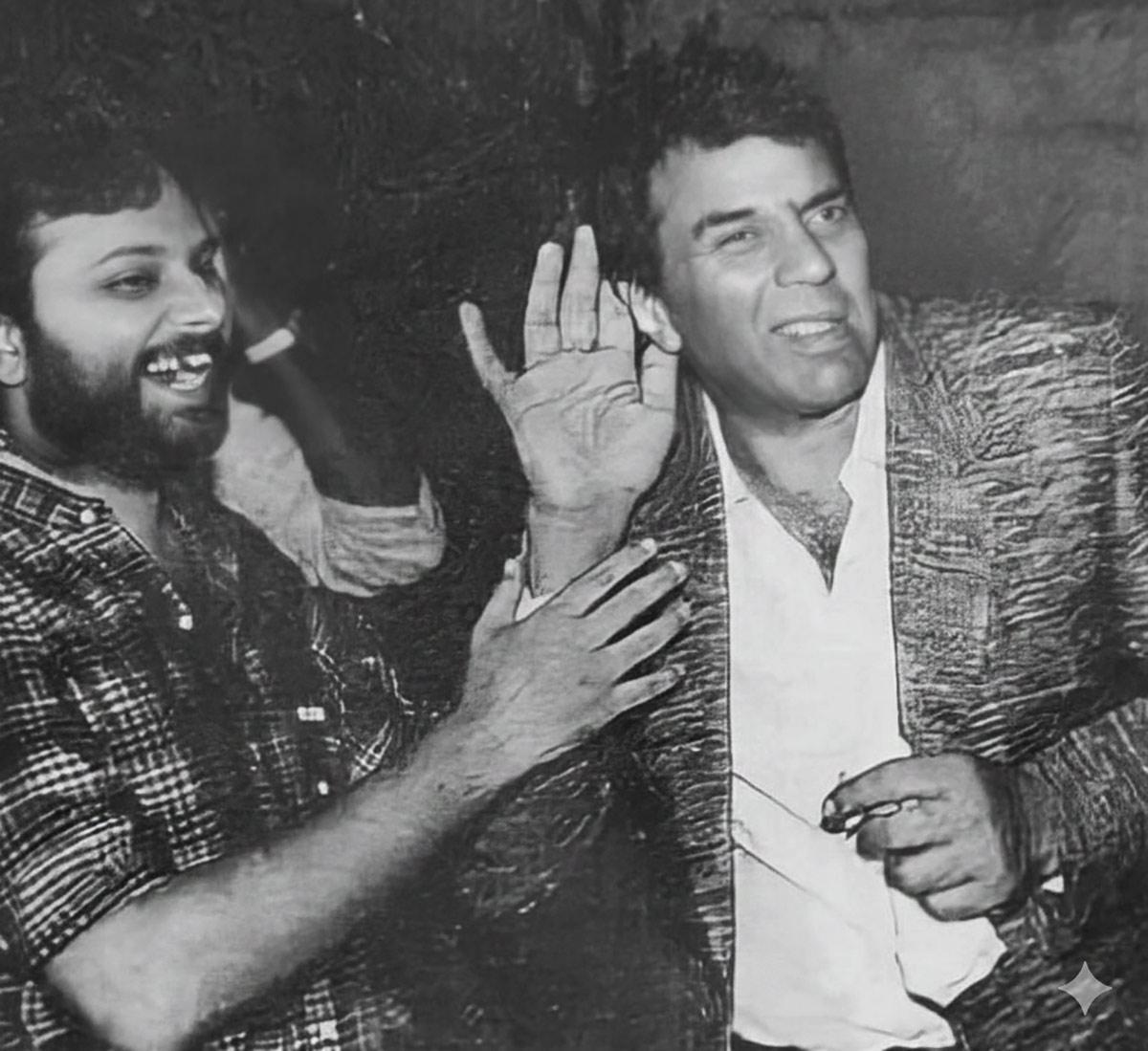
It went on to become an iconic action film. Any scene in particular that you remember?
There were so many, including Dharamji's fight with Praveen Kumar Sobti, a giant of a bad man appropriately called Rakshash.
The gold medal-winning hammer and discus thrower towered was 6 feet 7 inches and Dharamji reasoned that maybe he should through some punches too.
I don't make films with the rationale of a director, but the emotions of a viewer and I was very firm that no one was going to hit my hero.
Since Dharmaji's hands couldn't reach him otherwise, I had a sponge made for his cop, Arjun Singh, to launch himself at this man mountain.
Balancing a foot on Praveen Kumar's jang (thigh), he pummels him.
That move became very popular with the audience, as did the climax in which Arjun fires all around Sadashiv Amrapurkar's DBDN (Deen Bandhu Dina Nath) aka Mangal Singh, finally putting his foot on the chest of his father's killer, and pumping him with bullets.
Sadashiv Amrapurkar was resurrected, this time as dacoit Durjan Narayan, who turns into a terrorist, Kaala Naag, in Elaan-E-Jung, another blockbuster.
Yes, it opened on August 18, 1989, and such was my confidence in the film that we squeezed it between two much-hyped Amitabh Bachchan starrers.
Toofan, produced by Manmohan Desai and directed by his son Ketan, struck on August 11, and Prakash Mehra's Jaadugar on August 25.
Yeh donon filmon ke beech Elaan-E-Jung apna elaan kar diya(the film announced itself between these two films).
Such was the craze for it that the huge crowd which had gathered outside Delhi's Vishal cinema would not allow even the print to go in.
They wanted to play the film then and there, out on the street.
(Chuckling) Finally, using a rope, we got it into the theatre through the back.
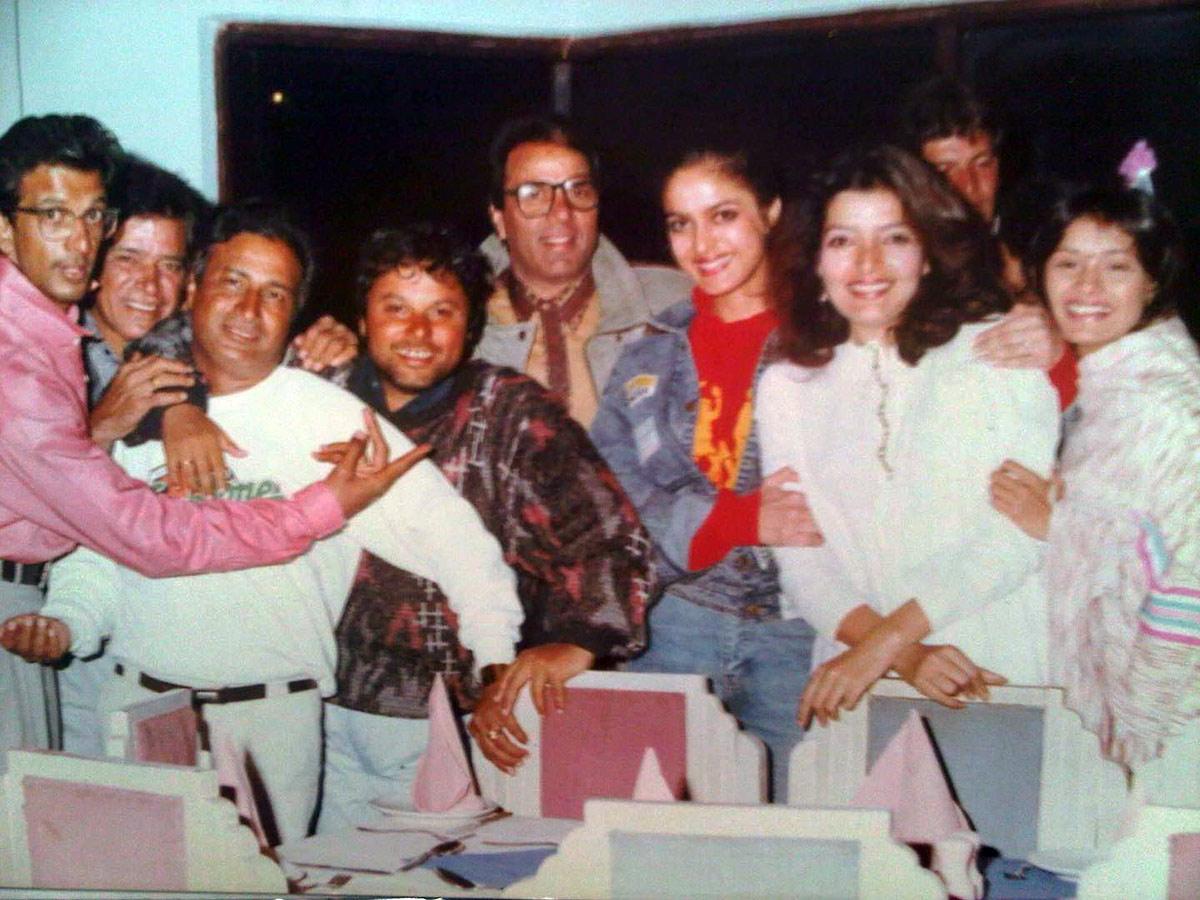
Tahalka, which completed a hat-trick at the box office for the two of you, had a song, Eya Eya O, with Dharmendra and Naseeruddin Shah dressed up as Laurel and Hardy.
I had decided I wanted to do something different, so we wrote this song and I turned Dharamji into Hardy, even giving him a small moustache, and making him waddle with Naseer's stick-like Laurel.
I applied lipstick and passed him off as a woman, bada mazaa aaya (I had a lot of fun).
People enjoyed seeing him in these avatars.
When you work with an evergreen superstar like Dharamji, you can make such 'items', but my 'items' weren't just entertaining fillers, they were incorporated into the story.
In this case, it was a ploy to get an injured Major Rao into the hospital and try to save his life.
Is it true that Naseer's role of Captain Ranveer was first offered to Sunny Deol?
Never! Sanjay Dutt and Rajinikanth sir were a part of the initial casting; I had also spoken to Jackie (Shroff) dada.
But back then, the association had put a ceiling of 12 films that no actor could break.
Sanjay was already doing a number of films and wasn't available in February-March when I wanted to shoot.
So Aditya Pancholi came in for him.
I also had to opt for Mukesh Khanna over Rajini sir because of a two-three months strike down South.
When it ended, he had to go back to the films he had been shooting for when work halted and as a result our project was pushed ahead by three months.
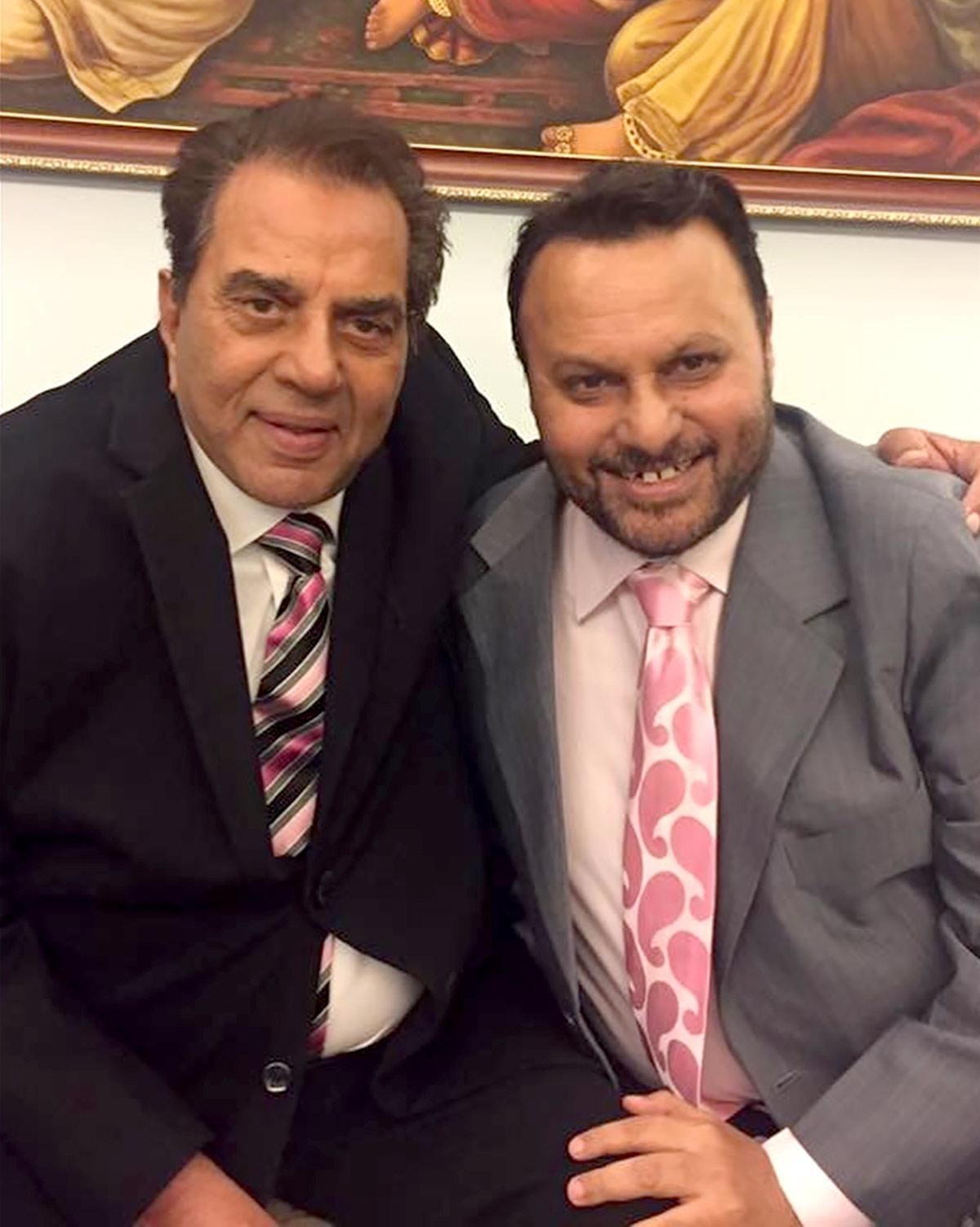
What about Dharmendra?
He was always there, through all the casting changes.
Without him, hum film soch bhi nahin sakte the (Without him, I can't even think of a film).
These films bring back so many fond memories of Dharamji who would get very involved with the script and dialogue, offering inputs of his own.
But once we started shooting, woh character ko pakad ke chalte the (he was never out of character)
We never had an actor like him before, and we won't ever again.
Such a handsome man, a man of the soil, but while bade aadmi banne ke baad kuch log apne maati ko bhool jaate hain (some forget their roots after becoming famous and successful), Dharamji remained a true son of the soil till the end.
What kind of a relationship did the two of you share away from the camera?
I was like a son to him, aur pita ke baad (after my father) if I loved anyone as much, it was Dharamji.
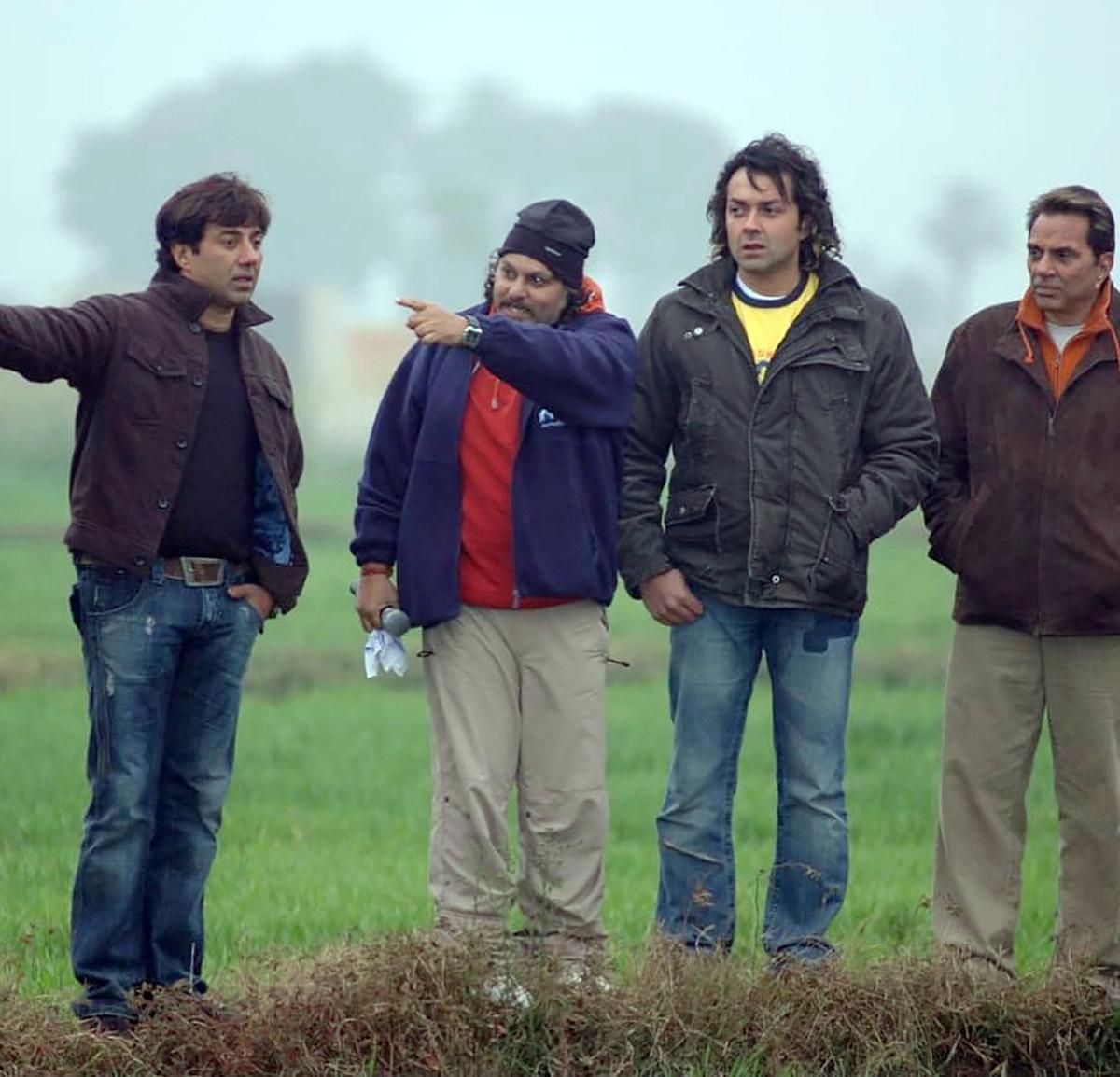
How did you bring manage to bring the three Deols together in Apne?
They wanted to make a film together and I wanted it to happen.
I was very sure I didn't want to make an out-and-out action film with the Deols.
There was a lot of love between them and I was looking to make an emotional family drama with them.
When I got this subject of a disgraced boxer and his two sons, who will go to any lengths, even risk their lives, to make his dream come true, Apne became a reality.
You also wanted to make Apne 2 and it was Dharamji's pet project...
I will find a way to make Apne happen, unko shraddhanjali denge zaroor (it will be a tribute to him).
Dharmaji ke bina Apne 2 ho hi nahin sakte (Without Dharamji, Apne 2 cannot happen), but yeh AI ka zamana hai (this is the age of artificial intelligence) so anything is possible.
Kaisa karenge, (how will we do it), kya karenge (what will we do), that I still have to figure out.
Photographs curated by Manisha Kotian/Rediff




 © 2025