
'One of the dignified aspects of their relationship is that Hema reportedly told Dharamji that she would never disturb his first family.'
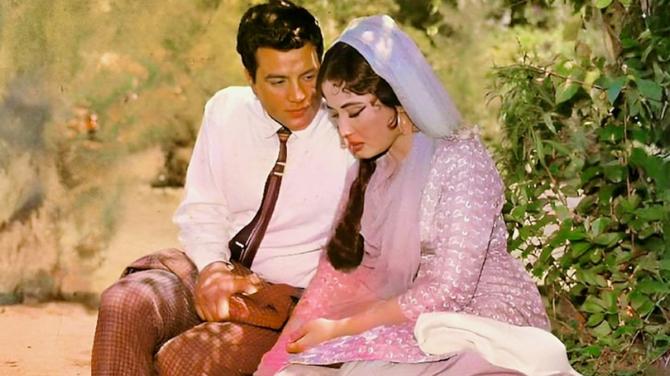
Simplicity remained Dharmendra's greatest charm, and Dr Rajiv Vijaykar wrote about it at length in the star's biography Dharmendra: A Biography: Not Just a He-Man.
"Dharmendra was a brilliant actor, but an even better human being," Dr Vijaykar tells Patcy N/Rediff.
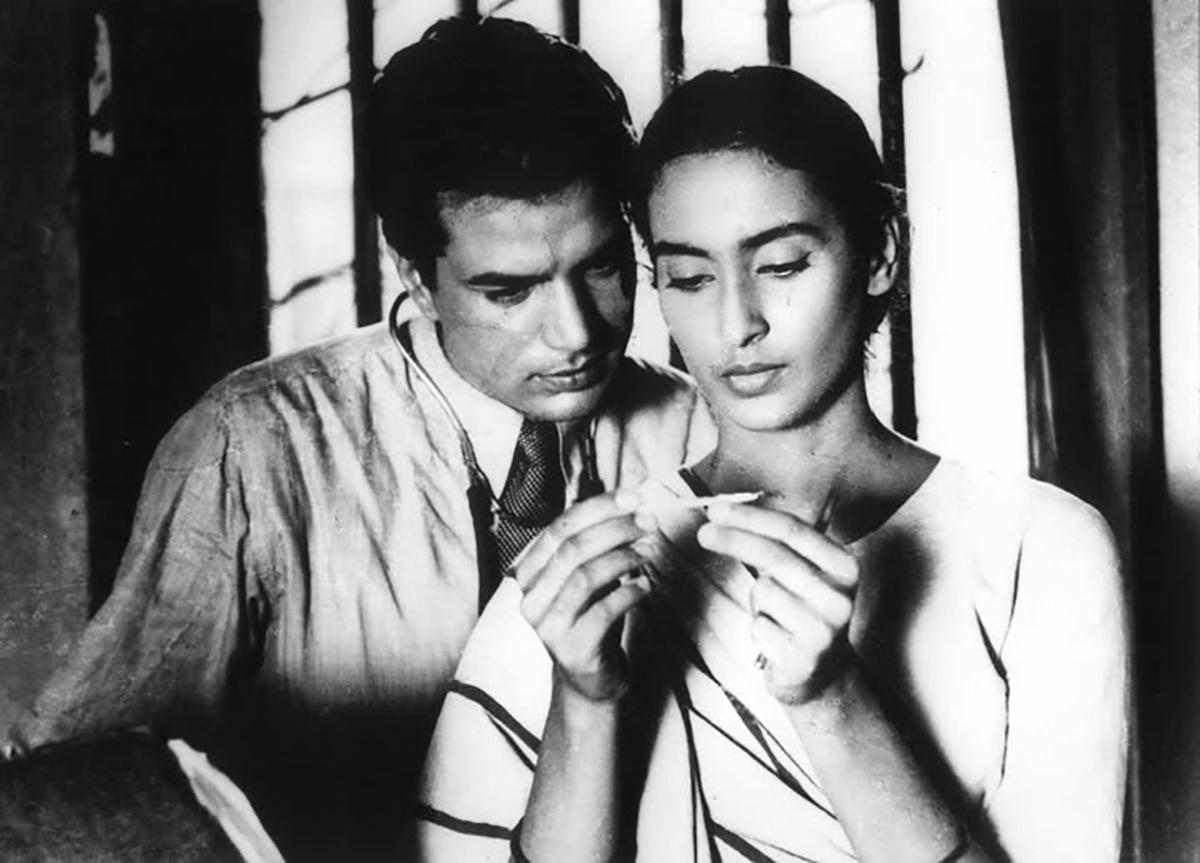
The most important role in Dharmendra's early career is often said to be Bandini. Would you agree?
He first caught people's attention with Shola Aur Shabnam. That was also the first film in which he appeared topless in a scene though that had nothing to do with the film's success.
But he was definitely noticed.
Bandini probably drew more attention because it was an acclaimed film made by Bimal Roy, a master filmmaker.
In Bandini, he wasn't really positioned against Ashok Kumar and Nutan, both highly regarded actors, but he managed to make a lasting impression in that small role.
But if I truly want to highlight Dharmendra the actor, I would point to his later films, Phool Aur Patthar.
Anupama is one of his most under-rated performances.
He was outstanding in Jeevan Mrityu and Seeta Aur Geeta.
I loved him in Mera Gaon Mera Desh, which has many similarities to Sholay. Dharamji himself told me this.
He was superb in Pratigya and Chupke Chupke.
Even Ghazab, a moderate success in which he played a double role -- one of them a ghost -- is highly under-rated.
Then, there's Apne I genuinely felt he deserved all the Best Actor awards that year. Unfortunately, he didn't get any.
In your book, you briefly touched upon Dharmendra and Meena Kumari's association. Could you talk about that?
During my research, I read something about Meena Kumari, and also spoke to someone, whose name I cannot reveal.
Both sources shared the same perspective: Dharmendra was simply an anchor for her.
It was she who entered his life with that particular emotional angle.
They worked together in several films, but only Phool Aur Patthar succeeded.
Baharon Ki Manzil, Majhli Didi, Chandan Ka Palna flopped, Purnima did moderately well.
She needed someone during that phase of her life, and he, being a good-hearted person, became that someone.
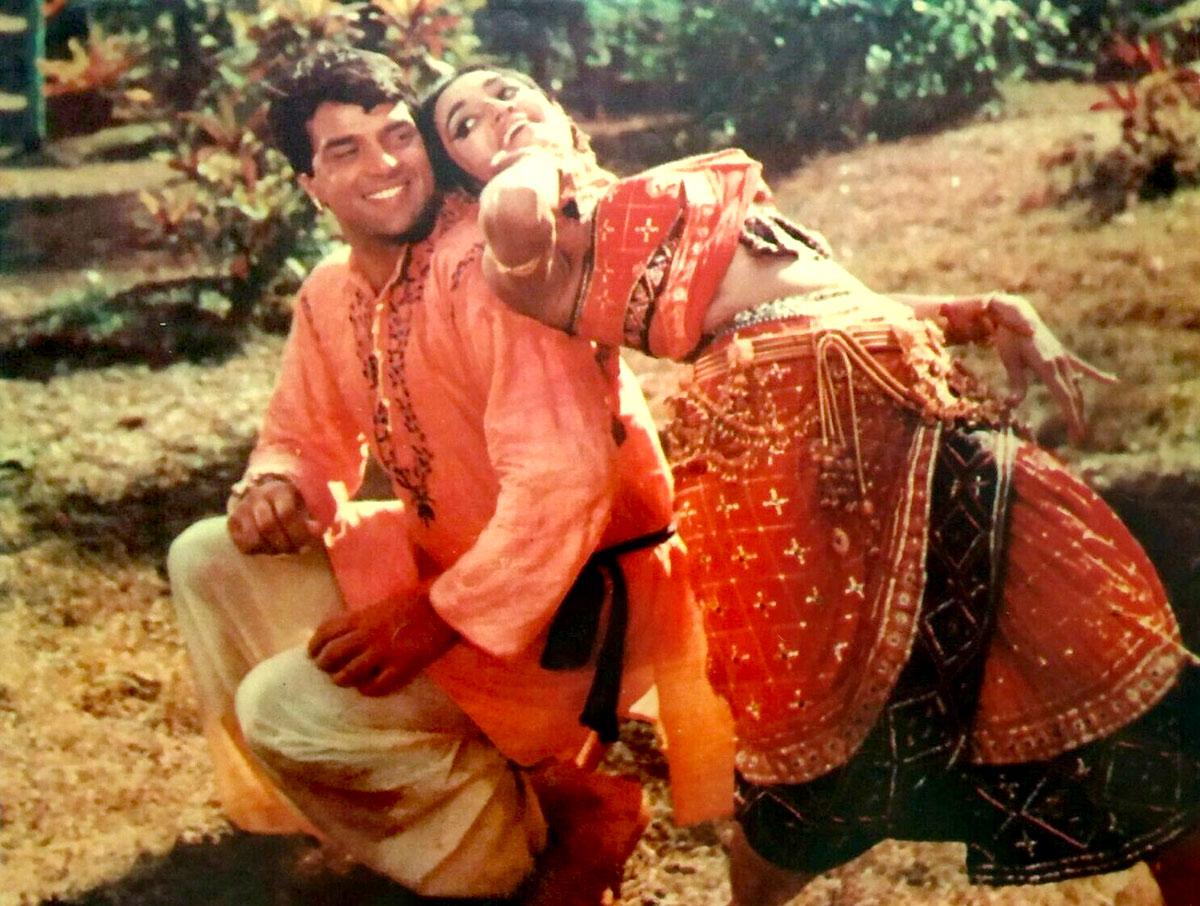
Jeetendra and Dharmendra worked together in over 12 films. Yet, not everyone knows about it.
That was the era of multi-starrers, and both actors were extremely saleable. They worked multiple shifts in a single day.
Dharmendra had a strong action image, and Jeetendra appeared in masala-style action dramas.
Jeetendra was quite amused when I told him they had done so many films together because 'most of them were flops'.
Apart from Dharam Veer, they didn't have a single major hit.
The later films, Hum Sab Chor Hain, Dharma Karma, Sone Pe Suhaga, Jaani Dost, even The Burning Train were box office failures.
They were not known as a famous pair like the way Dharmendra-Amitabh Bachchan or Dharmendra-Shatrughan Sinha were, despite having only a few films together.
You have written that Asha Parekh once requested Dharmendra not to drink on set when he was shooting with her.
Yes, Ashaji herself told me this. She mentioned that he used to be a little afraid of her. Incidentally, her pairing with Dharamji was one of the most successful ones at the box office.
They had consecutive superhits like Aaye Din Bahar Ke, Shikar, Mera Gaon Mera Desh, and Aya Sawan Jhoom Ke.
Samadhi, which was Dharamji's home production, was another success.
Ashaji told me, 'That simple boy from the village never really changed' and that was true.

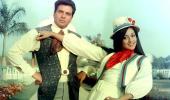
Tell us about Hema Malini and Dharmendra's relationship, personally and professionally.
Their marriage took place secretly. (Journalist) Bharti Pradhan stumbled upon the information by chance because her family shares the same priest as Hema's.
The priest hadn't realised that she wasn't just a journalist, but a journalist with considerable influence in the industry.
One of the dignified aspects of their relationship is that Hema reportedly told Dharamji that she would never disturb his first family.
For years, there was a bit of tension, which was understandable.
But when Hema had an accident (in 2015), Sunny (Deol) went to Mathura to see her. Hopefully, things are fine between the families now.
It is perhaps the most dignified second marriage I have ever seen, not only in films, but also in life.
Dharamji himself told me once that his first wife Prakash Kaur was looking for a match for Esha at that time.
Their work relationship began with their early films and deepened during the making of Sholay.
Their first proper meeting was at a premiere where Shashi Kapoor was present.
On the sets of Sholay, he began bribing the junior members of the unit so that certain shots could be prolonged. He used to give them small signals, and money because he wanted to spend more time with her.
There must have been many emotional upheavals.
I remember a headline from when I was in school, 'Hema To Marry Jeetendra.'
I was a Jeetendra fan too, largely because of the songs in his films, and I remember being quite happy about that announcement.
Eventually, people intervened and made them understand because Jeetendra was already engaged at the time.
What does Dharmendra's death mean to Hindi film industry?
Dharmendra's death means a colossal loss to everyone, his friends, family, fans, cinema and to what is known as good natural acting, which does not get shackled by method acting.
He just flowed seamlessly into every role, whether it was a ghost, a politician, a professor, a dacoit, a criminal, a don, or a commissioner.
Dharmendra was a brilliant actor, but an even better human being.
Photographs curated by Satish Bodas/Rediff










 © 2025