

'You need the drishti, the experience. I am beginning to see things differently.'

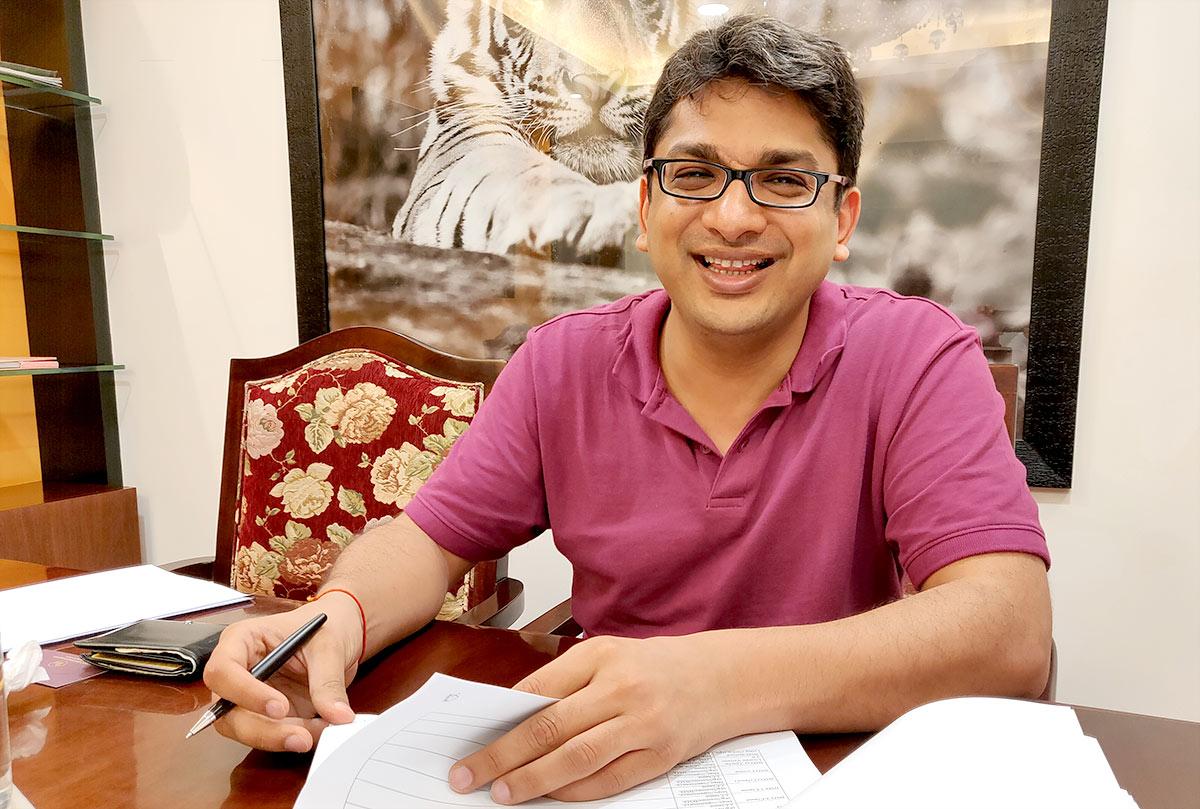
Delhi-based film-maker Ankur Singla is a former lawyer and tech entrepreneur, who sold his start-up to Amazon and launched an indie production house Barsaati Films. His debut film Ghich Pich opened in select cities on August 8.
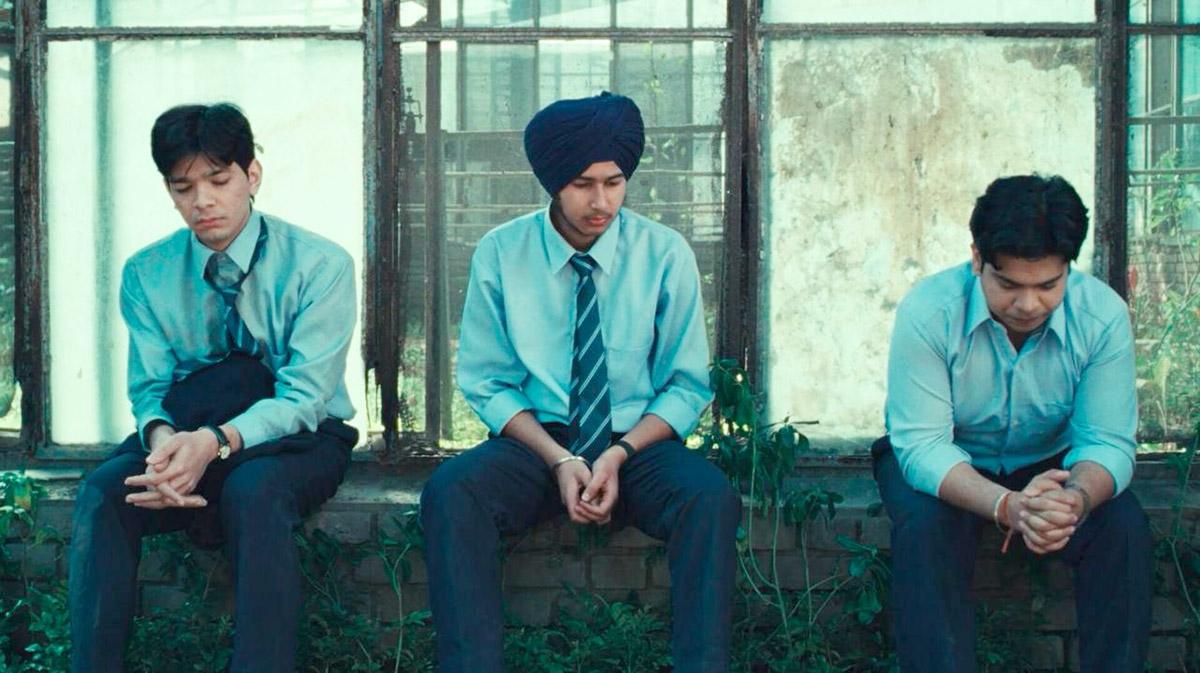
A sweet, heart-felt drama about three childhood friends, now in their final year of high school, Ghich Pich explores teenage angst, emotions associated with growing up, falling in love and father-son struggles.
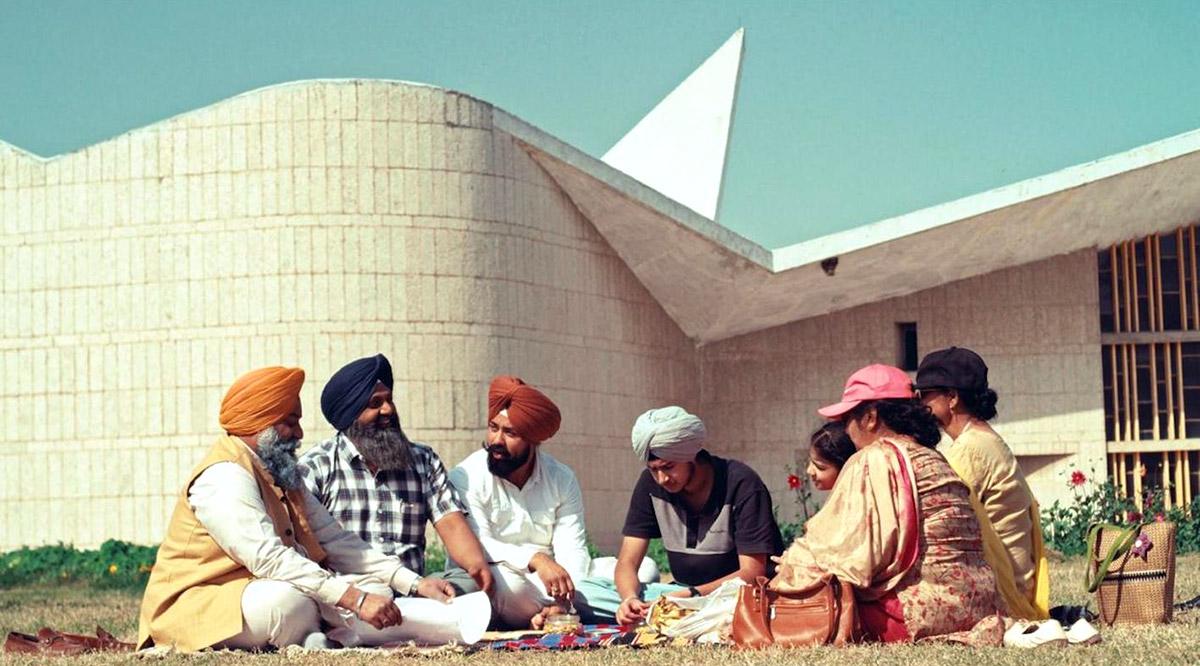
Set in the late 1990s, Ghich Pich is also an ode to Chandigarh, the first Indian planned city, designed by the French architect Le Corbusier. The city's beautiful architecture plays a backdrop to the narrative, as does its quiet town mood.
The film's three young actors are Gaurav Arora, Aryan Rana (both first time actors) and Kabir Nanda (who also stars in Kohrra 2). The supporting cast includes Geeta Agarwal Sharma, who has appeared in 12th Fail, Laapataa Ladies and was recently seen in the role of Aneet Padda's mother in Saiyaara.
Ghich Pich is the sign of the emerging film and theatre scene in Chandigarh, independent of the large Punjabi language film industry, based in Amritsar, Ludhiana and Mohali (a suburb of Chandigarh).
Ankur speaks to Aseem Chhabra about the making of the film and what Chandigarh means to him, saying, "Life is so different in small towns of Punjab versus Chandigarh. But they were so proud of living in Chandigarh."
Ankur, are your three protagonists based on real people from your life or an amalgamation which is what a lot of writers do?
Yes, definitely amalgamations. I started writing the script during COVID.
A lot of memories came flashing back in my mind.
When you have to write a three-character film, you have to make sure that you know they are genuinely different from each other.
They shouldn't seem similar -- the way they talk, their personalities.
I had prototypes in mind which were based on certain people I knew, friends, etc. And then I combined a few people together since you realise that in real life, all personalities are more complex.
Before you wrote the screenplay, you were trained as a lawyer. You had a startup. How did you learn film-making? It is one thing that people dream of becoming film-makers, and you can read books on basic script writing. But did you work on some films before that with some people?
The love for films came because I attended the National Law School in Bangalore. I started a film club as a hobby and we first watched the French New Wave films. 400 Blows really blew me away.
From there, we watched Italian New Realism films.
During COVID, I began to feel there was something in me.
I had to do something different.
I was still working at Amazon so I couldn't attend a regular film school.
So I started attending weekend classes at the Institute of Moving Images. There is no physical campus, but they offer eight-week classes in different cities. It's run by Pankaj Roy.
They basically crunch as much information and knowledge as possible. They first ask you make a one-minute film, with no cut, followed by a three-minute film with 90 cuts. A five-minute short film, and then a 20-minute diploma film using a hi-definition digital camera.
For the three-minute film with 90 cuts, I went to a Blue Tokai outlet and shot the barista making coffee. But I had to cut 90 times because then you understand the nature of continuity editing.
After that, I wrote a few short films and even directed them. But they came out quite bad.
It's a very tough thing to go through, when slightly later in your life, you realise you have to pay your dues.
This was like a two-three years long journey.
I had written a draft of Ghich Pich, but then with a writer friend I seriously began to re-work on it. I read lot of screenplays.
When you are older, you listen to other people and accept their feedback.
I began to understand that the ultimate goal of a screenplay is to convince the story to the audience. But reworking on the screenplay, I realised that my protagonists had mixed up goals. I had left many open endings.
Also at the time of casting, I understood that no matter what you write, it eventually depends on the actors. And we lucked out with the casting. Two of the young protagonists made their debuts and were very fresh.
At the edit stage, it became clearer. A lot was cut out.
And as the cliché goes, editing is rewriting.
The film truly kept improving with each phase.
I have been noticing Chandigarh's theatre and film scene has been evolving. I know Neelam Mansingh is a big theatre personality. Even Deepa Mehta has collaborated with her. And there are young film-makers like Anmol Sidhu (Jaggi) and Kabir Singh Chowdhury (Mehsampur, a docu-drama based on the life of Amar Singh Chamkila) making explosive films dealing with taboo subjects.
At the two editions of the Cinevesture International Film Festival in Chandigarh, organised by Nina Lath Gupta, I saw so many young people with a hunger for acting, making films and learning in the craft. I also noticed with films like Udta Punjab, and shows like Kohra, Tabbar, even Pataal Lok 1, a lot of actors were found in and around Chandigarh. So what do you think is happening in Chandigarh?
I live in Delhi, and traveled a lot to Chandigarh for the film. Otherwise, since 2002, I have lived in Bangalore, London and Delhi.
From my experience, I can say there are many theatre groups in Chandigarh. I think film-making is still smaller as compared to theatre. People want to write and direct, but I believe they need more guidance.
There are very few ways for people to learn, and people have to make choices. Many either go towards the Punjabi film industry, much of it is based outside Chandigarh or they move to Bombay.
Then there are casting agents like Mukesh Chhabra and who go to Chandigarh to cast. I don't think this was true 20 years ago.
So the challenge is that cinema is a very expensive art form, and often financing and then distribution become issues.
We still don't have very good answers.
But I would say cinema literacy has really shot up in recent years.
They have all seen Breaking Bad, classics of world cinema, or some latest great Japanese, Italian and South Korean films.
That is one of the challenges for film-makers, also elsewhere in India, which is that they have to create something worth watching, and is probably under the fraction of the budget of some of the films they are watching.
Tell us about Chandigarh. My impression is on one hand, it is the most modern Indian city in terms of architecture. It's the capital of two states and yet it has that very quiet, small-town mind.
I was born in 1983 and stayed there till 2002. This will sound odd, but when you grow up in a middle-class household, you have no sense of architecture. You have no sense of a city. You are taught a little bit in school that it is a beautiful, planned city but you don't really feel it in any tangible way.
When I started writing around the time of COVID, I became somewhat interested. I went back and met an architect who is a graduate from NID (National Institute of Design, Ahmedabad).
I asked him to show me around Chandigarh. He took me to various different sectors. He showed me Punjab University, gave me it a tour of the Capitol Complex.
I read books by Le Corbusier and understood his thinking.
Why can't we design a home, like a machine, like a car, where everything is super-efficient and there are no superfluous elements?
And that was also needed because after World War II, you didn't have extra resources to just make something look nice.
You mentioned that Chandigarh had a small-town mind and that's why I decided to leave to fulfil my dreams.
Corbusier designed a modern city, because Lahore went to Pakistan.
But I felt that people were maybe taking time to pick up the ideals of a big city. Many of these people were uprooted from small towns of Punjab.
My parents came to Chandigarh in 1982-1983 and slowly the city shaped them, and they shaped the city. Life is so different in small towns of Punjab versus Chandigarh. But they were so proud of living in Chandigarh.
I studied in Government Model Senior Secondary School in Sector 16. I shot the film there. When I was young I used to go to that school every day, but obviously I didn't notice anything.
This time, when I was shooting the film, I began to notice the lines of the architecture. It has been designed with so much love and beauty.
You need the drishti, the experience. I am beginning to see things differently.








 © 2026