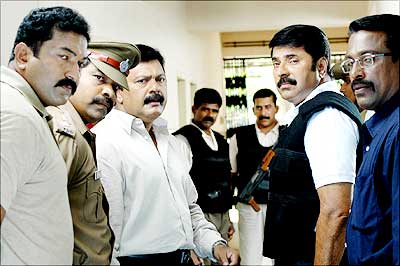
How was it for you people barging in after 36 hours and seeing the dead bodies?
It was an insult to us. We felt very bad. For professional commandos, it was frustrating. We could have done the same thing 36 hours ago. Then, there would have been some fire-fighting and we would have caught them alive. We could have done the operation with some satisfaction.
What happened was, they fired at us, still we didn't get the permission to go in. In the firing, one of our men got injured, one police person got killed. At the end of the day, what do you have? You got nothing and one of your men got injured.
After you came out of the house, how did you react?
My commanding officer and all the seniors were there. I threw down my helmet and walked off.
But the hero of Mission 90 days reacts differently...
Yes, in the film, he expresses his frustration. That exactly was in my mind, but I couldn't express it. When you are in uniform, you have to maintain certain discipline. Only if I showed what I felt inside, would the public know. That was why Mammootty spoke like that.
The SIT chief also wrote a book. He wrote it from his point of view, and I made the film from my point of view. They write books and I make films. So, all of us are conveying our points of view. There is nothing that nobody knows or is new in the film. Everything about the operation is known to everyone.
Photograph: A scene from the film Mission 90 Days.
Also Read: Penchant for photographic record nailed LTTE
 Advertisement