
The 15-year agreement will see Infosys develop a next-generation, data-driven workforce management platform to replace the existing electronic staff record (ESR) system, which annually manages a £55 billion payroll for 1.9 million NHS employees.
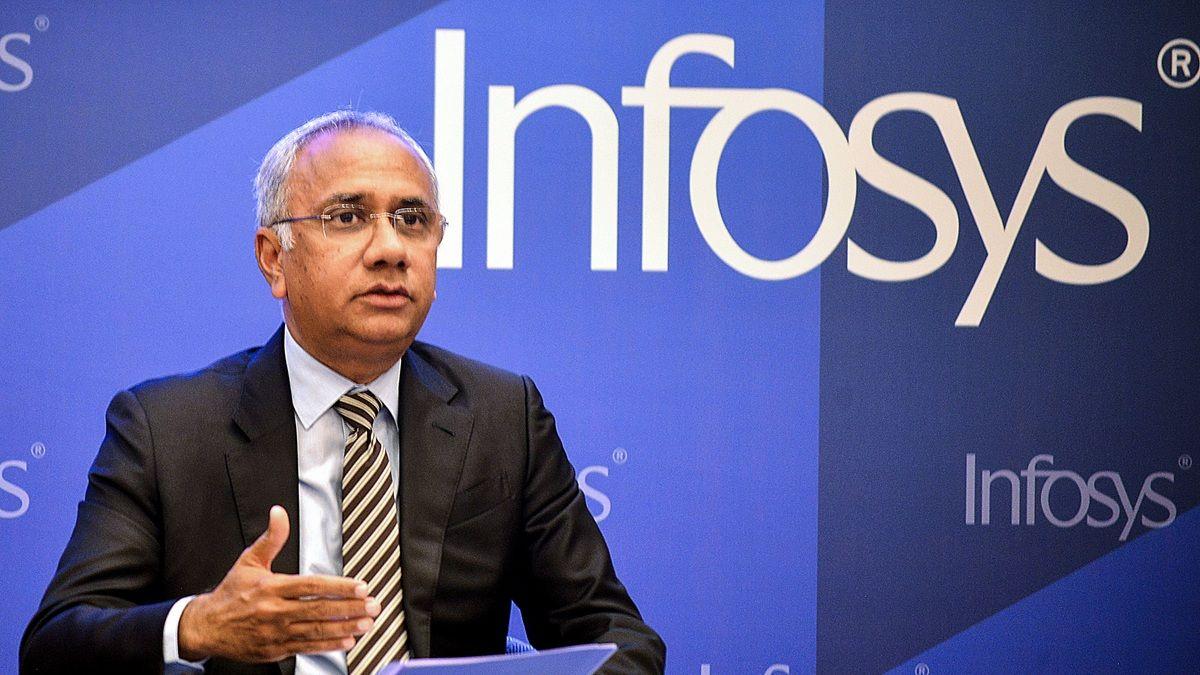
Infosys has landed a £1.2 billion ($1.59 billion or ₹14,000 crore) contract from the NHS Business Services Authority (NHSBSA) to modernise its workforce management system in England and Wales, marking one of the largest deals in recent times amid a challenging macroeconomic environment.
The mega deal comes nearly two years after the company won a $1.64 billion contract from Liberty Global. So far, the $3.2 billion deal with Germany's Daimler -- which was signed during the pandemic in 2020 -- is the biggest for Infosys.
The 15-year agreement will see Infosys develop a next-generation, data-driven workforce management platform to replace the existing electronic staff record (ESR) system, which annually manages a £55 billion payroll for 1.9 million NHS employees.
"We are honoured to be chosen by the NHSBSA to deliver generational change for employees of the NHS in England and Wales through the Future Workforce Solution," Infosys Chief Executive Officer (CEO) and Managing Director Salil Parekh said in a statement.
"With our extensive experience in delivering digital transformation and organisational change for global entities, combined with elements of our AI (artificial intelligence) offering -- Infosys Topaz -- we will deliver a platform that not only drives efficiency today but empowers the NHS to elevate its invaluable work into the future."
NHSBSA CEO Michael Brodie said: "The solution will go far beyond simply replacing ESR -- it will be a strategic enabler for building a workforce that is fit for the future."
Information-technology (IT) services companies have increasingly leaned on such mega deals to bolster revenues. However, these agreements are often slow to materialise and can pressure margins due to stiff competition.
Many of these contracts primarily focus on cost optimisation rather than transformative change -- enhancing efficiency for customers in a difficult economic climate shaped by tariffs and cost pressures.
AI and generative AI (GenAI) are emerging as tools to unlock operational value, allowing savings to be redirected into broader transformation initiatives.
Phil Fersht, founder and CEO of HfS Research, called the Infosys-NHSBSA deal "one of the most ambitious digital workforce transformations" in the UK public sector.
"By re-architecting how the NHS manages, supports, and empowers 1.9 million employees, Infosys and NHSBSA are moving beyond system replacement to systemic reinvention. This deal exemplifies how AI-enabled services can rewire large institutions from the inside out -- where technology, data, and people converge to build a more adaptive, human-centred enterprise."
Aligned with the NHS's 10-year health plan, the new workforce solution will deliver a modern, flexible, and integrated platform covering the entire employee lifecycle -- from recruitment and onboarding to payroll, career development, and retirement.
The deal also reflects Infosys's improved visibility into its deal pipeline this year, which prompted a guidance upgrade in July. The contract is expected to add around $150 million annually to the company's top line.
By comparison, HCL reported a total contract value of $2.6 billion in its second quarter but noted the absence of mega deals, relying instead on a mix of small and large contracts.
Wipro and Cognizant inked several mega deals exceeding $500 million this year, while TCS secured a $640 million, seven-year order from Danish insurer Tryg -- the company's first major deal since January 2025.
India's top six IT services firms, alongside Cognizant Technology, face at least $18 billion in deal renewals this year. Against the backdrop of macroeconomic headwinds and US tariffs clouding future growth, these renewals carry heightened significance.










 © 2025