
India Inc, which is sitting on cash balances of ₹13.5 trillion, is using the funds to meet capital expenditure as well as brownfield expansion, resulting in ‘anaemic’ demand for bank loans, State Bank of India (SBI) chairman CS Setty said at an event on Monday.
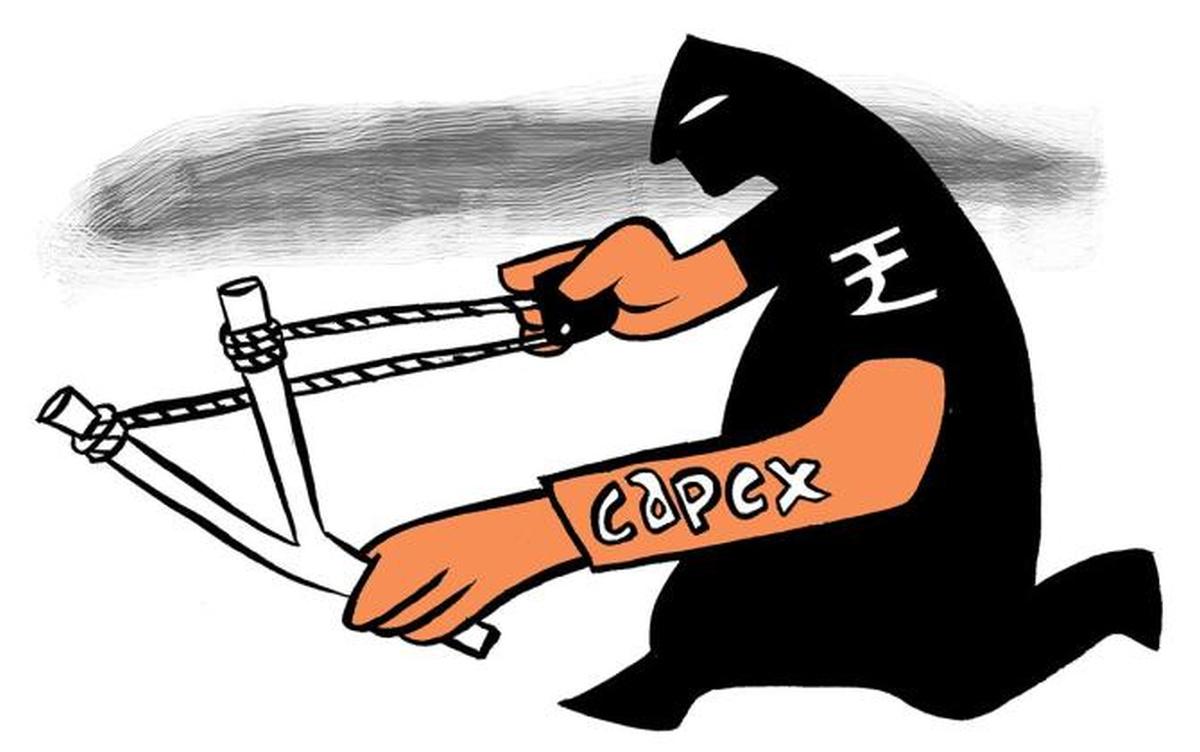
He added that a slowdown in corporate credit is mainly due to lack of demand.
Speaking at the Federation of Indian Chambers of Commerce and Industry-Indian Banks Association (Ficci-IBA) banking event, Setty also said the IBA will formally request the Reserve Bank of India (RBI) to allow Indian banks to finance mergers and acquisitions (M&As) of Indian corporates.
It would start with listed companies where acquisitions are more transparent and approved by shareholders.
He said, “Of late, corporate funding has shown some shift towards capital markets, and private credit, but there are long-term financial requirements.
"So, the banks have to step up as the next wave of long-term capex, which is essential for India's growth ambition.”
“What we are witnessing is that deleveraging has already taken place in the corporate sector, and companies now hold significant cash balances.
"Our internal estimates put the cash availability of corporates at ₹13.5 trillion, which means that capex expansion or brownfield investments are largely being met through their own internal resources,” he said.
He added that while a broad spectrum of corporates does have strong capex plans, these may not fully translate into corporate credit, as they either have access to capital markets or robust internal funds.
RBI data suggests that credit to industry recorded 5.5 per cent year-on-year (Y-o-Y) growth, compared with 7.7 per cent in the fortnight ended June 27.
In FY26 (till July), India Inc has raised ₹4 trillion through corporate bonds from the debt capital market.
Additionally, corporates have raised over ₹1 trillion from the equity capital markets through block deals, and qualified institutional placements (QIPs).
Several large banks, including HDFC Bank, ICICI Bank, Axis Bank, Kotak Mahindra Bank, Federal Bank, and others, have noted that Indian corporates are increasingly turning to equity and debt markets for their funding needs, leading to slower growth in their corporate loan books in Q1FY26.
“Most of the banks have witnessed one of the most anaemic corporate credit growths in recent times in Q1,” Setty said.
The SBI chief noted that major overhangs in the banking sector — such as liquidity coverage ratio (LCR) norms and project financing norms — are now behind them. And, banks are well-positioned, going forward.
“I don't think it is about supporting corporate credit growth.
"I think it is not about supply issues. In my view, it is a demand issue.
"And, hopefully, the demand for corporate credit comes back as soon as possible,” he said.
He added that it is important for the corporate world to start looking at capacity expansion right away.
This will definitely be supported by both the capital markets, as well as debt markets through the banking system.
He also said lenders, including SBI, will have to step up financing startups and micro, small and medium enterprises (MSMEs) in hunt for new business.
This is because big corporates are shifting to capital markets and private credit for incremental funding needs.
MSMEs are central to jobs and economic growth but have traditionally lacked access to formal bank credit.
However, enablers such as formalisation and digital trade have made lending to this segment safer and more scalable, he said.
Setty also highlighted that credit risk remains an important concern for all banks.
This is given their fiduciary responsibility to keep depositors’ money safe and manage credit risk prudently.
They are now increasingly seeing significant risks on the cyber front, particularly in terms of customer protection.
“Today, what we are saying is that if a customer is sharing his OTP or compromising his credentials, we as vendors or bankers may not have a responsibility,” Setty said.
He added that in many global jurisdictions, regulators have started talking about shared responsibility.
“So, it is important to handle this risk proactively.
"The large amount of operational risk coming from the liability accounts have to be realised, which was not very important earlier,” he said.
He added that opening a loan account today seems to be more safe than opening a deposit account.
“You have the issue of mule accounts, the issue of wrong transactions happening, which is central to our customer protection activities.
"So, this risk definitely has to be handled,” he added.












 © 2025