
Major foreign mining and refining companies have assured the Indian government that they will have sufficient stocks of rare-earth oxides to supply to the winning bidders under the country’s production-linked incentive (PLI) scheme for indigenous manufacturing of rare-earth permanent magnets (REPMs), Business Standard has learnt.
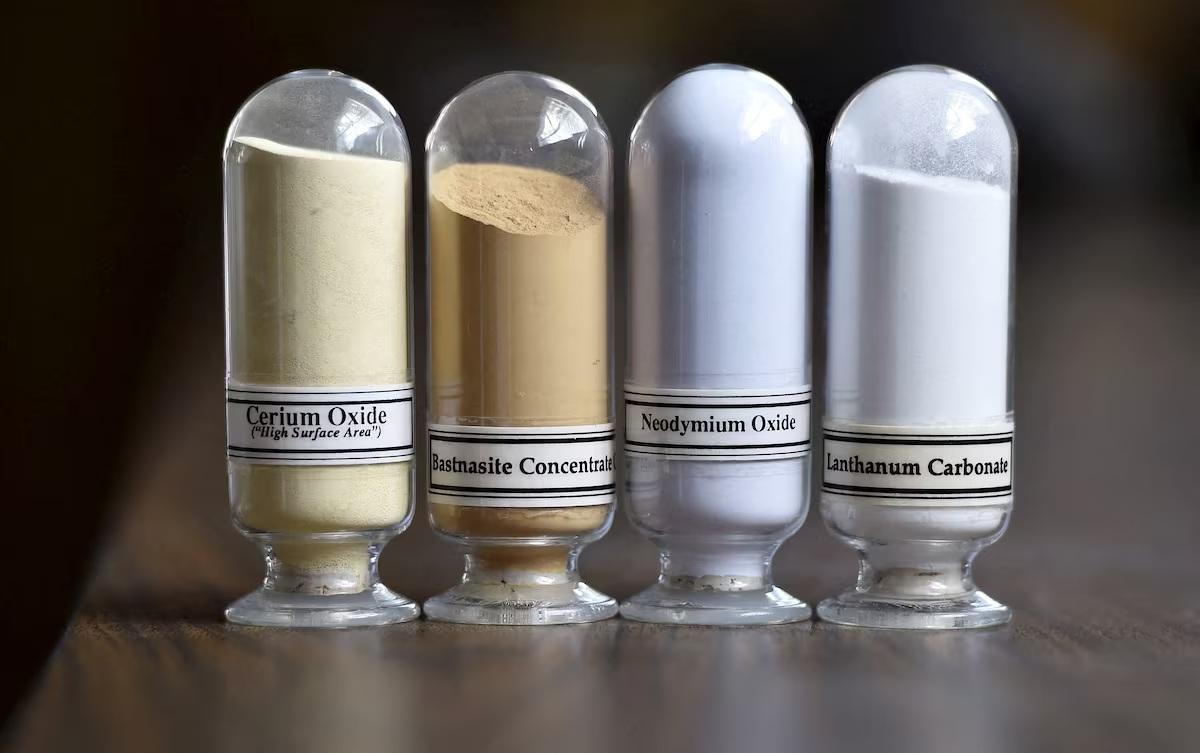
These international mining and refining companies include UK-based Rainbow Rare Earths and Australia-based Lynas Rare Earths, and Iluka Resources.
The Ministry of Heavy Industries (MHI) is the nodal ministry for the scheme, which is currently under intense inter-ministerial discussions.
The PLI scheme proposes financial incentives, both capital subsidy and sales-based incentives of about Rs 7,350 crore, for private players that set up five manufacturing plants with a combined REPM production capacity of 6,000 tonnes per year.
According to the MHI’s estimates, around 1,500 tonnes of rare-earth oxides will be required to produce 6,000 tonnes of REPMs.
In India, only Indian Rare Earths Ltd (IREL), which operates under the Department of Atomic Energy (DAE), produces these oxides and can supply no more than 500 tonnes to the winning bidders under the scheme.
The remaining 1,000 tonnes will, therefore, have to be imported.
“Bharat Heavy Electricals Ltd (BHEL), which functions under the MHI, informally reached out to about 20 foreign mining and refining firms to check if they would be able to supply rare-earth oxides to the winning bidders.
"Many of them, including Rainbow Rare Earths, Lynas Rare Earths, and Iluka Resources, responded positively,” a senior government official told Business Standard.
A second official said the firms that responded positively informed BHEL that they have sufficient stocks of rare-earth oxides to meet the needs of the winning bidders for several years and are willing to enter long-term supply contracts to ensure this.
This assurance is expected to assuage the Department of Expenditure’s (DoE) concerns that the PLI scheme could merely shift India’s import dependence from finished magnets to rare-earth oxides.
China controls about 90 per cent of REPM production in the world right now.
Since April, it has restricted exports of REPMs to India, affecting automobile output in the country.
The first official told the newspaper that even IREL, during recent inter-ministerial discussions, stated that it is working to double its output of rare-earth oxides from 500 tonnes to about 800–1,000 tonnes, which would reduce the import requirement to just 500–700 tonnes.
In addition, some state governments have awarded contracts to small private firms for beach sand mining to produce rare-earth oxides domestically, so that IREL is not the only local source in the coming years, the second official said.
“Through these discussions with IREL and foreign mining firms, and through new beach sand mining projects in India, the government wants to ensure that the availability of rare-earth oxides is not a concern for the winning bidders even before the PLI scheme is officially launched,” the official added.
Rainbow Rare Earths, Lynas Rare Earths, and Iluka Resources did not respond to Business Standard's queries regarding this matter till the time of going to the press.
During the inter-ministerial discussions held several weeks ago, the DoE, under the Ministry of Finance, had sought clarity on the long-term strategy for securing rare-earth elements, as the proposed PLI scheme focuses only on setting up plants that convert rare-earth oxides into REPMs, even though India currently lacks adequate oxide supplies.
The DoE noted that China has a “stranglehold” not only over REPM production, but also over the refining of rare-earth elements used in their manufacture.
It cautioned that while the scheme could reduce India’s dependence on imported REPMs, it might simply shift the dependence to imports of rare-earth oxides from other countries to meet the 1,000-tonne shortfall.
The REPMs story
- PLI scheme for rare-earth permanent magnets (REPMs) proposes incentives for private players that set up five manufacturing plants.
- According to the MHI’s estimates, around 1,500 tonnes of rare-earth oxides required to produce 6,000 tonnes of REPMs.
- In India, only Indian Rare Earths Ltd (IREL) produces these oxides. It can supply no more than 500 tonnes to the winning bidders of PLI
- The remaining 1,000 tonnes will have to be imported
- Meanwhile, IREL is also working to double its output of rare-earth oxides to about 800-1,000 tonnes from 500 tonnes
- Globally, China controls about 90% of REPM production












 © 2025