
The small sports utility vehicle (SUV) segment — comprising models less than 4 metres in length — could witness the “maximum” growth among all categories in the coming months following the recent goods and services tax (GST) rate rationalisation, Tarun Garg, chief operating officer of Hyundai Motor India (HMIL), said.
“The small SUV segment is already the biggest segment in the car industry.
"GST rate rationalisation, coupled with the 8th Pay Commission recommendations, and the rising customers’ aspirations could give a huge demand boost...small SUV segment could see the maximum growth,” he told reporters on the sidelines of the 65th annual convention of the Society of Indian Automobile Manufacturers (Siam).
Garg said the appeal of small SUVs is evident from the number of launches in this category over the past 4-5 years, compared to only a few in the hatchback segment, which also falls in the sub-Rs 10 lakh price range.
“That aspiration of the customer (for a comparatively bigger car like a small SUV) will not die,” he stated.
Garg noted that the urban market, driven largely by sentiment, is now expected to see strong demand for small SUVs.
“The rural market does well when there is good monsoon, minimum support prices, etc.
"Urban market does well when the overall sentiment is positive.
"Now, with the GST rate change, the urban market will also get a fillip,” he explained.
Small SUVs currently account for about 30 per cent of the industry’s overall passenger vehicle sales. In the April–July period, 395,114 units of small SUVs were sold in India.
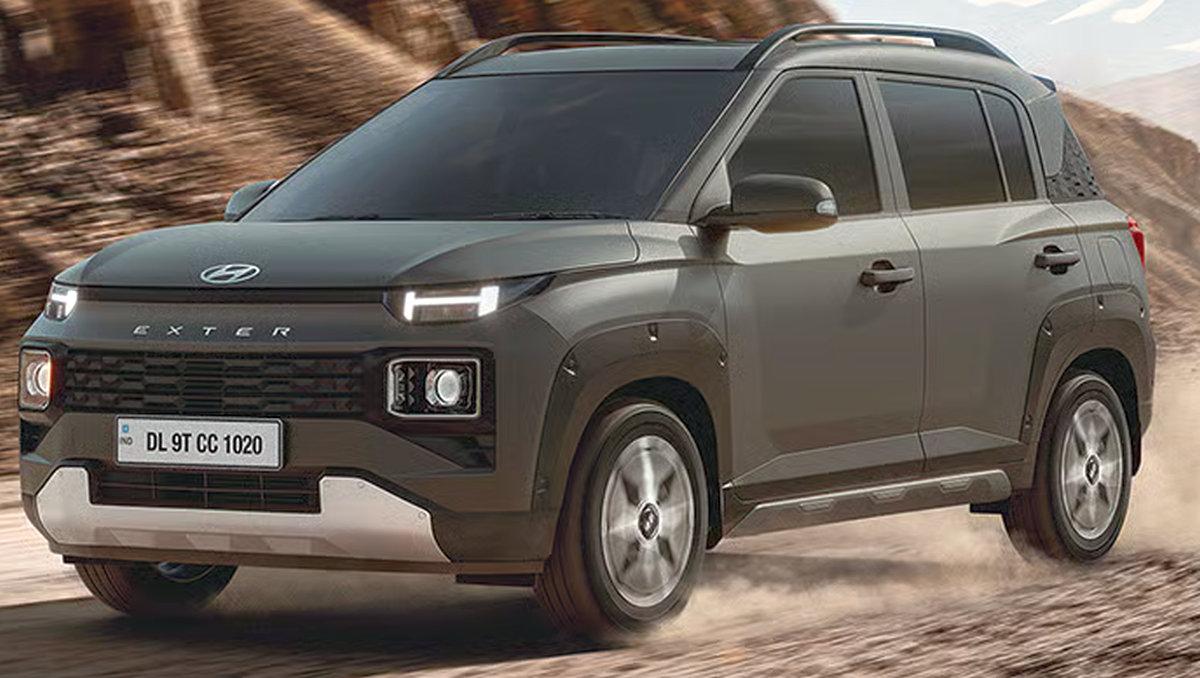
Hyundai’s Exter, Maruti’s Brezza, Tata Motors’ punch and Kia’s Sonet are few of the key models in the small SUV segment.
Looking at the broader market, Garg said that in the past 20 years, the compounded annual growth rate of auto industry volumes has been 4.5–5 per cent.
“In the April–August period, the industry’s volume sales dropped by two per cent year-on-year (Y-o-Y).
"There were danger signs of the sales slipping into a negative category.
"The government’s decision (to rationalise GST) came at the right time. Festival season is now starting.
"We will see very good momentum now till the end of FY26,” he added.
The COO projected that during September–March of FY26, industry volume sales could grow around 5 per cent Y-o-Y, but tempered expectations of a dramatic surge.
“It is true that the GST rate cut is a huge step. However, geopolitical issues are there and they will have some negative impact.
"Normalcy in geopolitical issues can give even more fillip to overall industry sales,” he stated.
On September 3, the GST Council reduced the tax on small cars (less than 4 metres in length and with engines up to 1,200 cc for petrol and 1,500 cc for diesel) to 18 per cent from the earlier 29–31 per cent (including cess).
For larger cars (over 4 metres, engines above 1,500 cc, and ground clearance above 170 mm), the rate was lowered to 40 per cent from an effective 50 per cent earlier.
The Centre has also withdrawn the compensation cess.
Motorcycles with engine capacity below 350 cc will now be taxed at 18 per cent instead of 28 per cent.
The revised GST rates will take effect from September 22.












 © 2025