
The operating performance of the country’s largest passenger carmakers, Maruti Suzuki India (MSIL) and Hyundai Motor India (HMIL), in the July–September quarter (Q2) of 2025–26 (FY26) outpaced brokerage expectations.
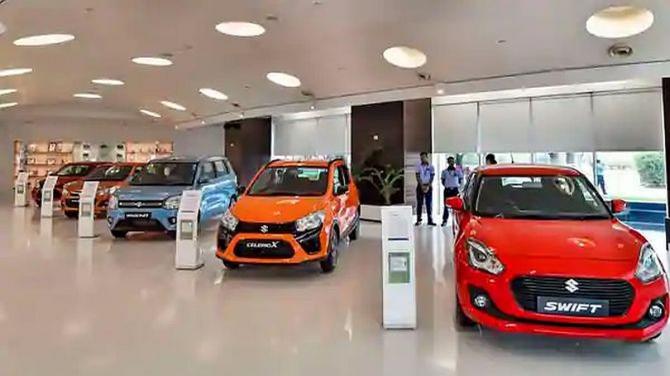
Profitability stayed firm, helped by a richer product mix and tighter cost control.
The outlook for the domestic passenger vehicle (PV) segment remains upbeat, with demand improving after the goods and services tax (GST) cuts.
Most brokerages continue to take a positive view of the two stocks.
Volume trends were uneven, with softer domestic sales offset by stronger exports. MSIL’s volumes rose 2 per cent year-on-year (Y-o-Y), while HMIL’s slipped slightly.
For MSIL, domestic sales fell 5.1 per cent as customers delayed purchases in anticipation of GST-driven price cuts.
Exports, however, jumped 42.2 per cent to a record quarterly high.
Similarly, HMIL’s domestic sales declined 7 per cent, but exports climbed 22 per cent from the same period last year.
Despite slower domestic sales, MSIL’s revenue rose 13 per cent — ahead of estimates — thanks to an 11 per cent increase in average realisations, driven by a higher share of sport utility vehicles (SUVs) and exports.
HMIL’s revenue increased 1.2 per cent Y-o-Y and 6 per cent sequentially, with realisations up 1.7 per cent.
Both companies saw gains on the margin front. HMIL’s gross margin improved by 240 basis points (bps) Y-o-Y, with SUVs making up 71 per cent of domestic volumes and exports rising from 22 per cent to 27 per cent of sales.
The stronger mix pushed operating margins up 110 bps.
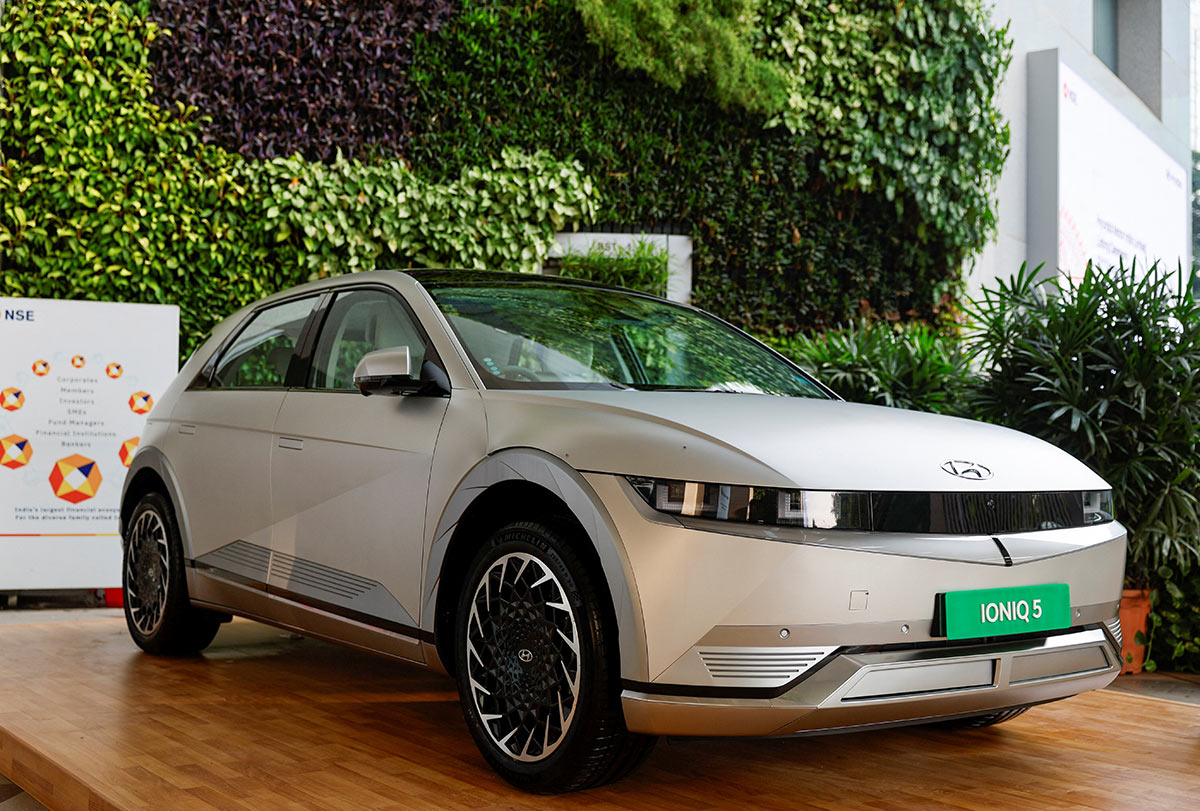
HMIL expects some pressure on margins ahead due to ramp-up costs at its new Pune plant and commodity inflation but aims to offset this through its favourable product mix, higher exports, and continued cost discipline.
MSIL’s operating profit margin was 140 bps lower Y-o-Y but still came in above projections.
Margins held steady sequentially despite higher discounts and promotions, aided by cost reductions and a stronger model mix.
JM Financial expects the domestic PV market to stay buoyant, supported by GST cuts, the 8th Pay Commission, repo rate cuts, and better liquidity.
HMIL is expected to grow in step with the industry in FY26, with medium-term volume growth anchored by 26 new models — 13 internal combustion, five electric, eight hybrid, and six compressed natural gas variants — slated for launch between FY26 and 2029–30.
Eight of these models are due by 2026–27 (FY27), with further upside from the Pune plant ramp-up.
Analysts at JM Financial, led by Saksham Kaushal, maintain an ‘add’ rating on HMIL with a March 2027 target price of Rs2,650, valuing it at 26 times FY27 earnings.
The stock has gained 34 per cent over the past year and currently trades at Rs 2,637.
Motilal Oswal remains optimistic about MSIL’s prospects.
The GST cut has revived small-car demand, making vehicles more affordable for price-conscious buyers.
Along with new launches such as the Victoris and eVitara, this is expected to help MSIL capture additional market share, said analyst Aniket Mhatre.
MSIL also expects to exceed its export guidance of 400,000 units in FY26.
Any government incentive for hybrids could further rerate the stock, with MSIL best placed to benefit.
Motilal Oswal has a ‘buy’ call with a target price of Rs18,712, valuing it at 28 times September 2027 earnings per share.
The stock has risen 46 per cent over the past year and now trades at Rs16,186.












 © 2025