
'At COP30, the emphasis will be on unlocking climate finance, reinforcing the principle of common but differentiated responsibilities, and building resilience through inclusive transitions and the mainstreaming of adaptation.'
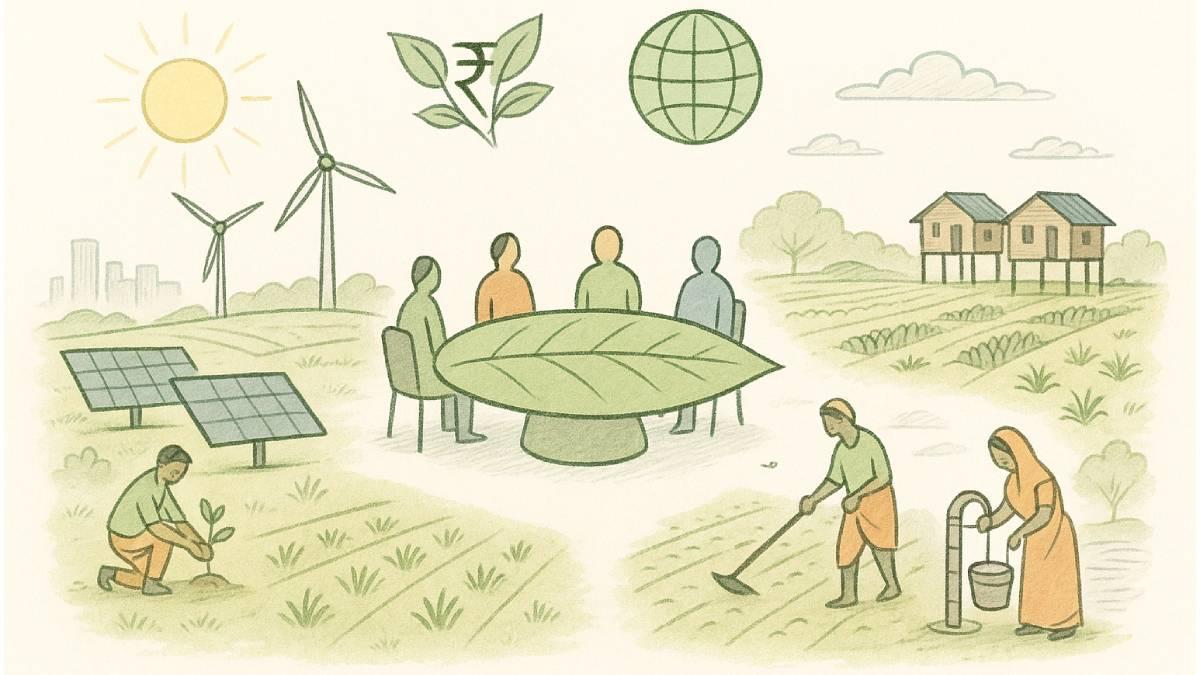
At the 30th Conference of the Parties (COP30) to be held from November 10 to 21, 2025, in Belem, Brazil, India will likely focus on climate finance, climate adaptation, and the principle of common but differentiated responsibilities, says Ashish Chaturvedi, head of action for climate and environment at the United Nations Development Programme (UNDP) India.
In an email interaction with Sudheer Pal Singh/Business Standard, he elaborates on the country's priorities and strategies.
What are India's key priorities at COP30, and what outcomes is the country aiming for?
At COP30, India will likely place climate finance and climate adaptation at the centre of its priorities.
The focus will also be on ensuring that emerging and developing economies can transition in ways that are fair and inclusive.
India has already demonstrated strong leadership in renewable energy and is on track to meet its Nationally Determined Contributions (NDCs) for 2030 under the Paris Agreement.
Looking ahead, India is likely to advocate for stronger partnerships that can translate ambition into concrete action.
Mobilising resources and technical expertise at the scale needed to achieve its net zero target by 2070 will be key.
India's message is clear: climate action and sustainable development must advance together, delivering growth that is environmentally responsible and socially inclusive.
At COP30, the emphasis will be on unlocking climate finance, reinforcing the principle of common but differentiated responsibilities, and building resilience through inclusive transitions and the mainstreaming of adaptation.
Do you think India has the right policy and regulatory landscape for a meaningful energy transition?
Yes. India has established a strong policy and regulatory foundation for an effective energy transition.
The government's ambitious targets and supportive measures have already produced visible progress in renewable capacity and electrification.
In fact, India achieved over 50 per cent of its installed electricity capacity from non-fossil fuel sources nearly five years ahead of schedule, well before its NDC target.
The National Electricity Plan and the National Green Hydrogen Mission signal long-term intent and provide a clear road map for decarbonisation.
Complementary measures -- such as renewable purchase obligations for utilities, energy efficiency codes, and incentives for electric mobility -- further strengthen the framework and build investor confidence.
These examples show that India's system increasingly rewards low-carbon choices.
The next step is to ensure these policies translate into tangible results on the ground.
In what ways has India integrated climate adaptation into national and sub-national development plans?
Adaptation is no longer treated as a standalone issue in India; it is becoming a core part of overall development planning.
The National Action Plan on Climate Change and State Action Plans on Climate Change embed adaptation across sectors such as agriculture, water, health, and coastal management.
Flagship programmes -- including the Pradhan Mantri Krishi Sinchayee Yojana, MGNREGA (Mahatma Gandhi National Rural Employment Guarantee Act), and the National Watershed Development Programme -- are integrating adaptation with poverty reduction, water security, and livelihood enhancement.
India's NDC further reinforces the need to bring adaptation into vulnerable sectors such as agriculture, water, health, and disaster management.
At the state level, governments are piloting climate-resilient farming, ecosystem-based adaptation, and resilient infrastructure.
District-level planning is beginning to incorporate climate risk assessments, preparing vulnerable communities -- especially smallholder farmers and coastal populations -- for climate shocks.
This multi-layered approach embeds adaptation into policies, programmes, and plans at every level.
The upcoming National Adaptation Plan, led by the ministry of environment, forest and climate change, with technical support from UNDP under a Green Climate Fund project, will build on this framework.
It aims to strengthen planning, mobilise resources, and make climate-resilient development a central part of decision-making across the country.
In what ways is climate finance accelerating India's transition to a low-carbon economy?
Climate finance turns plans into real action.
While India's domestic investments in renewable energy have grown steadily, international climate finance plays a vital role in derisking new technologies and enabling scale.
Areas such as green hydrogen, battery storage, and decarbonising hard-to-abate sectors require patient, long-term capital that can leverage larger private investments.
It is equally important that finance reaches the state and local levels.
State climate finance facilities in West Bengal and Karnataka are under development to direct resources toward low-carbon projects, climate-resilient infrastructure, sustainable livelihoods, and local adaptation initiatives.
By linking global commitments with local action, catalytic climate finance helps India cut emissions, build resilience, and open new avenues for inclusive economic growth.
Do you think India is ensuring a just and inclusive transition for high-carbon sectors? If yes, how?
India's clean energy transition must leave no one behind, particularly in states like Jharkhand, Chhattisgarh, and Odisha, which rely heavily on coal.
The focus is on creating alternative livelihoods, reskilling workers, strengthening social protections, and supporting green industries that can generate new jobs.
By connecting national goals with state planning and community engagement, India's transition aims to be not only low carbon but also just, inclusive, and forward-looking.
Feature Presentation: Ashish Narsale/Rediff












 © 2025