
'Indian markets may underperform global peers for the next two quarters.'
'But beyond that, India should catch up and resume its long-term growth path.'
Donald Trump's tariffs on pharma dented market sentiment back home. Rishi Kohli, chief investment officer, Jio BlackRock AMC, tells Puneet Wadhwa/Business Standard in New Delhi that he expects around 8-10 per cent earnings growth next year, though sector and stock selection will determine the real winners.
What's your view on the latest development on pharma tariffs? Do you think markets in India, and globally, are becoming more immune to sudden tariff changes?
Yes, definitely. The uncertainty is very high given President Trump's unpredictable moves.
That volatility extends beyond tariffs to his general policy mood swings.
Right now, India seems to be in the crosshairs, and there's always a threat that (pharma) generics could be targeted, which would have a much larger impact.
The market is getting used to this uncertainty, but the overhang will remain in the near-term. In the long run, economics should help stabilise things.
Over the past year, Indian markets have underperformed global peers. With issues like pharma tariffs and H-1B visas, will this underperformance continue?
Indian markets may underperform global peers for the next two quarters. But beyond that, India should catch up and resume its long-term growth path.
After a good two- to three-year run earlier, valuations became stretched, and a correction was due.
The initial correction was around 15 per cent, which was contained because strong SIP (systematic investment plan
Since then, markets have been sideways and consolidating.
Earnings growth slowed in recent quarters, but upgrades have recently outnumbered downgrades.
I expect earnings and fundamentals to recover in a quarter or two, and from March to April 2026, India should resume its long-term uptrend.
Do you expect mutual funds to struggle in attracting new money over the next few quarters as markets remain sluggish and investors remain cautious?
Not really. While AUM (assets under management) is somewhat correlated with market sentiment, SIP flows have been remarkably steady, even during declines.
SIP penetration is still very low in India, so there's a long growth runway.
Every month, new folios and SIP flows are being added, which is a healthy trend.
Over the next 6 to 7 years, mutual fund penetration (as a share of GDP or compared to deposits) has the potential to grow 2 to 3x.
So, despite short-term caution, the industry's long-term direction is clearly upward.
But equity flows are thinning and demat account growth has stagnated. Does that worry you?
Not much. Flows -- whether retail or FPI (foreign portfolio investor) -- are one of many signals we monitor. They matter in the short term, but aren't decisive.
Retail sometimes chases momentum, sometimes stays ahead of the curve.
Similarly, FPI flows are often overanalyzed; correlations are weak except during specific events.
You're launching a new fund. Can you explain its structure and approach?
We're launching a Flexi-Cap fund in the systematic active equity category.
BlackRock runs a $300 billion global business in this space, and we're bringing that data-driven, technology-enabled approach to India.
The goal is steady, consistent alpha rather than volatile short-term outperformance.
The fund is benchmark-aware (NSE 500), with large caps forming about two-thirds of the portfolio and the balance split between mid- and small-caps.
Allocations can shift slightly depending on market conditions.
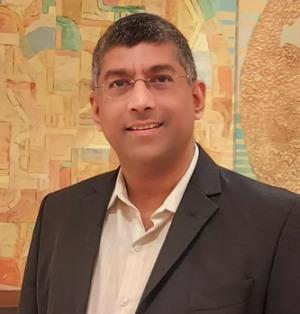
IMAGE: Rishi Kohli.
Which sectors look interesting to you right now?
Auto looks strong, helped by GST tailwinds and favorable cycles. Metals also look promising, supported by global trends.
Within banks, public sector banks are more attractive.
Pharma and IT are more stock-specific plays due to lingering uncertainties -- tariffs for pharma and H1B issues for IT. So, stock selection is critical there.
So would you say the next year will be more stock-picking driven rather than a broad market rally?
Absolutely. A year ago, everything was going up together, but now dispersion between stocks and sectors is high. That means opportunities are more stock-specific.
That's also why we're starting with a Flexi-Cap fund, which allows for stock-specific alpha generation.
What's your take on consumption post-GST cuts?
The impact is overrated for FMCG. People won't buy more soap or toothpaste because it's ₹3 cheaper. That's why FMCG wasn't on my list of attractive sectors.
Auto, on the other hand, has seen a meaningful GST-driven impact on costs and demand.
What earnings growth do you expect for India over the next year?
Around 8 to 10 per cent earnings growth overall, though sector and stock selection will determine the real winners.
You're using BlackRock's Aladdin platform and artificial intelligence for portfolio allocation and management. More fund houses, even retail investors, may use a similar technology going ahead. What's the moat then for mutual funds to defend their market share going ahead?
Aladdin is a fully integrated data, modeling, and trading platform developed over 40 years.
It processes fundamental and alternative data, runs systematic models, generates portfolios, pushes orders, and handles risk/compliance -- all automatically.
Replicating this isn't easy -- it takes scale, decades of development, and top AI talent.
BlackRock's AI Labs, for instance, employs some of the best researchers globally.
Many local models are still at 'version one' while BlackRock's models are now at 'version seven or eight', incorporating context and nuance. Replicating that maturity will take a long time.
Do your AI models predict where markets are headed?
No, we don't use AI for market predictions. It's one of many signals in our process.
Human judgment is still critical -- choosing the right data, cleaning it, and applying bounds on exposures.
Disclaimer: This article is meant for information purposes only. This article and information do not constitute a distribution, an endorsement, an investment advice, an offer to buy or sell or the solicitation of an offer to buy or sell any securities/schemes or any other financial products/investment products mentioned in this article to influence the opinion or behaviour of the investors/recipients.
Any use of the information/any investment and investment related decisions of the investors/recipients are at their sole discretion and risk. Any advice herein is made on a general basis and does not take into account the specific investment objectives of the specific person or group of persons. Opinions expressed herein are subject to change without notice.
Feature Presentation: Rajesh Alva/Rediff












 © 2025