With credit markets frozen, chief executive James Ziemer faces some tough decisions. RBC Capital Markets analyst Edward Aaron argues that investors "need to know how (Harley) will raise capital to fund this business."
BMO Capital Markets analyst Edward Williams says Harley is more vulnerable to a downturn because it "aggressively went after a lower-quality borrower" to gain market share against other lenders.
Indeed, between 2003 and 2006, the percentage of HDFS borrowers paying 15% or more in interest - an indicator of credit risk - increased from 8% to 19%, according to company reports.
HDFS' share of Harley's operating income also grew to more than $200 million, about 15% of the company total, up from 7% in 2000.
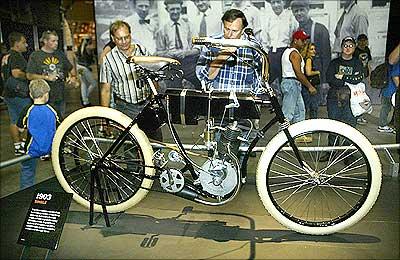
Image: The first Harley-Davidson motorcycle built in 1903 is displayed during the Harley-Davidson 100th Anniversary | Photograph: Daniel Berehulak/Getty Images
Also read: The best cities for riding out a recession
Powered by 
| Live updates on money.rediff.com |
|
 Advertisement