You say one of the reasons India is forging a new identity as a
fast progressing country is because of the innovative strength of Indians at all levels.
I vividly remember reading an example of Indian ingenuity in a book by Pavan K Varma called Being Indian. The owners of restaurants along the highway in Punjab have been worrying for many years how to produce good quality of
Lassi in big numbers and in short time.
Someone then came up with the idea of using the home washing machine. And now hundreds of small restaurant owners pour yogurt, sugar, spices, salt and water into the machine, and tap the outflow tube as an exit pipe from which
the lassi flows right into glasses. Varma calls this Jugaad, a creative improvisation.
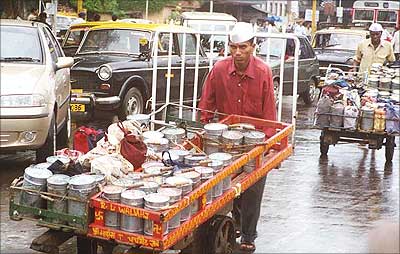
Jugaad has always been with us in India, in villages, towns, and cities, but it is only now we see it become too prevalent. A great example that has caught the attention of the world: It is the dabbawallah phenomenon in Mumbai. Each working day of the week, even during the heavy monsoon season, over 175,000 lunch boxes from homes across the city are delivered on time
during the lunch hour in offices across Mumbai. A human chain of messengers travels in shifts by train, bus and finally a short distance by cycle, foot and elevator.
Each delivery man makes a journey of as much as 35 miles to the worker's desk. Someone would have thought each dabba carrying a home-cooked meal for specific workers could cause mayhem because of delivery mix-ups. And yet the
dabbawallahs, who are mostly illiterate, have devised a colour-coding system that has made their supply system guaranteed to succeed.
Jugaad plays a huge role today as India is emerging as a global superpower. It is one element in the almost unbelievable growth of today's Indian economy that makes many economists conclude that Indian economic development will continue to defy common sense and rigid expectations.
 Photograph: A Dabbawallah in Mumbai. Photograph: Sanjay Sawant
Also read: What you can learn from a dabbawallah
 Advertisement