


October 17, 2002 | 1342 IST
|
|
||
|
|
|
|
|
|
||
|
Home >
Money > PTI > Report October 17, 2002 | 1342 IST |
Feedback
|
|
|
No looking back on liberalisation: PMAssuring foreign investors that differences in divestment or any other domestic economic policy were only the democratic process of reconciliation and achieving consensus, Prime Minister Atal Bihari Vajpayee said there would be no looking back on liberalisation process.
Vajpayee who was inaugurating the first India-ASEAN Business Summit in New Delhi said that India's GDP growth target of 7 per cent "exhorts us to stay on this path. There can be no looking back." Vajpayee's commitment to push ahead with economic liberalisation came in the wake of serious differences within his Bharatiya Janata Party-led government over disinvesting key public sector, particularly oil, companies. Referring to his visit to Europe last week, Vajpayee said: "I assured our European business friends that such hiccups as they may see in our liberalisation process are only the democratic process of reconciling divergences and achieving consensus." The prime minister noted that India had compelling reasons to persevere with economic reforms. He also called for the integration of the economies of India and Association of South East Asian Nations to benefit better from globalisation and reduce the impact of slowdown in western economies which face uncertain prospects of recovery in the near future. He said, "The present global economic slowdown provides an immediate context for our closer regional integration.'' The prime minister observed that the western economies which have been the mainstay of Asia's foreign investment and export-led growth today face uncertain prospects of recovery in the near future even as India continues on an interrupted growth trajectory averaging an economic growth of about 6 per cent. ''We should, therefore, build on the complementarities between the Indian and ASEAN economies. This can also cushion us against the impact of a downturn in external markets." The one-day business summit, organised by the Indian government and the Federation of Indian Chambers of Commerce and Industry, is being attended by Malaysian Prime Minister Mahathir bin Mohammad, the Deputy Prime Minister of Thailand and Ministers from other ASEAN members -- Cambodia, Laos, Singapore and Vietnam. Vajpayee said India and ASEAN had a mutual interest in the working of beneficial preferential and free trade arrangements. ''We need to look at the conventional as well as innovative mechanisms, to promote economic integration.'' The Prime Minister assured the delegates that India was committed to reducing its peak tariff rates to East Asian levels within the next three years. The government was continuously introducing measures for improving market access, harmonisation of standards and simplification of documents. ''We seek reciprocal measures from our partners. We see a Regional Trade and Investment Area as a near-term objective of India-ASEAN economic relations," he said. The two-way trade of less than $10 billion between India and ASEAN did not do justice to their population of 1.5 billion people, producing $1.5 trillion worth of goods and services annually. The prime minister said the two-way flow of information had to be accelerated. This required active relations between the chambers of commerce, and regular exchanges of business delegations. The commencement of regular summit-level India-ASEAN dialogue next month in Pnom Pehn would be a 'new watershed' in Indo-ASEAN relationship, he said. Vajpayee said that each of ''our countries'' had achieved expertise and even dominance in certain areas of technology. ''It is crucial that we cooperate by complementing our respective strengths, rather than undercutting each other.'' By pursuing these objectives, India and ASEAN can become mutually reinforcing engines of growth and development. On globalisation, he said the countries of the region had benefited from the vast expansion of trade, investment and economic cooperation. But the benefits have been uneven, among and within the nations. ''Globalisation cannot be sustained as a one-way quest for developing countries markets by the products and capital of the developed world. We need greater equity and a larger share of the fruits of globalisation for developing countries." These socio-economic goals can be promoted through sub-regional cooperation which would pay special attention to the needs of less developed areas in a region, he said. In this context, India attached the 'greatest importance' to the initiative for ASEAN integration. The prime minister observed that one of the strengths of the economic bonds between India and ASEAN was that investment flows had been in both directions, unlike India's links with Europe and the United States. Acknowledging that ASEAN countries had good infrastructure such as power, urban municipal services, airports and roads and India's relative weakness in this sphere, he said this provided a further complementarity between the two. India became a sectoral dialogue partner of ASEAN in 1992, full dialogue partner in 1995, and a member of the ASEAN Regional Forum in 1996. Additional inputs: UNI
ALSO READ:
|
ADVERTISEMENT |
||||||||||||||


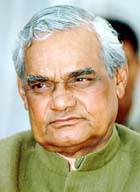 "I assure our European business friends that such hiccups as they may see in our liberalisation are only the process of reconciling divergences and achieving consensus. Our reform process continues to target high growth with balanced and equitable development," he said.