
|
|
|
|
|
| HOME | MONEY | MUTUAL FUNDS | FUND FILE | |||
|
May 26, 2000
Books
|
Templeton India Growth FundDhirendra Kumar Templeton India Growth Fund (TIGF) invests primarily in equities of high capitalised, out-of-favour "value" stocks. The fund declared its only dividend of 15 per cent in February 2000. Entry into the fund carries a maximum load of 2 per cent depending on the amount of investment. Exits within 12 months also have a similar load structure.
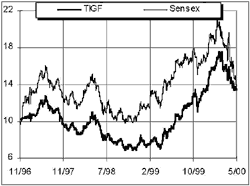
Since its launch, the fund has given an annualised return of 8.32 per cent against 2.69 per cent by the Sensex. The fund stayed away from the hot sectors of software, pharma and FMCG until September 1999 when it had a 10 per cent allocation to software. Interestingly, after being a laggard for a few years, the fund stretched its conventional definition of a value stock - as reflected by a 24.5 per cent stake in software and 8 per cent in pharma by December 1999. As on April 2000, the fund is diversified across software (31%), FMCG (6%), chemicals (13%), finance (10%), aluminium (7%), auto (6%), industrial conglomerates (5%) and petroleum (4%). The changed position of the fund has boosted its NAV in the recent past. During calendar 1999, it gained 88 per cent and in the year ending April 2000, it was up 93 per cent and ninth among 38 funds of its category. In the month ending April 2000, it has lost only 7.33 per cent against an average fall of 20.68 per cent. With a higher allocation to infotech, this fund will yield higher returns with lesser volatility compared to its aggressive peers. The fund, being truly diversified, could now be a significant beneficiary either way of software or cyclicals rising. The fund holds promise as a long-term investment. Launched in the rising markets of September 1996, it took almost a year to fully deploy the initial mobilisation. The fund gained initially, but in the falling market since then, it was a consistent under-performer. From the peak in August 1997 to its lowest in December 1998, the fund lost 9 per cent more than the Sensex. The fund trailed behind most of its open-ended equity fund peers. But the fund was very disciplined in following its stated value investing philosophy - where the focus was to invest in securities with the most promising potential for long-term growth rather than look at hot markets and day-to-day trends. It followed a bottom-up approach to pick stocks that had high liquidity and large capitalisation with a low to average price to book value and average price-earning multiple. The fallout of its strategy was that the fund had been fully into stocks from sectors such as that of banking, petroleum, petrochemicals, cement, aluminium, auto, shipping and telecom, whose values were on a free fall for two years.
Source: Value Research |
||||||||||||||||||||||||||||||||||||||||||||||||||||||||||||||||||||||||||||||||||||||||||||||||||||||||||||||||||||
|
HOME |
NEWS |
BUSINESS |
MONEY |
SPORTS |
MOVIES |
CHAT |
INFOTECH |
TRAVEL SINGLES | NEWSLINKS | BOOK SHOP | MUSIC SHOP | GIFT SHOP | HOTEL BOOKINGS AIR/RAIL | WEATHER | MILLENNIUM | BROADBAND | E-CARDS | EDUCATION HOMEPAGES | FREE EMAIL | CONTESTS | FEEDBACK Disclaimer |
|||||||||||||||||||||||||||||||||||||||||||||||||||||||||||||||||||||||||||||||||||||||||||||||||||||||||||||||||||||