
'Some buyers get carried away by festival offers and purchase higher variants or larger vehicles than they truly need, which impacts running cost and long-term affordability.'
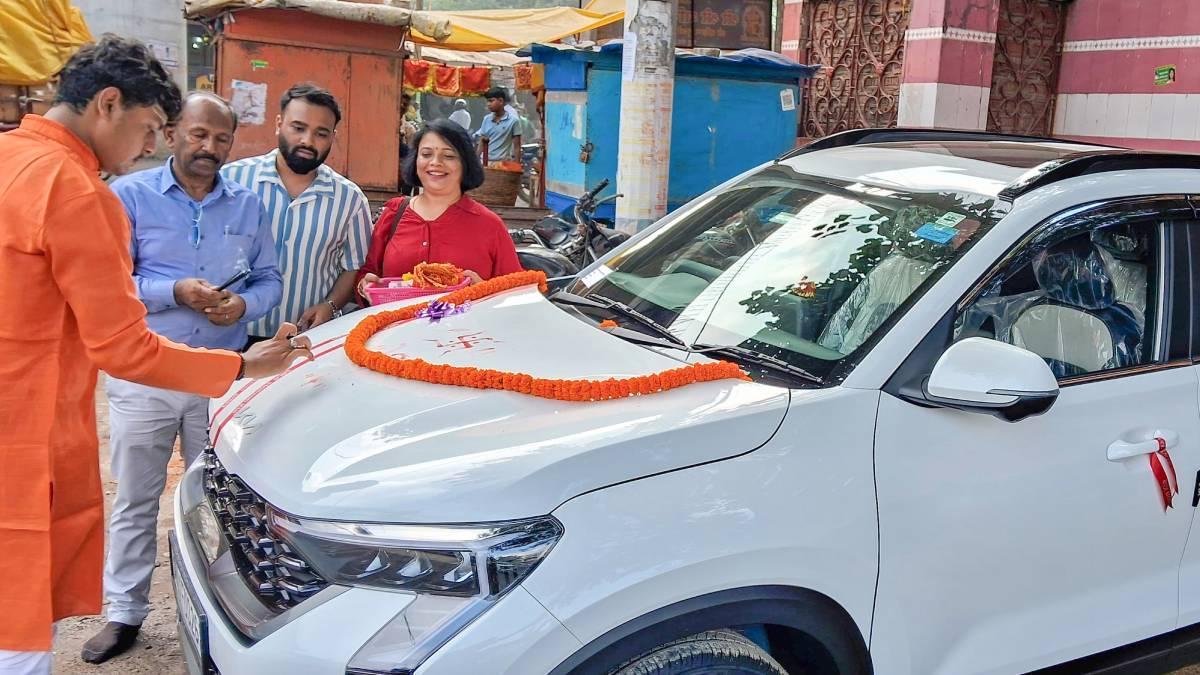
Car dealerships are offering attractive deals owing to the goods and services tax (GST) rate cut and festival-season offers.
Maruti Suzuki, Hyundai, Tata Motors, Mahindra and Kia have all announced significant price cuts.
Many prospective buyers are flocking to showrooms. Here is a guide to help them get a good deal.
Best time to buy
"Dealers are under intense pressure to meet their quarterly and festival sales targets, giving you greater leverage in negotiations," says Ravi Bhatia, president, JATO Dynamics India.
"Timing your purchase strategically towards the end of the month or quarter, when sales teams are under pressure to meet targets, improves your chances of getting additional benefits," says Akhil Rathi, head - financial advisory, 1 Finance.
Picking the right model
First, consider factors such as daily usage (in kilometres), type of driving (urban, highway, or mixed), parking constraints, and passenger load.
"These factors will help you decide whether to buy a small hatchback, a sedan, or an SUV," says Rathi.
Fix a realistic on-road budget to narrow your choices.
Compare models on total ownership cost, including fuel efficiency, service charges, spare part pricing, and resale potential.
"A car with a slightly higher upfront cost but lower maintenance cost and stronger resale value often proves cheaper in the long run," says Rathi.
Safety ratings should also be a key criterion.
Bhatia suggests leveraging online platforms (CarDekho, CarWale, etc) for price and feature comparisons, and forums (like Team-BHP) for insights from owners.
Choosing the dealer
Do your homework before visiting a showroom. Compare prices across cities.
"Even a state border can result in a price difference of Rs 20,000-Rs 30,000 due to variations in road tax and other levies," says Bhatia.
"Compare total on-road prices rather than just ex-showroom costs," says Abhishek Kumar, Sebi-registered investment adviser and founder, SahajMoney.com.
Engage with at least three dealers of the same brand.
Ask each for a transparent cost sheet that includes the ex-showroom price, including costs like registration, insurance, and accessories.
Check the dealership's reputation as you will have to interact with it for after-sales service.
Prefer a model with a comprehensive service network.
"Check the manufacturing month of the vehicle through VIN (vehicle identification number) to ensure that the car belongs to fresh stock and is not an older unit being pushed during the season," says Rathi.
Kumar suggests verifying that the GST benefit is being implemented.
Negotiating smartly
When negotiating on accessories, focus on essentials.
"These include mud flaps, mats, and basic protective covers. Unnecessary cosmetic upgrades should be avoided," says Rathi.
Avoid rushing into a deal. "Hold your ground if you sense that a better offer is around the corner," says Rathi.
Dealerships with unsold stock, especially of less popular colours or variants, are often more willing to negotiate.
"Be prepared to walk away if the deal does not meet your requirements," says Kumar.
Getting the best loan deal
Dealerships now tie up with multiple banks and non-banking financial companies (NBFCs), due to which approvals are quicker.
Adhil Shetty, CEO, BankBazaar.com, cautions buyers against mistaking convenience for value.
"A dealer may highlight an attractive rate from one bank, but you could be eligible for even better terms from another lender, especially the bank where you maintain your salary account," says Shetty.
Some lenders finance up to 100 per cent of the car price.
"Look for such an offer if you don't have enough to pay towards the down payment," says Radhika Binani, chief product officer, Paisabazaar.
She adds that public-sector banks generally offer lower rates than private-sector ones.
Also, compare prepayment and foreclosure charges.
Binani warns that festive season loans are often bundled with costly add-ons.
"Even though you may get an offer at a relatively lower interest rate, you may end up paying a higher overall cost of credit," says Binani.
Insurance essentials
Many buyers take the first insurance option suggested by the dealer, which can be a mistake.
Pankaj Verma, chief technical officer, Zurich Kotak General Insurance, recommends online research into policy features, exclusions, and premium breakup.
He advises asking the dealer also for multiple quotes with a one-page summary of premium, insurance declared value (IDV), and add-ons.
Do not be swayed by the lowest premium. "Instead, opt for a policy with add-ons such as engine protection, zero-depreciation, return to invoice, and a strong claim-settlement record," says Verma.
Mistakes to avoid
Be rational and budget-conscious when selecting the vehicle model.
"Some buyers get carried away by festival offers and purchase higher variants or larger vehicles than they truly need, which impacts running cost and long-term affordability," says Rathi.
Another common error is skipping the pre-delivery inspection, which can result in receiving a car with defects or one belonging to an older batch.
Some borrowers extend the loan tenure to reduce the EMI, resulting in increased overall interest burden.
Finally, Kumar warns against buying overpriced accessories or insurance pushed by dealers.
Disclaimer: This article is meant for information purposes only. This article and information do not constitute a distribution, an endorsement, an investment advice, an offer to buy or sell or the solicitation of an offer to buy or sell any securities/schemes or any other financial products/investment products mentioned in this article to influence the opinion or behaviour of the investors/recipients.
Any use of the information/any investment and investment related decisions of the investors/recipients are at their sole discretion and risk. Any advice herein is made on a general basis and does not take into account the specific investment objectives of the specific person or group of persons. Opinions expressed herein are subject to change without notice.
Feature Presentation: Ashish Narsale/Rediff











 © 2025