

Do you have mutual fund and personal finance-related queries?
Please ask your questions HERE and rediffGURU Nitin Narkhede, founder Prosperity Lifestyle Hub, and Association Of Mutual Funds in India (AMFI)-registered financial planning advisor, will answer them.
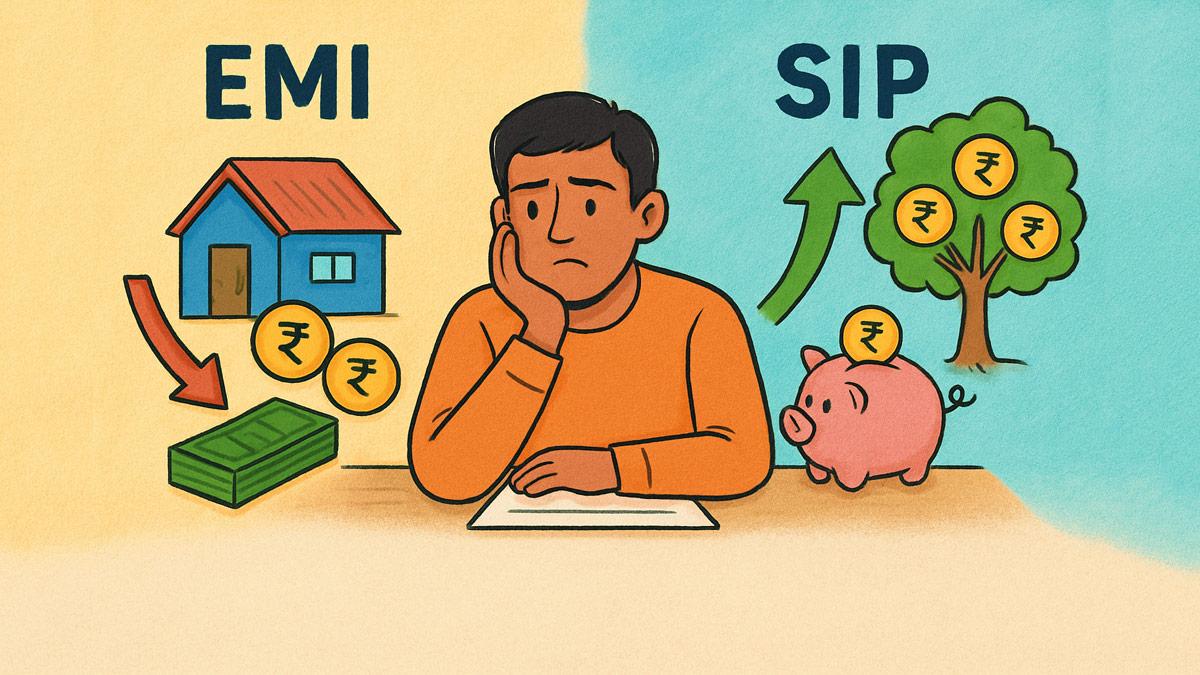
Anonymous: I recently got married. I have a corpus of 25 lakhs in MF, 2 lakhs in equity, 1 lakh in gold and 1.5 in fd. Expenditure - 26k rent, 15k send to parents, 26k Emi for a 17.6 lakhs loan, Investment- 18k per month in MF My take home is 1.65 lakhs. I want to a buy a flat and a want to take a car around 10 -13 lakhs. Please suggest me how to plan it. Soon i want to plan baby as well.
Congratulations on your recent marriage! You have a strong financial foundation and a healthy income.
You're financially stable with a solid income and existing investments. Before buying a flat and car, prioritize building a 3-6 month emergency fund. Limit total EMIs (existing + new) to under 45% of your take-home pay. Consider a flat within Rs 70L, using Rs 20L from your corpus and a Rs 50L loan. Buy the car only after finalizing your home purchase -- opt for a 50% down payment and a short loan term.
Start a small SIP for future baby-related expenses.
You're on the right path -- ensure you don't stretch your finances too thin by taking on too much debt at once.
A financial advisor is like a doctor of finance who suggests the required actions and helps you achieve your financial goals. So do not hesitate to consult a financial advisor.
Anonymous: I m 37yrs old i have 67 thousand per month salary i want to build a house and want to take home loan of 40 lakh. I’m confused it is my bad decision or good after all i have to pay a huge amount for 20yrs long time. plz help.
Taking Rs 40 lakh home loan at age 37 on a Rs 67,000 monthly salary is a major financial decision that requires careful planning. Ideally, your EMI should not exceed 40% of your monthly income -- around Rs 27,000 in your case.
A Rs 40-lakh loan for 20 years at 8.5% interest would mean an EMI of approx Rs 34,700, which is over 50% of your income -- this can be risky, especially if you have other expenses or no emergency fund.
Suggestion:
- Reduce loan amount by saving more or choosing a smaller house
- Try for a co-applicant (like a working spouse) to improve eligibility
- Ensure you have a 6-month emergency fund before taking a loan
- Reconsider the timing or loan size if it strains your finances
- It’s not a bad goal but proceed only if it fits your budget safely
Anonymous: I am a 24 year old medical intern receiving Rs 43,000 per month stipend for a 12 month period. What would be the best way to invest this money? My monthly expenses are around 18-19k.
I really want to congratulate you for thinking about your investments and financial planning. You are among the elite 10% people in the world who at least think of working on your finances.
- At 24, with Rs 43,000 monthly stipend and Rs 18-19k expenses, you can begin solid financial planning. Start by building an emergency fund of Rs 50,000 in a high-interest savings account or liquid mutual fund.
- With the surplus, invest Rs 15-20k monthly through SIPs: split between an index fund (Nifty 50), a flexi-cap fund, and a mid-cap fund for long-term growth.
- Get a basic health insurance plan and avoid unnecessary debt.
- These habits will help you create wealth, build financial security, and stay prepared for future goals.
- Starting early gives you the power of compounding -- stay consistent and review your plan yearly.
Anonymous: Dear Sir, I am 37 years old with two kids aged 8 and 3. My income is 1.5 lakhs per month. I have 4.5 lakhs in NPS corporate with monthly contribution of 8.5K and paying 2K monthly in PPF for both my kids, which got accumulated to 2.5 Lakhs for elder one and 1.25 lakhs for younger one respectively. I have a house worth 60 lakh, recently completed the home loan. I have ancestral property worth 4 cr in metro. I want to start planning for my both child's higher education and for retirement life. Please provide an investment plan that would help me to.
At 37 with a stable income, debt-free home, and valuable ancestral property, you’re well-placed to plan for your children’s education and retirement.
- Start SIPs of Rs 10K and Rs 7K for your 8- and 3-year-old in diversified equity funds to build Rs 30-50L over 10-15 years.
- Continue PPF for safe growth.
- For retirement, increase NPS contribution and start Rs 15K SIP in equity mutual funds to build Rs 3-4 crore by age 60.
- Keep Rs 3-5L as emergency fund.
- Ensure adequate life and health insurance.
- Review investments yearly and scale contributions with income. You're on track -- just streamline and stay consistent.
Anonymous: Hello Sir, I have 72 lakhs in cash and i am 33 years old. I just got married. I do not have any experience in mutual fund. However, i do invest in stocks. Kindly guide me or advise me how to.
You need to elaborate on your goals and responsibilities in life. Depending on the responsibilities and goals, and what you have done in these areas till now, it won't be easy to comment.
However, you have two options: One is Do-it-Yourself by learning about MFs in detail, and the second is to get help from a financial advisor who can help you plot your life & investment plan.
You are at the age of 33, and if you plan and implement effectively, you can plan your retirement at the age of 40, i.e. within the next 7 years, and enjoy the things you love most.
- You can ask rediffGURU Nitin Narkhede your questions HERE.
Disclaimer: This article is meant for information purposes only. This article and information do not constitute a distribution, an endorsement, an investment advice, an offer to buy or sell or the solicitation of an offer to buy or sell any securities/schemes or any other financial products/investment products mentioned in this QnA or an attempt to influence the opinion or behaviour of the investors/recipients.
Any use of the information/any investment and investment related decisions of the investors/recipients are at their sole discretion and risk. Any advice herein is made on a general basis and does not take into account the specific investment objectives of the specific person or group of persons. Opinions expressed herein are subject to change without notice.








 © 2026