

Exercise caution when charging your phone in public places or borrowing a charger from someone -- you might get hacked.
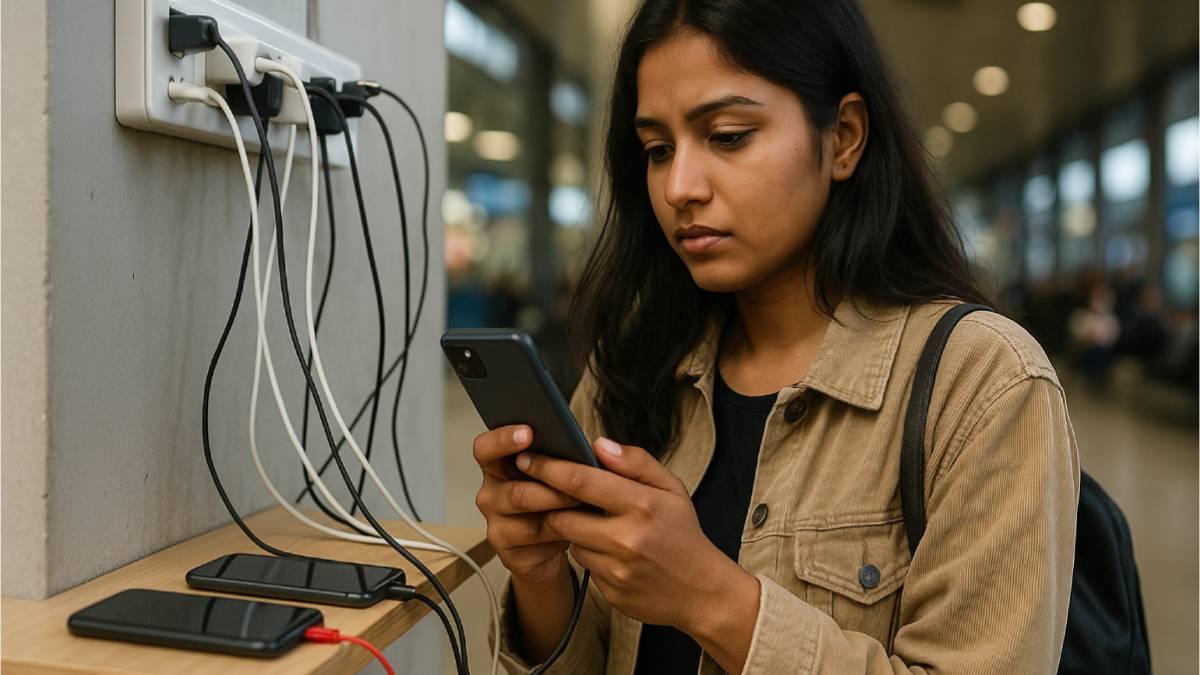
Do you charge your phone at airports, cafes, train stations or even on public transport?
Be cautious -- the simple act of plugging in could open a backdoor for hackers.
As charging technology becomes faster and more universal, it's turning into a playground for cybercriminals.
Have you heard of threats like Juice Jacking, Cable Sniffing, Port Poisoning, Chargeware and Power Drain Attacks? These are the new risks behind every USB port.
Let's decode what each of these terms means, how they can affect you and what you can do to stay safe.
Juice jacking: When charging becomes a data leak
Juice jacking happens when you connect your phone to a compromised public charging port -- usually via USB.
As you may know, while your device is being charged, the same cable can also transfer data simultaneously.
A manipulated port can silently copy files, steal passwords or even install spyware.
How to stay safe
- Use your own charging adapter and plug into wall sockets.
- Use a USB data blocker (a small USB adapter you can plug between your cable and a public port) or a 'charge-only' cable (a special cable designed to carry only power, not data).
- If a message appears on your phone when connecting to a public charging port or an unfamiliar computer, tap 'don't trust'.
Cable sniffing: When the charger is the spy
Cable sniffing involves malicious cables that look perfectly normal but are fitted with tiny electronic components.
Once connected, they can send keystrokes, record data or remotely access your device.
Researchers have demonstrated spy cables that transmit stolen data wirelessly to nearby devices.
For example, the O.MG cable is a USB-type cable that looks like a standard charging or data cable (Lightning, USB-C, USB-A, etc.) but is embedded with additional hardware -- a microcontroller and Wi-Fi-capable implant hidden inside the connector casing.
So remember, even a familiar-looking cable borrowed from someone could be compromised.
How to stay safe
- Buy cables only from trusted manufacturers.
- Avoid using free or found cables.
- Stop using cables that overheat or behave unusually.
Port poisoning: When ports turn against you
Port poisoning refers to malware that spreads through physical connectors such as USB-C or HDMI ports.
Once connected, an infected port can modify files or inject malicious code into your device.
This type of malware can corrupt data, spread between devices or alter firmware. It can, at times, even survive even a factory reset.
How to stay safe
- Use only original accessories.
- Avoid shared charging docks or hubs.
- Run regular malware scans on connected devices.
Chargeware: Apps that pretend to help your battery
Chargeware refers to fake 'battery-saving' or 'fast-charging' apps that secretly track users or display intrusive ads.
Some even act as spyware, accessing files or network data without consent.
These apps often request permissions unrelated to charging -- such as access to contacts or messages -- and then misuse that data.
How to stay safe
- Download apps only from official app stores.
- Avoid apps that ask for unnecessary permissions.
- Use your phone's built-in battery optimisation instead.
Power drain attacks: Reading data through energy
Every device uses electricity in slightly different ways depending on what it's doing -- downloading data, typing or streaming video.
In a power drain attack, hackers analyse small variations in energy consumption to infer what's happening on the device. Attackers can steal sensitive information such as passwords or PINs from the connected device.
These attacks are still mostly experimental but highlight how even power usage can leak information about your activity and app behaviour.
How to stay safe
- Keep firmware and operating systems updated.
- Use trusted chargers and power sources.
- Avoid unknown USB hubs or 'smart' charging ports.
Protecting your power and privacy
Most people think of cybersecurity as something that happens online but physical vulnerabilities are growing too.
As USB-C becomes standard, one careless plug-in could compromise your data.
Stay safe
- Carry your own charger or power bank.
- Keep your phone locked while charging in public.
- Enable USB Restricted Mode (Settings → Face ID & Passcode → USB Accessories).
- Update your OS regularly to close known vulnerabilities.
Your phone holds your digital identity -- photos, passwords and personal information. Treat every cable and port with the same caution you'd give your password.










 © 2026