

EPFO has simplified PF withdrawals -- fewer rules, faster access and more flexibility -- while introducing safeguards that make it harder to drain your retirement savings too early, explains Reetika Sharma, a certified financial planner and CEO of F-Secure Solutions.
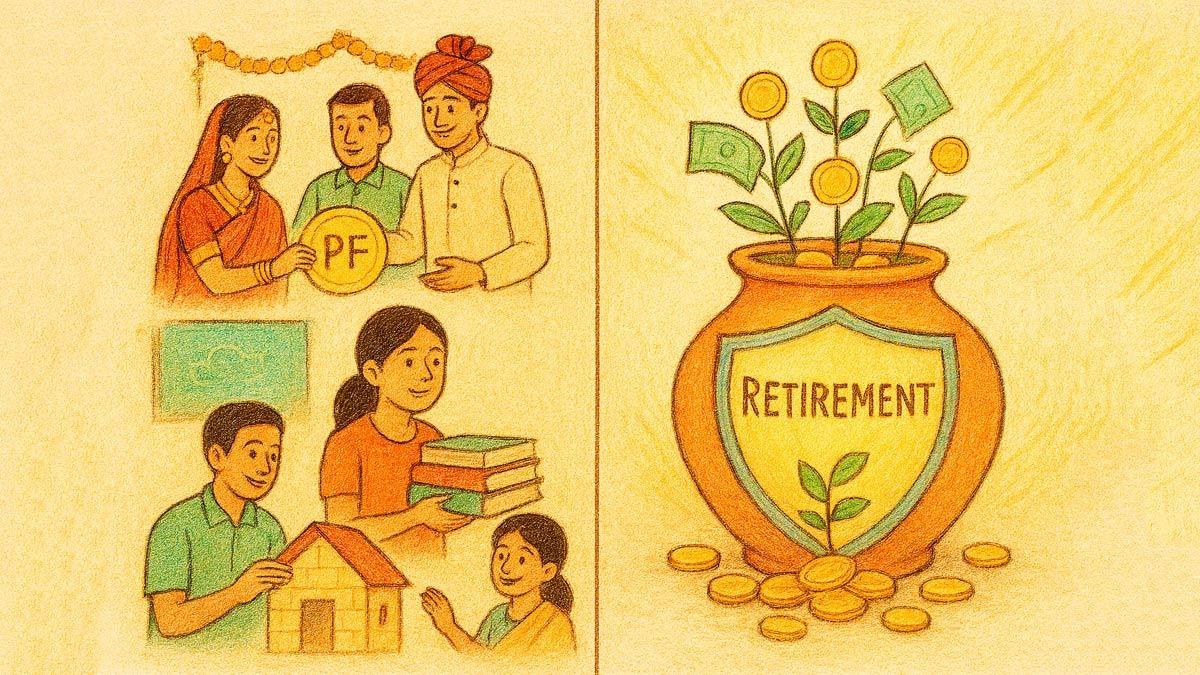
The Employees' Provident Fund Organisation (EPFO) has introduced significant amendments to its PF withdrawal rules, aiming to simplify the process and provide greater flexibility for its subscribers.
Here is a breakdown of the latest key amendments -- the pros and cons that every EPFO member must know:
Easier access and simpler rules
These amendments make it easier for you to access your EPF money when you need it:
1. You can withdraw a lot more money
You are now allowed to withdraw up to 100 per cent of your eligible PF balance for certain needs. This includes both your and your employer's share.
2. Simpler withdrawal rules
EPFO has removed 13 complicated reasons for withdrawing money and combined them into just three groups:
- Essential needs (marriage, education or medical bills)
- Housing needs (buying or building a house)
- Special circumstances (other urgent situations)
3. No explanation needed
For urgent withdrawals under 'special circumstances', EPFO members no longer have to give a detailed reason (such as a natural disaster or factory closure). This makes applying for withdrawal of funds faster and reduces the chances of a claim being rejected.
4. Easier to withdraw for family events
The limits for withdrawals for marriage and education have been increased from only three withdrawals during the entire EPF tenure. You can now withdraw up to 10 times for education purposes and five times for marriage purposes.
5. Minimum service time is now just one year
You only need to have worked and contributed to your PF for 12 months (one year) to be eligible for partial withdrawal, much less than the earlier, varied limits.
Previously, you required seven years of service for marriage-related withdrawals and five years of service for house-related withdrawals. This waiting period before you could withdraw your EPF money has been reduced to one year.
5. Faster, paperless claims
The simpler rules and digital systems are expected to make almost all partial withdrawal claims process automatically, meaning less paperwork and quicker money in your bank account.
Discouraging early full withdrawal
These changes are meant to protect your retirement savings but they make it harder to empty your account when you switch jobs:
1. You must keep some money for retirement (25 per cent rule)
If you want to receive some amount at retirement, it is mandatory to leave at least 25 per cent of your total PF contribution in your account. The money you leave behind will continue to grow with interest.
2. Longer wait to take out all your PF after leaving a job or retiring (12 months)
If you leave a job, the time you have to wait to withdraw your entire EPF balance has been increased from two months to 12 months (one year).
The goal: This rule encourages you to transfer your PF to a new job instead of breaking your retirement savings.
3. Longer wait for full pension withdrawal (36 months)
If you are withdrawing your entire pension amount and not just the PF (to understand the three components of your EPF, do read this feature), the waiting time has been extended from two months to 36 months (three years).
The goal: The aim, according to new changes, is to ensure you do not compromise your long-term retirement benefits easily.
- Need Help With Your PF Queries? Ask rediffGURUS Reetika Sharma, Purshotam Lal, Naveenn Kummar, and Nitin Narkhede.











 © 2026