

The future belongs to those who move fast, use AI deeply and focus relentlessly on customer impact.

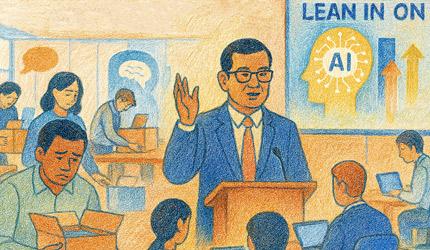
In the aftermath of withdrawing approximately 14,000 corporate roles, Amazon's Devices Division Vice President Tapas Roy addressed the surviving workforce via an internal memo, urging them to 'lean in on AI' as the company pivots its strategy.
He laid out three inter-linked priorities:
- Sharpen focus on tasks that directly impact customers
- Embrace artificial intelligence tools to heighten productivity
- Proactively identify and eliminate bureaucratic processes that slow progress
While acknowledging the emotional weight of the job cuts, the message framed the restructuring as a critical step toward long-term competitiveness in a fast-evolving tech landscape.
When Amazon informed its employees that roughly 14,000 corporate jobs would be eliminated, it sent a stark signal of change -- not only to those leaving but to those staying.
Inside the devices division (which includes teams working on the Kindle, Fire, Echo and associated software services), Roy conveyed a clear message: The future belongs to those who move fast, use AI deeply and focus relentlessly on customer impact.
Roy's memo began by acknowledging the difficulty of the decision.
'These changes were hard but made thoughtfully to position our organisation for future success,' Roy wrote, referencing the job cuts within the OS & services team.
From there, he outlined three strategic anchors:
Focus on customer-impacting work
Roy told remaining employees to concentrate on projects that most directly affect customers, rather than on internal or administrative tasks.
Lean in on AI
He urged the team to actively adopt artificial-intelligence tools and platforms to increase effectiveness and accelerate product delivery. 'Lean in on AI to enhance your effectiveness,' the memo read.
Raise your hand to simplify or eliminate processes
Recognising that bloated processes slow innovation, Roy encouraged staff to spot and remove unneeded layers of bureaucracy. 'Raise your hand when you see opportunities to simplify or eliminate unnecessary processes.'
The timing of this message is significant. Amazon is navigating a broader industry tide: Firms are being reshaped by generative-AI, automation and changing expectations of scale and speed.
The move to cut 14,000 jobs is part of a larger plan -- analysts estimate millions of roles may be affected industry-wide as AI adoption deepens.
Roy's memo additionally referenced support mechanisms for both impacted and remaining employees. The company's employee assistance programme (EAP) was highlighted as available 24/7 for confidential support.
For those who remain employed, the implication is clear: The job is no longer about simply doing more of what has been done before. It's about reimagining the way work gets done -- faster, smarter, and more intensely oriented toward outcomes.
In this environment, the cost of standing still may be higher than the cost of change.
As Amazon resets its internal compass around AI, customer-impact and streamlined operations, the note from Roy acts as both a roadmap and a challenge.
For employees, the question is not whether change will come -- but whether they will lead it or be overtaken by it.









 © 2026