

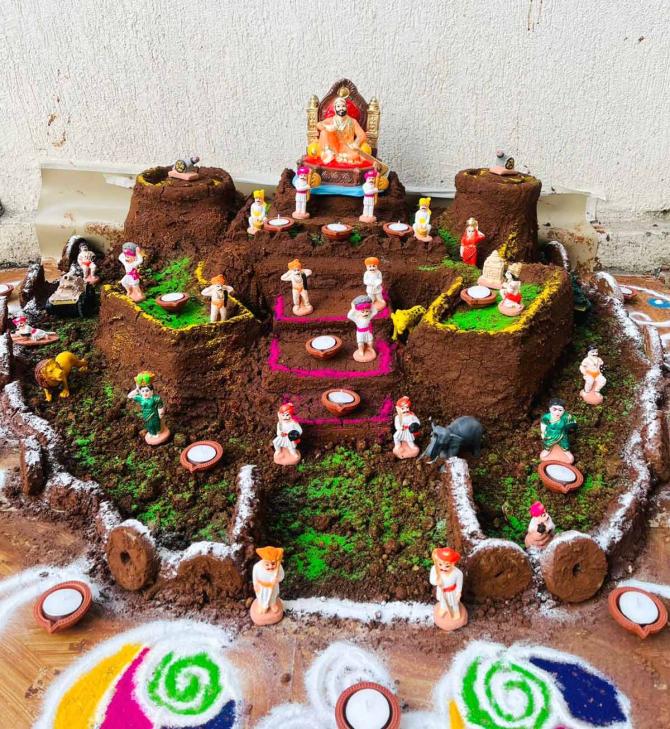
Diwali celebrations in Maharashtra would be incomplete without the making of the killa, a playful ritual rooted in tradition and creativity, where children and adults come together to craft miniature forts made using mud, sand and clay.
Diwali memories are filled with joy, laughter and the unmistakable aroma of freshly prepared sweets and savouries wafting through every lane and home.
For days and weeks before the festival, Indian homes would buzz with activity -- mothers and grandmothers would wrap up their daily chores early and spend the afternoons and evenings making ghee-laden besan laddoos, karanjis, chaklis and sweet or salty shankarpalis while children waited eagerly for the holidays to begin.
Once they were free from school, they wouldn't just compete and boast about fireworks; they would gang up to prepare for the biggest celebration of the year.
Practically every home became a hub of warmth and festivity as neighbours would exchange trays of homemade delights.
But if you grew up in Maharashtra, like I did, Diwali holidays brought along an extra charm that went beyond the food and festivities. For kids across the state, it meant coming together to build something truly special: The killa or miniature fort.
Building the killa from scratch wasn't just a playful craft activity children did for fun. It was a proud community tradition rooted in history.
The killa -- big or small -- was built to honour the bravery and valour of the Marathas, particularly Chhatrapati Shivaji Maharaj, whose forts stood as symbols of strength, strategy and self-reliance.
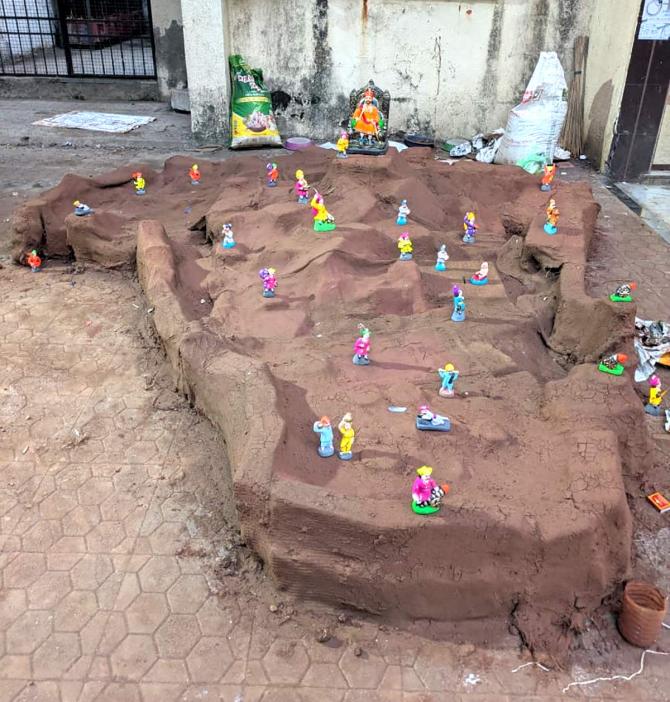
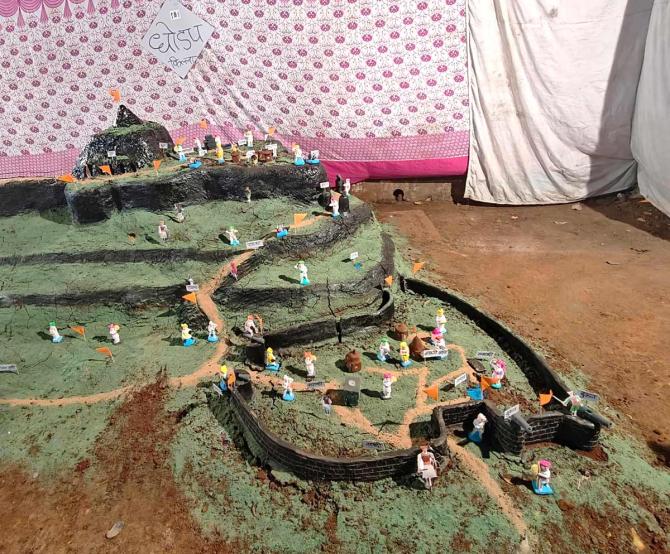
During the Diwali holidays, children would gather mud, stones and waste material, including jute sacks and thermocol, to construct forts featuring moats, winding paths, strategically designed steps, tunnels, prisons, flag-topped watchtowers and miniature mountains. The work did not stop once the killa was ready; the cracks would regularly need to be filled with wet sand, which would then dry under the sun.
Every year, parents would grumble about kids coming home with muddy hands and feet and how the clean-up after would be such a laborious chore. But that did not ever stop the children from diving into the process.
As iconic forts like Daulatabad, Murud Janjira, Raigad and Pratapgad were recreated, it would bring the tales of Shivaji's bravery back to life.
In many places, there would also be an adjacent fort to show the failed attempt of his enemies, like Aurangazeb, to capture the fort.
Once the fort was ready and dry, children would run door to door to collect money from elders to buy small toy soldiers, cannons and miniature flags to decorate and personalise the killa.
From saline bottles and syringes that turned into mini waterfalls and decorative fountains, it was interesting to see their imagination turn neighbourhood corners into scenes of Maratha glory.
Today, there are tons of reference material available on YouTube but there was a time when all this was learned through trial and error and through stories told by elders and grandparents.
For years, what began as a simple act of remembrance continued to remain a beautiful blend of fun, learning and legacy.
However, with the passing of time, as old chawls that once upheld this tradition made space for multi-storeyed buildings, the familiar sights of children playing in open courtyards slowly began to fade.
As these children became adults chasing deadlines and EMIs, the tradition of making killas slowly lost its relevance.
However, even today, in some old Maharashtrian homes and housing societies, you may spot these little forts proudly displayed outside the entrance or in some quiet corner in the garden, a reminder that Diwali in Maharashtra goes beyond the lights and sweets.
Throughout Diwali, these killas would be adorned with diyas and colourful rangoli.
Earlier, there would be competitions for the best, biggest, and most creative killas to encourage participation.
For thousands of Indians who are now grandparents and parents, the killa reminds them of how Diwali once celebrated courage, creativity and the spirit of togetherness.








 © 2026