Fringe benefits (FB) means any consideration for employment provided by way of any privilege, service, facility or amenity, directly or indirectly by the employer, whether by way of reimbursement or otherwise. In such case the value of fringe benefit is considered for taxation in the hands of the employer and not the employee.
Accordingly, if your salary structure constitutes such fringe benefits then you could take so much portion of your salary out of the tax range. Some examples of such fringe benefits are contributions to superannuation fund (if it is in excess of Rs one lakh per annum), fuel and maintenance expense on cars, gifts including gift coupons, tour/travel/ foreign travel expenses, food coupons (which is not taxable) etc.
However, there is a catch here; generally employers do not want to take the hit for the FB tax and incorporate the amount of tax into the salary structure of the employee based on cost to company (CTC) concept. Accordingly, you might end up paying the tax on such structured components. Here it is our opinion that you might still benefit by taking the hit for the FBT as the effective rate of tax on such FB is substantially lower than the highest slab rate of tax.
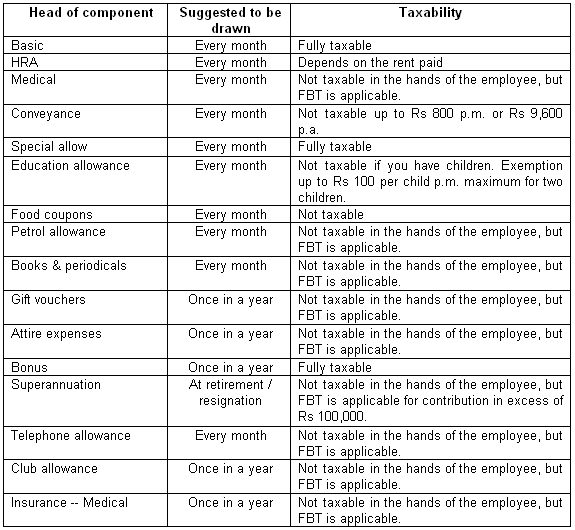
By using these measures you could cut your tax bill substantially. Also, you would find a list of possible heads of salary/compensation that could act as a ready reckoner to enable structure your salary better.
Also read: Market fall: How much money did you lose?
 Advertisement