|
|
 Email | Get latest news on your desktop Email | Get latest news on your desktop
How to select a brokerage
August 20, 2008
While there are scores of companies and banks that offer you online trading facilities you must consider the following points given below before actually choosing one.
What are the investment avenues that are offered by the brokerage? What this means is, aside from trading in shares, do they offer you services like trading in derivatives, mutual funds, IPOs, commodities, etc?
What are the account opening charges?
What is the brokerage or commission charged by your brokerage on different types of transactions? Normally intra-day or day trading involves lower brokerage than delivery-based transactions. It would be prudent to select a brokerage in line with the nature of your transactions. The volume of your transactions (the number of trades and the quantity of the trade) should dictate the selection of brokerage. Because if you trade a lot then high brokerage charges could easily eat into your profits.
Also important are the depository participant (DP) holding charges (the amount charged by your depository per security held in your demat account).
What are the minimum transaction charges?
What are the statement charges?
What is the interest for delayed payment?
Whether free SMS service is provided?
Whether free stock tips and reports are given?
How many shares are offered for trading by your brokerage firm?
How many mutual fund houses are affiliated with the brokerage?
Whether a real-time quote is available during the market hours or if there is a time difference between the actual traded price in the exchange and at your broker’s terminal?
If the online trading account is with a non-banking institute like Sharekhan or Indiabulls, or Motilal Oswal, it is necessary to check if the brokerage has an affiliation with any bank/ banks with which you have your existing bank account as your online trading account is linked to your savings account.
Ensure that there are no inactivity charges. This is important especially for traders who trade very infrequently.
Online hacking or identity theft has become a big issue of late. Hence it is very important to check the security levels offered by your brokerage (most of the brokerages have a 128-bit encryption system). Make sure that you read the company’s privacy and security policies before signing the agreement.
Agreed that the list is exhaustive, but a little homework goes a long way in preventing any unpleasant surprises in the future.
Once you have checked all the above points and have selected a brokerage that suits your trading pattern, the next step is the formality of paperwork, which is a much-despised but much-needed necessary evil.
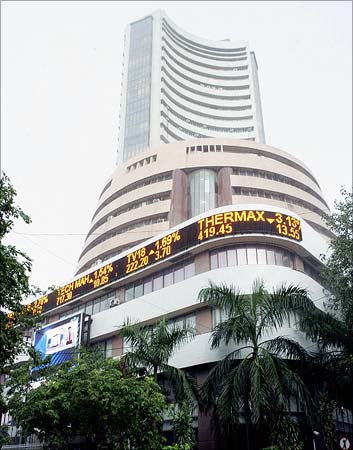
Photograph: INDRANIL MUKHERJEE/AFP/Getty Images
Also read: Lump sum or SIP? How to invest in bad times?
|
|
|
 Advertisement