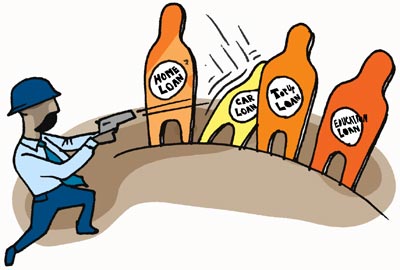
Debt repayment is like treating multiple wounds. First tend to the one that hurts the most.
Make a list of your various borrowings: personal loans, credit cards, home loans, vehicle loans, loans from relatives etc. Note which one you are paying the most interest on every month and work towards clearing it first. Then move to the next most interest heavy loan and so on.
Usually credit card outstanding payments and personal loans charge the highest interest rates for most borrowings. Interest rates can surge to 40 per cent on most of these.
The bright side is that these loans are usually not too large in value, so are easier to settle. Target these as your first step towards a systematic repayment plan.
"During my last trip to Singapore, I indulged myself in clothes and electronics shopping through my credit card. I ended up neglecting the payments since I was caught up with billing for the year-end," says Umesh.
"When I received my next bill statement, I was aghast at the rate of interest I was charged. Thankfully, it was an amount that could be repaid over a few months since it was just some personal shopping."
Car/bike loans and investment loans are next in line. Among the last loans to settle should be property/housing loans. These fall under 'good debt' and provide tax benefits along with low interest rates.
Also, housing rent would have cost you around the same amount as your EMIs. In the case of house loans, there is the strong chance of the property rates increasing over time. So selling the house in a few years will be quite profitable even including the interest paid.
It is interesting to note that the loans to settle first are ones that are for smaller amounts with high interest rates. Usually when a large capital is invested, like in the case of a housing loan, the interest rates drop as the repayment period is stretched over a long time.
Also read: How to be your own boss Advertisement