

'In choosing to be fully himself, even when it was uncomfortable, Usman Khawaja expanded the meaning of representation and conscience in Australian sport,' notes Asif Ullah Khan.

Usman Khawaja is set to retire after the SCG Ashes Test -- the very ground where he made his Test debut in 2011.
As he prepares to ride into the sunset, Khawaja's legacy will be measured not only by the runs he accumulated in his career, but by what set him apart in Australian cricket. He spoke openly about the racism he endured, challenged the silences of elite sport, and remained unwaveringly vocal about the suffering of Palestinians in Gaza.
In an age when athletes are routinely told to 'stick to sport', Khawaja chose a harder, more principled path: Refusing to pretend that human dignity and human suffering can be neatly separated from the game.
Khawaja's stance on Gaza and Palestine has been neither loud nor inflammatory. He has not called for boycotts, nor trafficked in slogans of hate. Instead, he has consistently articulated a simple, moral position -- that Palestinian lives matter, that civilian suffering deserves empathy, and that condemning the actions of a state is not the same as attacking a people or a faith.
That distinction, however, has often been ignored.
Over the past year, expressions of solidarity with Gaza brought Khawaja a reprimand from the International Cricket Council. During the first Test against Pakistan in Perth on December 14, 2023, he wore shoes at training bearing the slogans 'Freedom is a human right' and 'All lives are equal' in the colours of the Palestinian flag, but taped over the messages when told they violated ICC rules.
However, he wore a black armband on the field. The ICC said the armband breached its clothing and equipment regulations, which bar players from displaying political, religious or racial messages without prior approval, though Khawaja argued his was a humanitarian appeal.
The issue came into sharper focus when Khawaja refused to give a routine post-match interview to an Australian broadcaster that had recently sacked a journalist over pro-Palestinian social media posts. His refusal was calm, respectful, and deliberate. It was not grandstanding. It was solidarity.
In that moment, Khawaja demonstrated a form of activism that is rare in elite sport: The willingness to incur personal and professional discomfort without spectacle. He did not shout. He did not lecture. He simply declined to cooperate with an institution whose actions, in his view, punished compassion.
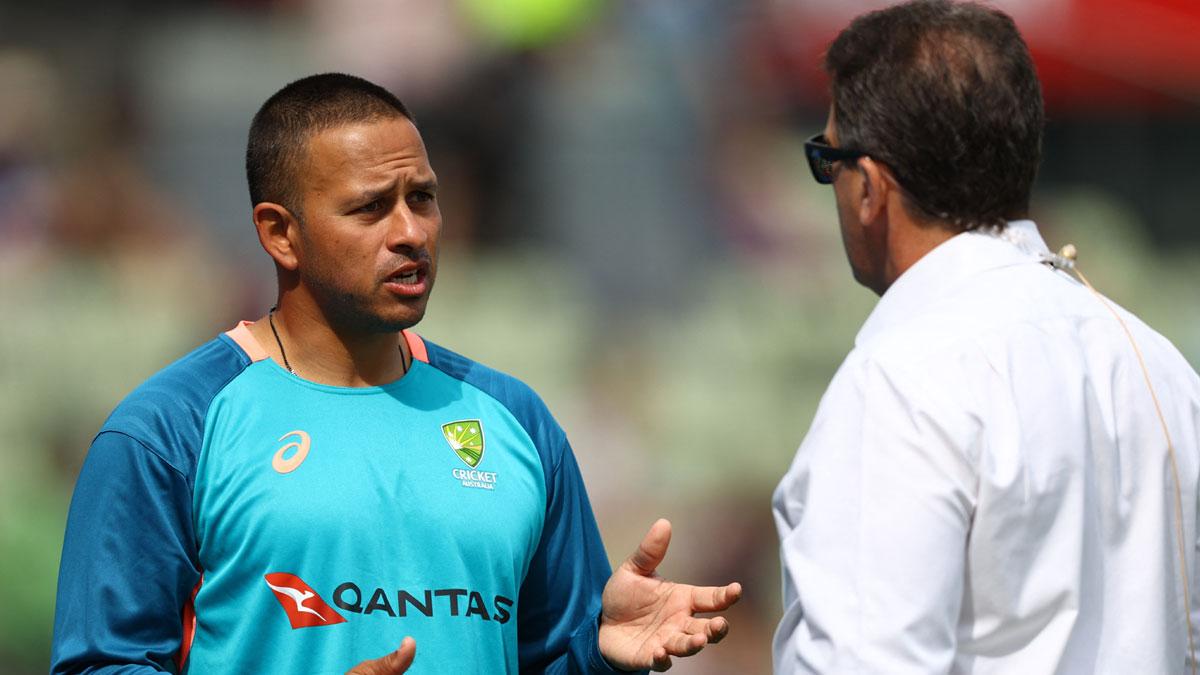
Critics argue that athletes should avoid politics altogether. But this argument collapses under scrutiny. Sport has always been political -- from apartheid-era boycotts to gestures against racism, from sanctioned displays of remembrance to carefully approved causes.
The real question is not whether sport allows politics, but whose politics are permitted.
Khawaja has also been explicit in rejecting antisemitism, repeatedly stating that his concern is with the actions of governments, not with the Jewish people. That this clarification is still required speaks volumes about the climate surrounding discourse on Gaza, where empathy for Palestinians is often treated with suspicion rather than seriousness.
As Usman Khawaja steps away from the game, he leaves a legacy of integrity -- of a man who showed that belonging does not require erasure, and that dignity does not need permission.
In choosing to be fully himself, even when it was uncomfortable, Khawaja expanded the meaning of representation and conscience in Australian sport.
That may be his most enduring contribution of all.










 © 2026