

Sack Gambhir before he damages any more careers, if you must. But it cannot stop there.
The project ahead must be bigger, more ambitious, and far more urgent: Rebuilding the spine of Indian cricket from the grassroots up, and giving the Test team the seriousness it deserves.
Only then will Indian cricket stop lurching from one crisis to another and begin, once again, to imagine greatness, suggests Prem Panicker.
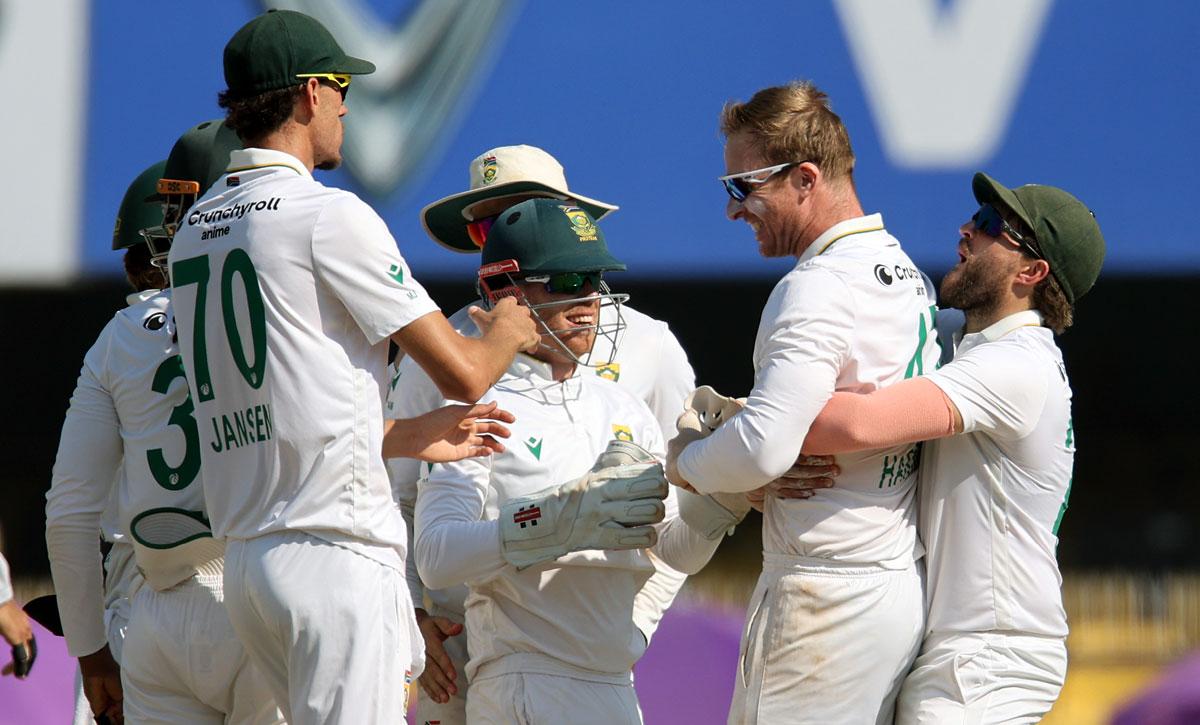
In the evening of the fourth day of the second, and final, Test of the home series against South Africa, India's veteran all-rounder Ravindra Jadeja came up with a dilly. If India could bat out the last day and secure a draw, he said, it would be 'as good as a win'. The team would view it as a moral victory -- a 'win-win'.
Even by England's exalted standards as the global custodians of the 'moral victory', Jadeja's spin on a game, and a series, where the home side had been out-batted, out-bowled, and out-caught was a stretch.
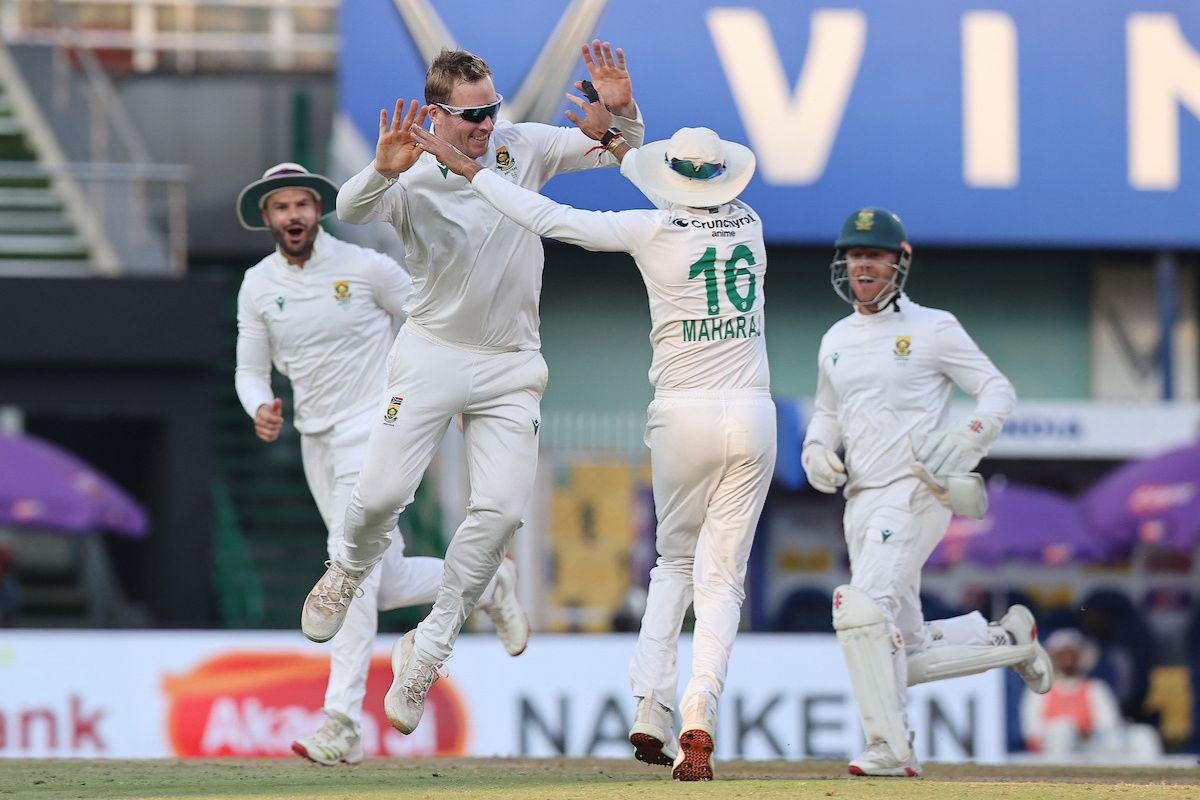
As it turns out, even that notional 'win-win' was denied as India went down 2-0 to the Proteas, suffering yet another home whitewash and, in the process, falling further behind in the World Test Championship stakes.
Predictably, the last rites were accompanied by the familiar chorus demanding Coach Gautam Gambhir's sacking. Some of it is predictable outrage, some of it is justifiable frustration, and some the latest manifestation of the cyclical habit of finding a sacrificial lamb when the team hits a slump.
Here is the truth we instinctively know but rarely articulate: Firing Gambir will not fix what is wrong with Indian cricket. If anything, centering him in this debate risks letting the system off the hook. Again.
This is not to pitch for Gambir's continuance in office -- perish the thought. There are solid grounds for the 'sack Gambhir' chorus.
In a quixotic bid to remake the Indian team in his own image, he has made a series of questionable decisions, beginning with his unacknowledged but very real role in abruptly ending the Test careers of some of India's senior stalwarts.
That the veterans were nearing their sunset years is not in dispute -- but where was the succession planning? To say this is a team 'in transition' is a cop-out: This transition was not organic; rather, it was manufactured, forced on the team without foresight.
To bring about the exit of senior players and then plead 'transition' makes Gambir and chairman of selectors Ajit Agarkar kissing cousins to the man who murdered his parents and then pleaded for mercy on the grounds that he is an orphan.
If the team now lacks stability, it points to a systemic failure of planning on the part of selectors and, yes, the coach.
To the larger point, India's Test decline is no longer a blip. It is structural. And the temptation to frame the crisis around one coach, one personality, one moment, is a way of ignoring the long-term rot that threatens to hollow out the only format that truly tests the depth of a cricketing culture.
The question of whether Gambhir should continue is fair. But it becomes meaningful only when placed inside the frame of larger questions: How did Indian cricket get here? What kind of leadership does it need? And what reforms are overdue if India is to reclaim its status as a serious Test nation rather than a white-ball obsessive that dabbles occasionally in the long format?
This cannot be about only one man. Gambhir is a symptom; the disease lies elsewhere. And any post-mortem worth conducting must be about not a man but a system -- not about a sacking that satisfies the bloodlust of disappointed fans, but about a reimagining of how India wants to play Test cricket.
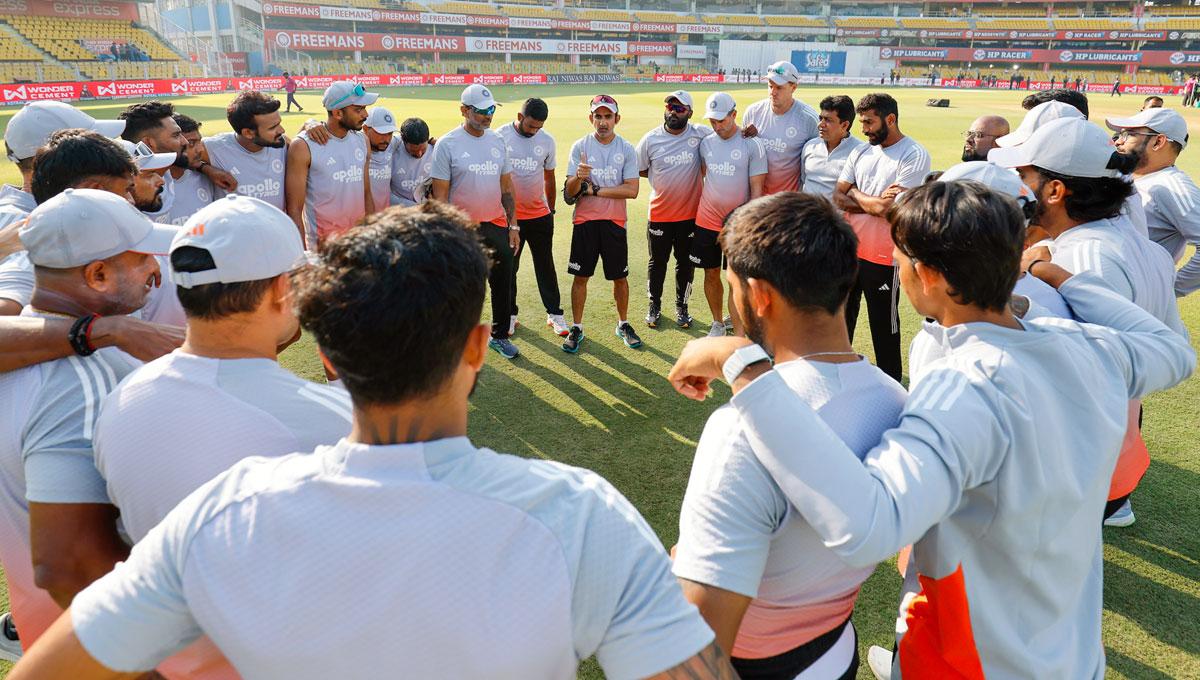
The crisis behind the train-wreck
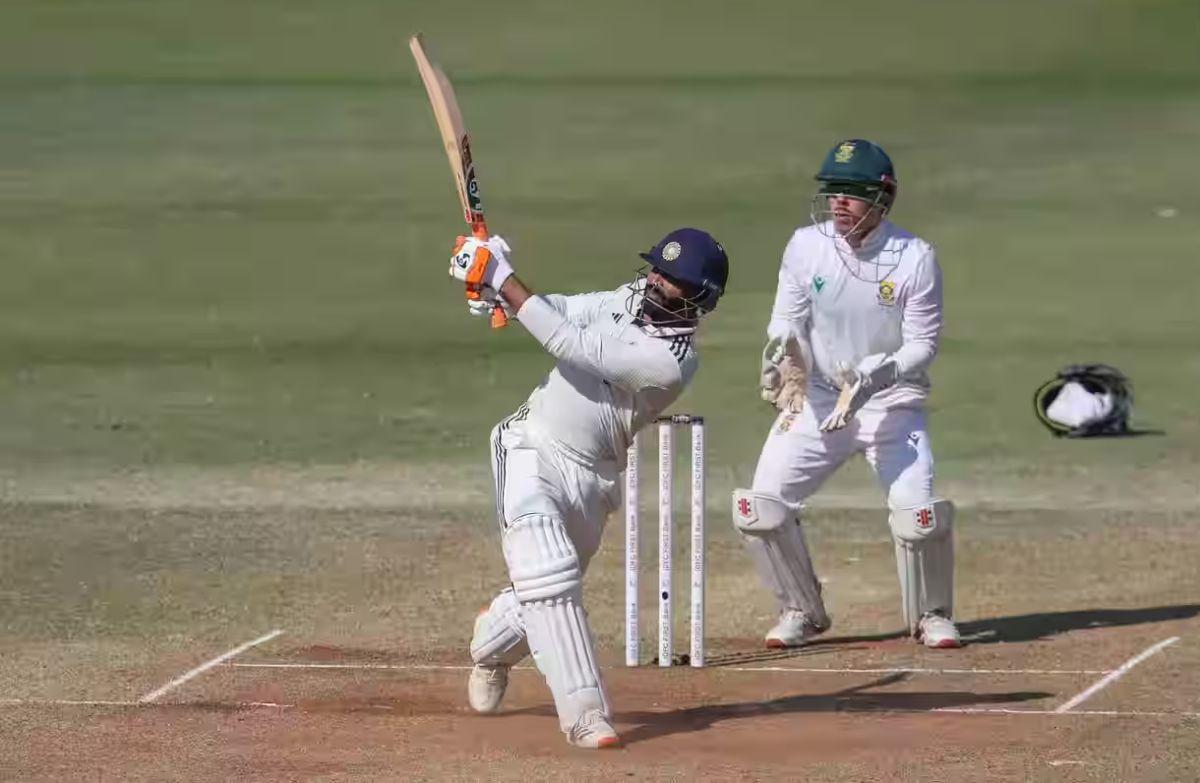
India's Test performances over the past two years have lacked coherence. Batting collapses are now routine; spinners struggle to exert the sort of control we once took for granted; and, what is worse, these diseases manifest even in home conditions where the batting was previously impregnable; a generation of fast bowlers is permanently injured or dangerously overworked; and the team has lost the one quality that distinguished it under Kohli and Shastri/Dravid: relentlessness.
Sack Gambhir by all means -- his personnel decisions have been questionable, his strategic calls disastrous, his man management abysmal to the point where players no longer know their roles, their futures, or what is expected of them. But even if his replacement is a coach of impeccable pedigree, he will inherit a landscape that does not conduce to excellence.
Take domestic cricket. Is it the proving ground for national selection? Not only is the answer an emphatic 'no', the coach and selectors have gone out of their way to extinguish any relevance it may have had.
The case of Mohammed Shami is illustrative. Once he recovered from his injury, he was asked to go back to the domestic circuit and prove his fitness. He did -- he played Ranji, bowled long spells with his old brio, and took wickets for fun. Despite this, he is nowhere in the selectors' frame and neither he, nor anyone else, knows why.
You could name a dozen others who have performed prodigies at the domestic level, but have been superseded in the national side by one-hit wonders and IPL stars of dubious merit. Add to this the decline in the ambition and quality of India A tours, and you have to conclude that the talent pipeline is broken.
A Test coach needs to have the nous to be able to chart a multi-year plan. Instead, under the current dispensation, Indian cricket lurches from assignment to assignment, chasing optics, narratives, and the relentless churn of the calendar.
Not who, but what the next coach must be
If India changes its coach, that change must be rooted in what the team actually needs.
India does not need a 'strongman' coach in the old mould -- the authoritarian presence who shapes a dressing room. Ravi Shastri was one such figure, but his authority was counterbalanced by a strong, opinionated captain in Kohli.
What the team needs now is a technical architect -- someone who thinks in cycles, not series; who understands player development as a pipeline from domestic cricket to India A to the national team; who values consistency over pointless chopping and changing in the name of experimentation; who can articulate a clear Test blueprint for batting and bowling; and who has both the people skills to manage egos and the strength to resist interference, all while keeping his own ego in check. (Dravid -- and before him, John Wright and Gary Kirsten -- was as close as we've gotten to that ideal template.)
Name-dropping successors is pointless unless the name arises from this skills audit. Whether the candidate is a seasoned international figure, a domestic stalwart, or a Moneyball-style data-aware coach, the key is philosophy, temperament, and the capacity to plan for the long term.
What Indian cricket cannot afford again is a coach chosen for symbolism, political alignment, or short-term PR value. The next appointment must be rooted in vision, not headlines; he should be picked for well-defined skill sets, not for proximity to power.
The selection dysfunction
But ask yourself this: Why is the chorus confining itself to the coach?
Team selection is the one part of the Indian cricket ecosystem everyone complains about, and no one ever fixes. It is also the single biggest lever India can pull to revive Test competitiveness.
The system today is opaque by design. Meetings are closed, minutes unavailable, roles undefined, accountability diffuse. The public does not know why certain players are backed unconditionally while others are dropped ruthlessly.
Even the players don't know. And their attempts to camouflage that uncertainty border on the ludicrous. For instance, Washington Sundar, promoted to No. 3 and demoted to No. 8 within the space of two innings, saying he finds the uncertainty 'exciting'. Well, if I were promoted to editor one day and reassigned to tea-boy the next, 'exciting' is one word for it -- but such "excitement" is to the detriment of both the individual and the organisation.

A meaningful overhaul should include:
- transparency (publish summaries of selection decisions and role clarity);
- data-informed selection (metrics that reflect red-ball craft, not just averages);
- role-based choices (batters who can bat time, spinners who can bowl long spells, pacers with the stamina for 18 overs a day);
- pathways (reinstate India A as the proving ground; no more parachutes from IPL to Tests); and
- independence coupled with accountability for selectors.
India's bench strength is not a myth -- it's simply poorly managed. To convert talent into Test resilience, the system must put sunlight into selection. For too long, it has been the place where Indian cricket's worst habits flourish -- patronage, inconsistency, short-termism.
Reform here changes everything.
So should Gambhir go?
Yes. But his sacking needs to be accompanied by a clear answer to the question of what -- not who -- comes next.
If Gambhir is removed without addressing the deeper issues, nothing changes. If he stays without a mandate, a long-term plan, and periodic health checks, nothing changes. But if his departure becomes the starting point for a wider reset -- redesigned selection processes, a clear red-ball strategy for the long term -- then it becomes meaningful.
Personalities have dominated Indian cricket for far too long. It is time for processes to take over.
Gambhir's failure stems partly from his own outsized ego and deep-rooted insecurity. But equally, it is a symptom of a system that rewards short-term thinking and political alignment over imagination and rigour. Removing him may assuage the public angst, but it will not restore India's Test competitiveness unless the system itself is rebuilt.
The real question is not 'Who should go next?' but 'What should Indian cricket stand for?'
If it wants to be a serious Test nation, it must protect the format structurally, reward it financially, and build it culturally. It must rediscover the idea that Test cricket is not a heritage piece but a living craft. It is no coincidence that India's most dominant Test years came under a captain who repeatedly declared the format the pinnacle of the sport and, with the buy-in of his coach, transmitted that conviction to his team.
Coaches, captains, selectors -- they all matter. But they matter only within a system designed to nurture excellence, not smother it.
Sack Gambhir before he damages any more careers, if you must. But it cannot stop there. The project ahead must be bigger, more ambitious, and far more urgent: Rebuilding the spine of Indian cricket from the grassroots up, and giving the Test team the seriousness it deserves.
Only then will Indian cricket stop lurching from one crisis to another and begin, once again, to imagine greatness.
Feature Presentation: Aslam Hunani/Rediff











 © 2026