
'This is not a case of tax evasion but the result of long-standing ambiguities in GST rules and unawareness.'
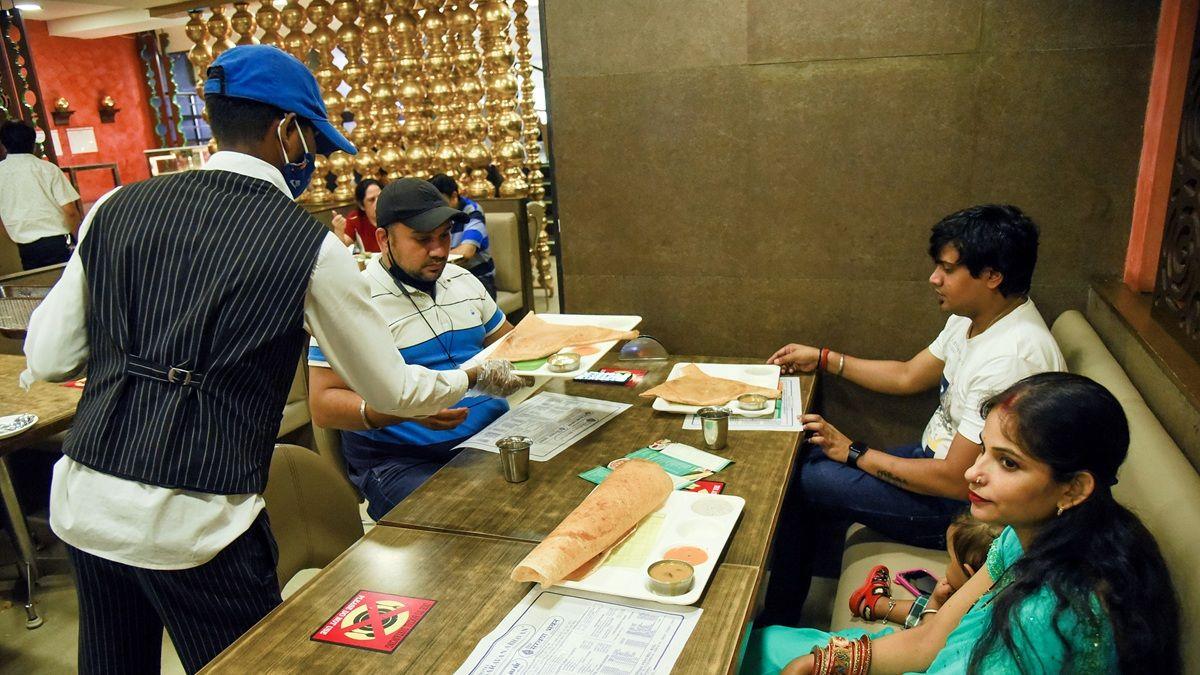
Top executives from the Federation of Hotel & Restaurant Associations of India (FHRAI) will meet government officials this week to address tax demand notices that hotels across the country have received over underpayment of goods and services tax (GST) for restaurant services on their premises.
“We will be meeting government officials in the coming week to address this issue of retrospective demand notices, which run into crores. This is not a case of tax evasion but GST-related ambiguity, which needs to be addressed by authorities. We want to clarify these matters and arrive at a solution," Surendra Kumar Jaiswal, the newly-elected president of FHRAI, told Business Standard.
At the body's 69th annual general meeting held on Saturday, Jaiswal also raised concerns over the removal of input tax credit (ITC) for hotel rooms priced under Rs 7,500, for which GST rates have been reduced to 5 per cent from 12 per cent earlier.
Although the revision is a continued effort to rationalise tax rates in order to benefit consumers, improve compliance, and support growth, it has turned into an added cost for guests and created structural cost burdens on hotels, particularly in Tier-II and Tier-III cities, Jaiswal noted.
Almost 90 per cent of the country's hotels operate below a room tariff of Rs 7,500, and are now subject to 5 per cent GST without input tax credit, he highlighted.
The withdrawal of ITC has escalated unrecoverable costs on rentals, utilities, outsourced manpower, and capital expenditure, deterring investments and threatening the growth of domestic tourism, he stated, while calling for reinstatement of ITC at the earliest and issuing a clarificatory circular to remove compliance ambiguities.
"Our industry is one of the largest generators of employment and a key driver of India's service economy. Yet, the GST framework without ITC has created inequities that threaten our competitiveness," he said.
The body also raised the sector's long pending demand for industry status.
"We are not seeking concessions but fairness, clarity, and parity. By restoring ITC, addressing copyright ambiguities, and granting infrastructure and industry status, the government can empower hospitality to support the vision of Viksit Bharat 2047 and secure India's rightful place as a global tourism hub," Jaiswal added.
Scores of hotels across the country have received retrospective demand notices worth thousands of crores of rupees for underpayment of the goods and services tax (GST) for restaurant services as authorities cracked down on the alleged evasion, even as hotel associations cried foul saying that these notices emanated from lack of clarity in GST rules and that there was no GST evasion.
Under the law, if the declared tariff of a hotel room is more than ₹7,500 per day, GST at 18 per cent becomes applicable on restaurant services also. However, for hotels with room rents below ₹7500, the GST is 5 per cent.
'Specified premises'
Hotels with room tariffs exceeding ₹7,500 per day are categorised as 'specified premises'. For restaurants outside the premises, the applicable GST rate is 5 per cent only.
GST authorities said many establishments continued to pay GST at the concessional rate of 5 per cent instead of 18 per cent on restaurant services even though the hotel room tariffs went above the ₹7,500 threshold.
In one such case, according to sources, the Pune unit of the Directorate General of GST Intelligence (DGGI) issued a notice to a hospitality company for underpaying ₹3.63 crore (Rs 36.3 million) on restaurant services between the financial year 2020 (FY20) and FY25.
Another hotel group was found to have underpaid ₹44.9 lakh (Rs 4.49 million) on restaurant supplies during October 2021-July 2023. Both demands were raised under Section 74 of the CGST Act, with interest and penalty also applicable, according to the documents seen by Business Standard.
Industry experts argue that linking restaurant tax rates to room tariffs is both unfair and impractical.
"This provision will necessarily have to be tested on the touchstone of Constitutionality, particularly using the principles of proportionality. The GST Council's clear intent has always been to rationalise and reduce tax on restaurant services. Linking the rate of tax on restaurants to the room tariff of hotels leads to disproportionate and absurd results," said Abhishek A Rastogi, founder, Rastogi Chambers, who claims to represent several industry players on the issue.
K Syama Raju, President, Federation of Hotel & Restaurant Associations of India (FHRAI), told Business Standard, that the notices had created financial distress for companies in the sector.
"This is not a case of tax evasion but the result of long-standing ambiguities in GST rules and unawareness. In many cases, even if a hotel charged more than ₹7,500 on any single occasion, demand notices for 18 per cent GST were raised retrospectively from the time GST was implemented," Raju said.
"This is clearly impractical and stems from regulatory ambiguity rather than deliberate non-compliance," added Raju.
The industry body head highlighted that since the past many years, the hospitality industry has faced challenges due to the linking of food and beverage rates with room charges and the ambiguity in GST provisions that fluctuated between 'Value of Services Received' and 'Declared Tariff'.
Walk-in diners
Hotel operators also raised concerns over the impact on walk-in diners.
"The current tax framework creates undue hardship for customers who simply walk into our restaurants without availing hotel rooms. Linking restaurant tax rates to room tariffs is impractical, as it penalises diners who are not even staying with us. Restaurant services should be treated independently to ensure fairness and ease of doing business," said Laxman Kariya, managing director, St Laurn Hotels and Resorts.
With inputs from Gulveen Aulakh











 © 2025