

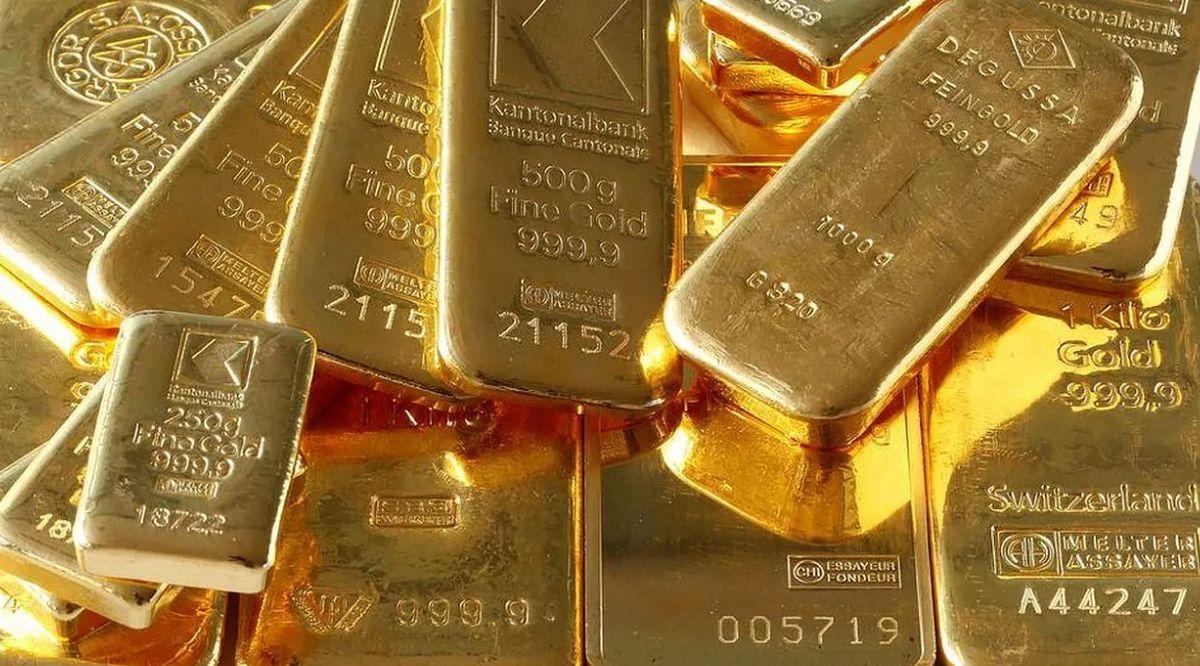
Gold imports climbed 349.22 per cent to $12.07 billion in January, while silver imports rose 127 per cent to $2 billion.
Key Points
- India's imports surged 19% year-on-year to $71.24 billion in January.
- Exports grew a muted 0.6% to $36.56 billion.
- Nearly 83% of the annual rise in imports was attributed to higher gold purchases, with oil imports remaining largely flat.
Inbound shipments into the country surged 19 per cent year-on-year to $71.24 billion in January, as the value of gold and silver imports expanded 4.5 and 2.3 times respectively, according to data released by the commerce department on Monday.
Exports, by contrast, registered a muted increase of 0.6 per cent Y-o-Y to $36.56 billion. As a result, the trade deficit widened to a three-month high of $34.68 billion, versus $23.43 billion in January last year and $25 billion in December.
Services exports rose 26.3 per cent to $43.9 billion in January, while services imports grew 17.3 per cent to $19.6 billion, yielding a surplus of $24.3 billion.
The January services figures, however, are estimates and will be revised following the Reserve Bank of India's subsequent release.
Merchandise shipments to the US contracted by nearly 22 per cent to $6.59 billion in January, amid a 50 per cent tariff on several Indian exports.
The fall in exports to the US underscored pressure on certain labour-intensive sectors, as contracts came under strain in the absence of relief from steep tariffs.
However, the finalisation of a trade agreement with the US earlier this month -- the removal of the 25 per cent punitive tariff from February 7 and a proposed reduction in the reciprocal tariff to 18 per cent, expected to take effect this week -- is expected to provide respite to exporters.
On a cumulative basis for April to January, exports to the US grew 5.85 per cent to $72.46 billion, despite the 50 per cent tariff coming into effect from August onwards, the data showed.
Commerce Secretary Rajesh Agrawal said merchandise and services exports had remained in positive territory so far.
"We will be nearing $860 billion (in overall exports) in the current financial year," Agrawal told reporters at a briefing on Monday.
Aditi Nayar, chief economist at ICRA, said India's goods imports unexpectedly swelled 19.2 per cent Y-o-Y in January, marking the second-highest monthly print after the $76.1 billion recorded in October 2025.
"This surge was entirely driven by gold imports, which ballooned to $12.1 billion in the month from $2.7 billion in January 2025. While oil imports remained flattish compared with year-ago levels, non-oil, non-gold imports rose by a relatively modest 4.9 per cent," Nayar said, adding that nearly 83 per cent of the annual expansion could be attributed to increased gold imports.
"In spite of the anticipated healthy services trade surplus, this unusually higher-than-expected merchandise trade deficit for January 2026 is likely to limit the extent of the current account surplus in the fourth quarter of FY26, unless prints for February and March cool significantly," she added.
Values of gold and silver imports surge
Gold imports climbed 349.22 per cent to $12.07 billion in January, while silver imports rose 127 per cent to $2 billion.
Suchindra Misra, special secretary at the commerce department, said gold imports recorded 1.83 per cent growth in value terms between April and December 2025, primarily driven by a 24.62 per cent increase in unit prices despite an 18.29 per cent decline in import volumes.
This, he noted, indicates that the rise in import value was largely attributable to price effects rather than higher quantities.
Misra added that India's gold import data points to a structural shift: Import values have risen sharply over time, while volumes have stagnated or declined, reflecting price increases rather than growth in physical demand.
According to commerce department analysis, the value of gold imports increased from $32.9 billion in FY19 to $58 billion in FY25 -- a 76 per cent rise over six years -- even as import volumes declined from 982.7 tonnes to 757.1 tonnes, a 23 per cent reduction.
By contrast, the 128.95 per cent increase in silver import value between April and December was driven by both a 46.69 per cent rise in unit prices and a 56.07 per cent increase in volumes, Misra said, highlighting the combined impact of higher prices and larger shipments.
Non-petroleum and non-gems-and-jewellery exports --a key gauge of underlying export health -- contracted 0.24 per cent to $32.78 billion in January.
Among major sectors, engineering goods (up 10.37 per cent), electronic goods (0.36 per cent), drugs and pharmaceuticals (0.96 per cent), organic and inorganic chemicals (1.08 per cent), man-made yarns (1.01 per cent) and marine goods (13.29 per cent) posted growth.
Ajay Srivastava, founder of the Delhi-based think-tank Global Trade Research Initiative, said the latest trade data highlighted the pronounced impact of US tariffs on export performance while also hinting at early signs of market diversification.
"The downturn is concentrated in the US market rather than reflecting a global slowdown. Between April 2025 and January 2026, India's exports to the US fell from $8.4 billion to $6.6 billion -- a 21.3 per cent decline -- dragging total merchandise exports down 4.4 per cent, from $38.3 billion to $36.6 billion. Exports to the rest of the world remained resilient, edging up from $29.9 billion to $30.0 billion," he said.
"The figures suggest tariff barriers in the US market have driven India's recent export slowdown, even as exporters begin cautiously expanding beyond their largest single market," he added.

Feature Presentation: Aslam Hunani/Rediff








 © 2026