
JSW Steel Ltd (JSTL) has announced a restructuring that unlocks value from Bhushan Power & Steel Ltd (BPSL) and changes the balance-sheet.
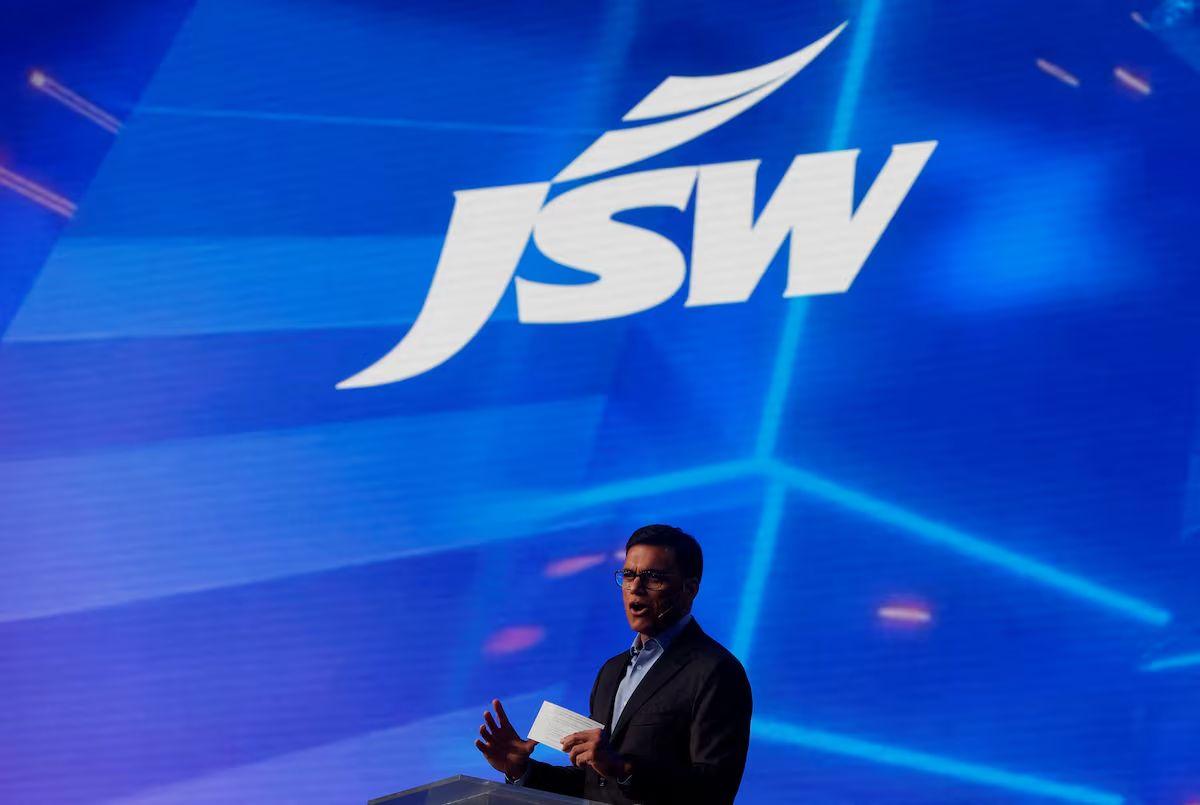
JSTL will do a slump sale of 50 per cent stake in BPSL to Japan’s JFE Steel in two equal tranches, totalling Rs 15,700 crore in cash.
This implies an enterprise value of Rs 53,000 crore.
The enterprise value comprises Rs 31,500 crore of equity value and another Rs 21,500 crore of debt transfer, the latter including BPSL’s existing borrowings of Rs 5,000 crore, and Rs 16,500 crore of additional debt, which is to be raised at JSW Sambalpur (the entity that acquired BPSL through a Rs 24,500 crore slump sale).
Ahead of the JFE partnership, JSTL merged Piombino, the intermediate holding company for BPSL, into the parent by acquiring the entire 17.35 per cent stake of JSW Shipping in Piombino at an implied equity value of Rs 43,000 crore by swapping equity of JSTL, resulting in the promoter stake rising from 45.32 per cent to 46.74 per cent in JSTL.
Overall, JSW Steel will receive Rs 24,500 crore in cash for slump sale of its stake, and JSW will also get Rs 7,900 crore through equity dilution on the back of the share-swap agreement with Piombino, which owned 17.35 per cent of BPSL.
Management expects deal to be completed in six-nine months, with key timelines being the slump sale cash consideration of Rs 24,483 crore by March 2026 (includes a first tranche of Rs 7,875 crore by JFE), and a second tranche of Rs 7,875 crore by JFE by June 2026, followed by deconsolidation of existing Rs 5,000 crore debt into the new entity, and new debt issuance of Rs 16,000 crore, taking total debt to Rs 21,000 crore.
After the transactions, BPSL will remain a legal entity, but its steel business will be carved out and housed under the new joint venture (JV).
This eliminates an intermediate promoter-owned entity, and ensures direct ownership of JSW Kalinga by JSTL, simplifying accounting, and clarifying the corporate structure while taking JFE as a 50 per cent JV partner.
The deleveraging strengthens JSTL’s balance sheet.
Bringing in JFE Steel as a 50 per cent partner at a decent valuation would also help JSTL acquire the expertise and strategic flexibility needed for the next cycle of growth.
The share of profits will flow directly to net earnings for JSTL while improving leverage ratios (with net debt-to-operating profit likely to reduce to 1.7 times by 2026-27, or FY27, from nearly 3 times now).
Along with JFE's technological expertise, JSW is looking to leverage its project execution capabilities to ensure it is well-placed for the next phase of growth opportunities.
There’s consensus across the industry that despite expansions by all the major players, India’s demand for steel will probably overrun supply in the next five years.
Given that the deal values BPSL at Rs 53,000 crore, this implies a valuation of $1,400/tonne of capacity.
The reduction of debt will lead to a value accretion for JSTL upwards of Rs 30/share.
For the JV partner, it provides easy access to India’s high growth market.
The transaction would imply an enterprise value (EV)-to-operating profit multiple of 10 times for BPSL if an operating profit per tonne of Rs 12,000 is assumed, along with safeguard duty continuation, and full utilisation of BPSL’s 4.5 million tonnes per annum (mtpa) capacity is also assumed.
JSTL traded at an EV-to-operating profit of around 9 times — these are pretty good terms, at the upper end of fair value.
The partnership may enable continued collaboration on value-added products with JFE (such as automotive steel and grain-oriented electric sheets) by leveraging JSTL's operational capabilities with JFE's technological expertise.
JSTL’s consolidated FY28 operating profit will be reduced by about 11 per cent but net debt will be cut by 50 per cent, according to analyst estimates.
JSTL has capex plans of Rs 20,000 crore for FY26, followed by another Rs 21,000 crore in FY27, and Rs 20,900 crore in FY28, which will go through with less stress on the balance-sheet. The market reaction seems to be generally positive.
Disclaimer: This article is meant for information purposes only. This article and information do not constitute a distribution, an endorsement, an investment advice, an offer to buy or sell or the solicitation of an offer to buy or sell any securities/schemes or any other financial products/investment products mentioned in this article to influence the opinion or behaviour of the investors/recipients.
Any use of the information/any investment and investment related decisions of the investors/recipients are at their sole discretion and risk. Any advice herein is made on a general basis and does not take into account the specific investment objectives of the specific person or group of persons. Opinions expressed herein are subject to change without notice.










 © 2025