
Officials from both India and the US in the recent past have indicated that a “fair deal” will be concluded soon, with Indian officials holding that more formal rounds of talks are not needed.
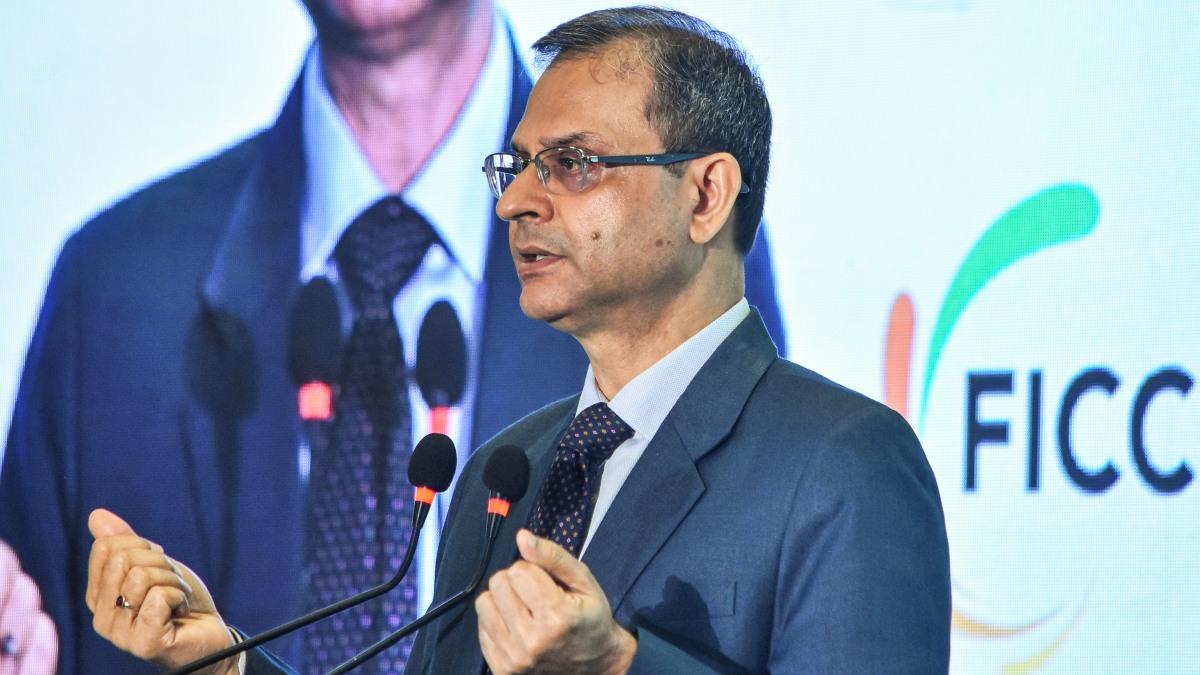
Reserve Bank of India (RBI) Governor Sanjay Malhotra on Thursday said that he is confident that there will be a “good trade deal” with the United States, which will relieve the pressure on the current account and in turn the rupee.
Delivering the VKRV Rao Memorial Lecture at the Delhi School of Economics, Malhotra said the recent depreciation in rupee is because of expectations that the trade deficit may go up as a result of additional penal tariffs by the US.
“Exports have come down, as you are aware, in October. But we are confident that there will be a good trade deal, hopefully, going forward. And that should relieve whatever pressure there is on our current account. We have very good buffers of foreign exchange of $690 billion. So that's not a matter of concern,” he added.
Officials from both India and the US in the recent past have indicated that a “fair deal” will be concluded soon, with Indian officials holding that more formal rounds of talks are not needed.
The deal is expected to substantially reduce the 50 per cent tariffs by the US on most Indian goods.
India's trade deficit rose to a record high of $41.68 billion in October and exports to the US contracted 8.6 per cent to $34.38 billion.
On cryptocurrency regulation, Malhotra said the RBI has taken a cautious approach because of various concerns and the government has to take a final view on the matter.
“There is a working group set up earlier. They will take a final call as to how, if at all, crypto is to be handled in our country,” he added.

Malhotra said though the US has come out with a Genius Act to establish a regulatory framework for crypto assets, India's situation is very different.
“We have a very sound system of (digital) payments, which the US doesn't have to the extent of scale that we have. So the domestic payments issue that they have is not with us. We are experimenting with CBDC (central bank digital currency). That's why we have a cautious approach towards crypto,” he added.
However, Malhotra said the RBI has an accommodative and enabling stance when it comes to digital innovations like the Unified Payments Interface (UPI) or digital lending, stressing that the central bank is mindful of ensuring necessary guardrails in the system.
While talking about the shift from rule to principle based regulation, Malhotra said the related dilemma in this regard is how much innovation to permit, when the risks are not fully understood.
The RBI governor said that the central bank was continuously adapting while being vigilant and alert to emerging risks and evolving conditions.
“We are encouraging innovation while being mindful of our regulatory objective of safeguarding systemic stability. We are trying to simplify regulations as much as possible while maintaining the necessary safeguards and guardrails,” he said.
Malhotra further said that given the pace of the economy's growth, it was only a matter of time that India would have many of its banks in the top 100 banks of the world.
He added that the shift from bank deposits towards money markets, mutual funds, equities etc is natural as the country progresses.
He said that even on the lending side many corporates and NBFCs were moving from bank borrowing to corporate and market based borrowing.
“It is not only on the liability side, but even on the asset side, this shift is happening. So the point is that it should remain balanced,” Malhotra added.
Malhotra said that the RBI was strengthening coordination with all other regulators, while respecting the jurisdictional boundaries.
“We are trying to enforce rules consistently, while recognising that there can be circumstances which will warrant flexibility,” he added.
Feature Presentation: Rajesh Alva/Rediff










 © 2025