

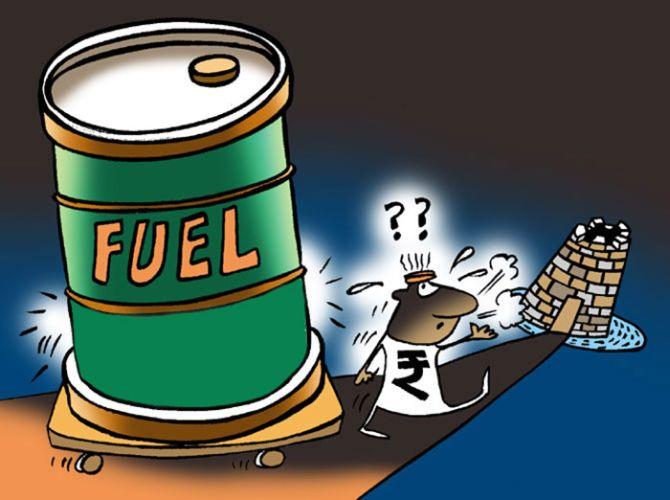
The Confederation of Indian Industry has urged the Indian government to implement a phased restoration of the fuel excise duty cuts over six to nine months, aiming to bolster government finances amidst stabilising crude oil prices and a significant surge in private investment.
Key Points
- CII recommends a phased restoration of the Rs 10-per-litre fuel excise duty cut over 6-9 months to ease government financial burden.
- The industry body believes this gradual approach will avoid disrupting consumer sentiment while allowing industry to absorb input cost pressures.
- The proposal comes amidst a significant pickup in private investment, with capex rising to Rs 7.7 trillion in September 2025.
- CII also proposed an industry compact, urging companies to reduce fuel and power consumption by 3-5% and guarantee MSME payments within 45 days.
- Firms are encouraged to front-load investments for FY27, increase domestic value addition, and exercise voluntary price restraint on essential inputs.
The Confederation of Indian Industry (CII) on Sunday urged the Centre to phase out the Rs 10-per-litre cut in special additional excise duty on petrol and diesel over a period of six to nine months, as crude oil prices stabilise. Such a move would ease pressure on government finances without disrupting consumer sentiment, it said.
Industry's Stance on Excise Restoration
"A calibrated phased restoration of the fuel excise will progressively relieve the exchequer of a very substantial burden without disrupting consumer sentiment, and industry is prepared to absorb a meaningful share of input cost pressures within its own margins," Chandrajit Banerjee, director general, CII, said in a statement.
The proposals come against the backdrop of a broad-based pickup in private investment activity.
CII’s analysis of nearly 1,200 companies from the CMIE Prowess database showed private capex rose to Rs 7.7 trillion in September 2025 from Rs 4.6 trillion a year earlier.
The organisation attributed the capex revival to the policy environment shaped by sustained public capital expenditure, fiscal consolidation and structural reforms.
The data signalled investment commitments across sectors at a scale not seen in "over a decade", the CII said.
The surge in private capex was the most important signal yet that the investment cycle had turned decisively, Banerjee said. Industry must now "lean in, not pull back" amid global headwinds, he added.
CII's Five-Point Action Agenda
The recommendation on roll back of the excise cut forms part of a five-point industry action agenda proposed by CII, in response to ongoing global uncertainties, including the West Asia crisis.
As part of its proposed industry compact, CII urged companies to commit to a 3-5 per cent reduction in fuel and power consumption over the next two quarters through efficiency gains, logistics optimisation, fleet electrification and increased renewable energy adoption.
It also called on larger corporates to guarantee payments to micro, small and medium enterprises (MSMEs) within 45 days, supported by expanded use of the TReDS platform and supply-chain financing mechanisms to ease working capital constraints.
The industry body emphasised the need to "ringfence" supply chains through diversified sourcing, strategic inventory buffers and alternative international tie-ups, alongside increasing domestic value addition in sectors such as components, specialty chemicals and capital goods.
The CII also encouraged firms to front-load planned investments for FY27, particularly in manufacturing, energy transition and digital infrastructure, while exercising voluntary price restraint on essential inputs and scaling up internship opportunities under the Prime Minister’s Internship Scheme.
Addressing Global Headwinds
While flagging India’s relative resilience, CII cautioned that spillovers from the West Asia crisis pose near-term risks, underscoring the need for coordinated action between government and industry to safeguard growth and macroeconomic stability.










 © 2026