
Almost 30 per cent of Maruti's auto-component exports are to the US, and about half of that is facing a duty of 25 per cent and the other half 50 per cent..
India's auto-component export is grappling with a "major challenge" as nearly 30 per cent of shipments to the United States (US) now face steep tariffs of 25-50 per cent, said Hisashi Takeuchi, managing director and chief executive officer, Maruti Suzuki India, adding that the country should continue demonstrating "policy stability and predictability" to strengthen its long-term manufacturing competitiveness.
In his speech at the annual session of the Automotive Component Manufacturers Association of India (Acma), Takeuchi said the US tariffs had put pressure on suppliers, given that a significant share of India's component export depended on that market.
He said New Delhi and Washington were in discussion and "the government is very sensitive to this issue and hopefully some solution will be found out".
He added that adversity could be turned into opportunity, recalling Prime Minister Narendra Modi's words: "Aapda mei avsar" (finding opportunity in adversity).
"Almost 30 per cent of auto-component exports are to the US, and about half of that is facing a duty of 25 per cent and the other half 50 per cent. That poses a major challenge," Takeuchi said.
The managing director said turbulence in global supply chains had opened up opportunities for India to position itself as a trusted, resilient and sustainable manufacturing hub.
He pointed to India's demographic advantage, strong domestic demand, and government initiatives such as the production-linked incentive (PLI), Make in India, and Aatmanirbhar Bharat.
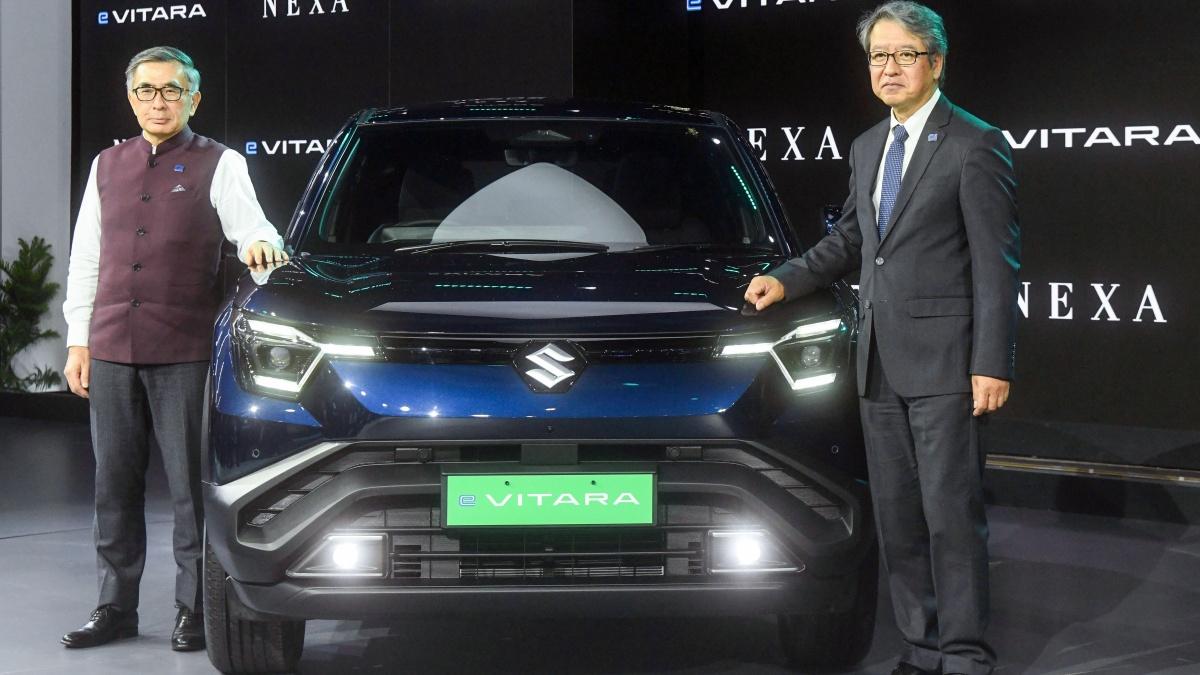
Takeuchi cited Suzuki Motor's decision to produce its first global electric vehicle (EV), the e-VITARA, in India as evidence of the country's rising status in world markets.
Prime Minister Modi last month had flagged off the first batch of the e-VITARA for export at Suzuki's Gujarat plant.
"These 'Made in India' EVs will be exported to over 100 countries across the globe. It is important to diversify and avoid over-dependence on one single market," he said.
Drawing lessons from Japan's post-war industrialisation, he said long-term success depended on investing in research & development, customer-focused innovation, and continuous improvement.
India too must pursue similar strategies while ensuring consistency in governance, he said.
"As India aspires to be a global manufacturing hub, it will be important to continue demonstrating policy stability and predictability."
Calling for Indian suppliers to move up the value chain, he urged them to embrace "Kaizen" principles, treat employees as partners, and aim for global scale.
"If we combine strategic intent with India's unique advantages of domestic demand, talent, and policy support, the possibilities for our growth are limitless," he said.
Kaizen, a Japanese management philosophy that emphasises continuous, incremental improvement in processes, products, and workplace practices, was a cornerstone of Japan's post-war industrial success.
Feature Presentation: Ashish Narsale/Rediff












 © 2025