
With gains of over 28 per cent, Hero MotoCorp has emerged as the best-performing largecap automotive stock over the past three months.
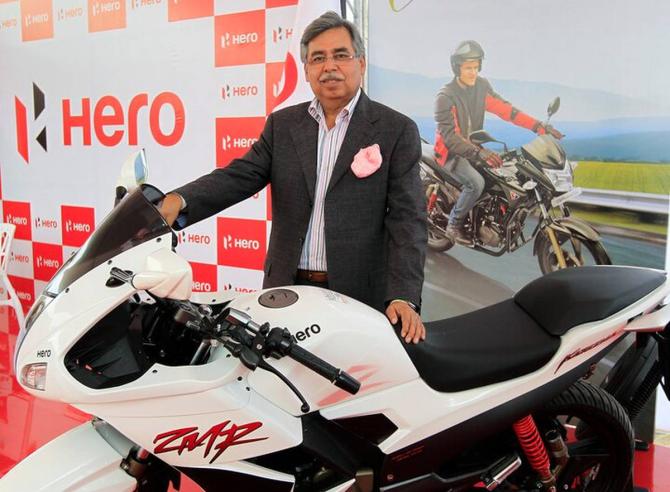
The rally has been driven by an improved outlook for the rural segment, higher demand during the ongoing festival season, and rising affordability following cuts in goods and services tax (GST) rates.
The key near-term triggers for the two-wheeler (2W) major include festival season volumes, launches, and market-share gains across categories.
In September, the company’s volumes grew 8 per cent year-on-year (Y-o-Y), supported by a 95 per cent surge in exports and strong traction in the scooter segment, which rose 54 per cent. Motorcycle sales were more subdued, increasing 4.5 per cent Y-o-Y. Year-to-date sales are flat compared to the same period last year, with motorcycle volumes down about 2 per cent.
Scooters, meanwhile, have been the primary growth driver, rising 29 per cent during this period.
For the July-September quarter (Q2) of 2025-26 (FY26), Motilal Oswal observes that Hero has staged a smart comeback, posting 11 per cent Y-o-Y volume growth and a robust 24 per cent sequential increase, supported by the festival season.
The company’s electric vehicle (EV) mix has climbed to 2.3 per cent of total volumes from 1.1 per cent a year earlier, while its export mix has increased to 7.7 per cent from 4.2 per cent Y-o-Y.
With healthy volumes and stable input costs, the brokerage expects operating margins to improve by 70 basis points Y-o-Y to 15.2 per cent.
Net profit in Q2 is projected to grow 20 per cent Y-o-Y, driven by strong volume growth and margin expansion.
Hero’s ability to gain market share will hinge on its performance in the scooter and premium motorcycle segments, both of which are expanding rapidly.
Analysts Yash Agrawal and Prateek Ladha of Nirmal Bang note that the 2W industry is undergoing a structural shift, with scooters gaining ground through launches in both internal combustion engine and EV formats, as urban consumers increasingly prioritise convenience.
Premium motorcycles are also growing steadily, buoyed up by festival demand.
The company has gained market share through launches and upgrades across both segments — motorcycles (HF Deluxe, Xtreme 125R) and scooters (Destini 125, Xoom 125).
Another tailwind for HMCL is the reduction in GST rates. Under GST 2.0, the tax on motorcycles below 350cc — which account for 94 per cent of industry volumes — has been cut to 18 per cent from 28-31 per cent, markedly improving affordability in a segment that had been subdued.
Axis Securities, which has an ‘overweight’ rating on the stock, expects government initiatives to boost rural incomes, rising disposable income, and the marriage season to drive 2W industry growth, benefiting HMCL, especially in the entry-level and 125cc segments.
Key factors to watch, according to the brokerage, include Hero’s EV product road map, its strategy in the mid-segment motorcycle space amid intensifying competition, and expansion into new international markets.
Axis expects the company’s operating profit to grow by 13-14 per cent annually from FY26 through 2027-28.











 © 2025