

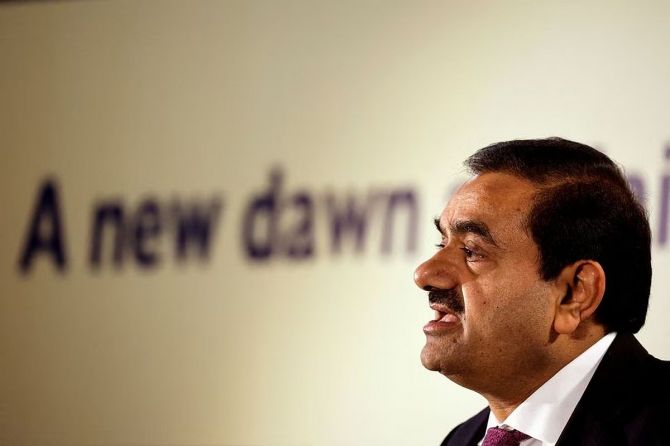
Billionaire Gautam Adani has unveiled the Adani Group's strategic move to a three-layer organisational structure, designed to flatten hierarchy, empower frontline operations, and foster faster decision-making across its diverse businesses.
Key Points
- The Adani Group is implementing a three-layer organisational structure to flatten hierarchy and empower frontline employees.
- This strategic shift is focused on fostering faster reflexes and decision-making closer to the point of action, rather than cost reduction.
- The group aims to build 'low-friction organisations' by promoting a culture of empowerment and accountability.
- Adani Ports and Special Economic Zone (APSEZ) achieved a milestone of handling 500 million tonnes of cargo in FY26 and targets 1 billion tonnes by 2030.
- APSEZ's logistics and marine services are projected to expand fivefold, contributing significantly to the group's ambitious growth targets.
Billionaire Gautam Adani on Friday said the Adani group was moving towards a three-layer organisational structure to flatten hierarchy and empower the frontline.
“Across all our businesses, we are redesigning the way we organise ourselves.
“We are moving towards a three-layer structure to flatten hierarchy and empower the frontline,” Adani, chairman of the group, said.
Empowering the Frontline
The Indian ports-to-energy conglomerate chief clarified that the move is not about cost reduction, but empowerment.
“The organisations that will win in the future will not be the ones with the tallest hierarchies, but those with the fastest reflexes.
“And, that can only happen when decision-making moves closer to the point of action.
“Low-friction organisations are built not by forcing compliance across multiple layers, but by creating a culture of empowerment where accountability is embraced with pride,” Adani added.
He also said the group’s systems will scale by increasing judgement, capability and ownership close to the ground, not by increasing control from the top.
Deepening Ecosystem Engagement
The group is also seeking to deepen engagement with ecosystem partners as part of its new operating philosophy.
It stressed that long-term resilience also depends on financially-healthy partners.
“When our partners are financially healthy, they invest better, execute better and stand stronger in difficult times,” he said.
Adani was addressing employees of Adani Ports and Special Economic Zone (APSEZ) in Ahmedabad as the company achieved a milestone of handling 500 million tonnes (MT) of cargo in FY26.
It aims to handle 1 billion tonnes by 2030.
“It took us 16 years to get to our first 100 million tonnes.
“The second 100 million came in five years.
“The third in just three years. And, the fourth and fifth 100 million tonnes were added in only two years each,” Adani said.
APSEZ's Growth and Ambition
APSEZ operates 15 ports and terminals across India's west, south, and east coasts, a diversified marine fleet of 127 vessels, and integrated logistics capabilities, including 12 multi-modal logistics parks.
It has 3.1 million square feet of warehouses, and over 25,000 trucks operating on its proprietary platform.
He added that APSEZ’s logistics operations and marine services will grow even faster, expanding fivefold over the same period.
“This is ambition at an extraordinary scale, and no one is better equipped than us to make it real,” Adani added.
APSEZ’s overall revenue in the first nine months of FY26 stood at Rs 27,998 crore.
Its logistics revenue was Rs 3,345 crore, while marine, port development & SEZ revenue was Rs 1,955 crore.
With a current cargo handling capacity of 633 MT per annum, APSEZ accounts for 28 per cent of India’s total port volumes.
Its 1 billion-tonne ambition includes 850 million tonnes of domestic cargo and 150 million tonnes of international cargo.










 © 2026